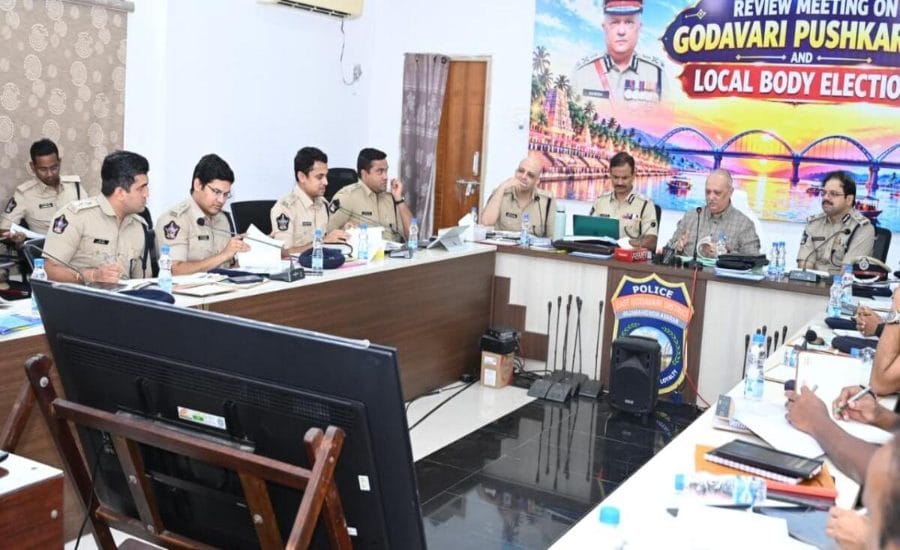
Amaravati: 1992-batch IPS officer and Andhra Pradesh Director General of Police Harish Kumar Gupta has stepped up security preparations in the Godavari region ahead of the upcoming local body elections, directing police officials to combine drone surveillance with stronger ground-level intelligence.
During a high-level review meeting held on Wednesday, October 7, the DGP assessed election preparedness across the Godavari belt and stressed the need for advance planning to prevent disturbances in sensitive villages.
The meeting was attended by Eluru Range Inspector General G.V.G. Ashok Kumar, along with the Superintendents of Police of East Godavari, Kakinada, Dr. B.R. Ambedkar Konaseema and Eluru districts. Deputy Superintendents of Police and other senior officers from the region also participated.
The focus of the meeting was not only on deployment during polling but also on identifying possible trouble spots early and building a stronger preventive security mechanism.
Drone Surveillance for Sensitive Villages
One of the key directions from DGP Harish Kumar Gupta was to bring sensitive villages under drone surveillance and strengthen aerial vigilance.
The objective is to help police identify potential trouble spots before they turn into law-and-order challenges. Drone-based monitoring can give security teams a wider view of vulnerable areas and support quicker assessment of emerging situations.
The DGP also called for a robust security action plan for the elections, with local conditions and previous trouble spots taken into account.
The emphasis on technology comes as Andhra Pradesh Police increasingly uses drones and other surveillance tools as part of preventive policing and event-security planning.
Read also: MHA Allots 2016 IPS Cadre to 7 MP Police Officers After 27 Years of Service – List Inside
Police Asked to Strengthen Village Intelligence
Along with technology, the DGP stressed the importance of information from the ground.
Police officers were asked to personally visit villages rather than depend only on reports reaching district headquarters. They were directed to strengthen their local sources and gather information about key issues in individual villages.
This approach is aimed at helping police identify disputes, tensions or other local factors that could affect the election environment before they escalate.
The DGP’s instructions place village-level intelligence at the centre of preventive policing. Officers are expected to understand local conditions closely and use that information while preparing security plans for polling.
Focus on Advance Prevention
The directions come against the backdrop of preparations for local body elections in Andhra Pradesh, where police are expected to maintain a peaceful and impartial environment during the electoral process.
Rather than waiting for incidents to occur, the security strategy focuses on early identification of risks and preventive action.
The combination of drone surveillance and field-level intelligence is intended to give police both a broader aerial picture and a detailed understanding of local conditions.
This could also help district police units coordinate their personnel and resources more effectively in areas identified as sensitive.
NCC and NSS Volunteers to Support Police
DGP Gupta also directed the district SPs to involve volunteers from the National Cadet Corps (NCC) and National Service Scheme (NSS) during election duties.
Their participation is expected to provide additional support to police personnel during the election period, particularly when large numbers of people are involved in polling-related activities.
The move also reflects the importance of community participation in managing major public events. With proper coordination and clearly defined responsibilities, trained volunteers can assist authorities in maintaining order and facilitating smoother movement of people.
Four Godavari Districts Under Review
The review covered East Godavari, Kakinada, Dr. B.R. Ambedkar Konaseema and Eluru districts, bringing a significant part of the Godavari region under the security assessment.
The involvement of senior officers from the four districts allows police to examine regional security concerns while also developing district-specific plans.
For local body elections, such coordination becomes important because polling takes place across numerous villages and local administrative areas rather than at a limited number of major urban centres.
Technology Backed by Local Understanding
The DGP’s directions underline a two-layer approach to election security: technology-driven surveillance and human intelligence.
Drones can help police monitor sensitive locations from the air, while officers working directly with villages can provide information about local disputes, concerns and possible flashpoints.
Together, the two approaches can help authorities prepare more targeted security measures and respond faster if tensions emerge.
For voters, the larger objective is to create a secure environment in which local elections can take place peacefully and without disruption.
As Andhra Pradesh moves closer to its local body polls, the Godavari security review signals a shift towards more preventive, technology-enabled and locally informed policing. The emphasis on advance intelligence, drone monitoring and wider coordination also highlights the growing role of technology and community participation in managing electoral security.
Read also: MHA Allots 2016 IPS Cadre to 7 MP Police Officers After 27 Years of Service – List Inside