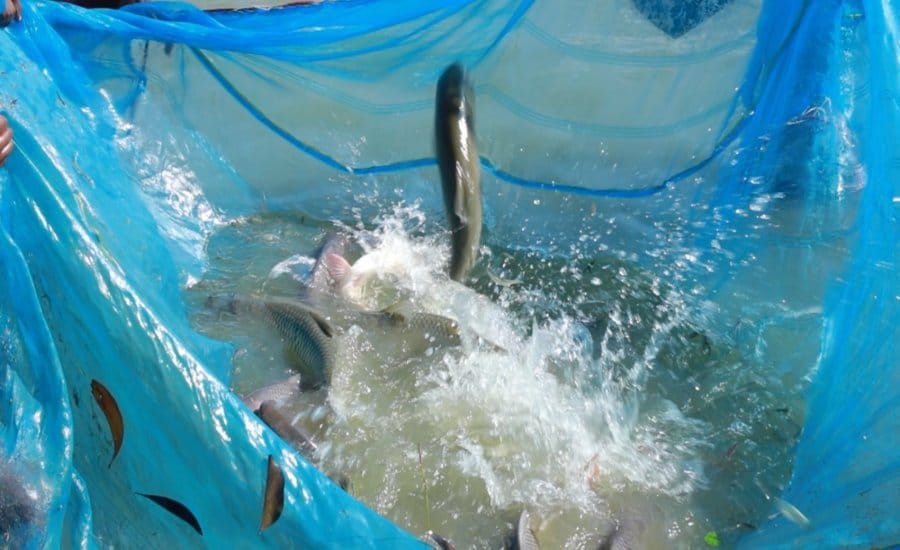
Patna: Bihar is expanding its focus on modern fish farming, with the state government planning to provide free technical training to 9,685 fish farmers and fishermen during the 2026-27 financial year.
The initiative under the Fisheries Training and Extension Scheme aims to introduce farmers to modern fisheries technologies and scientific methods being used in India and abroad. The training is designed to help farmers increase production, reduce costs and improve their annual income.
The Animal and Fisheries Resources Department is organising training through reputed fisheries institutions within Bihar and outside the state. A total of 332 batches will train the selected farmers during the current financial year.
Free Training to Reach Nearly 10,000 Farmers
The training programme will cover modern methods of fish farming, with participants being introduced to newer technologies and practices that can improve productivity.
The government says the training is completely free for beneficiaries, apart from the applicable registration fee. Farmers will learn how scientific techniques can help them achieve better production while managing farming costs more efficiently.
The programme is part of Bihar’s broader effort to strengthen fisheries as a source of livelihood and income for rural communities.
Read Also: Bihar’s Big Investment Push: Gadkari Says State Can Become Major Economic Hub
More Than 70,000 Fish Farmers Already Trained
Bihar has already expanded its fisheries training network significantly.
So far, 70,221 fish farmers have received free modern training at fisheries institutions inside and outside the state. Of these, 52,485 farmers were trained at institutions within Bihar, while 17,726 received training outside the state.
The department has also used exposure visits to help farmers understand practical fisheries models.
Under the state’s study and exposure programme, more than 47,409 fish farmers have so far been taken on free visits to developed wetlands and biofloc units. These visits allow farmers to observe the construction and functioning of modern fisheries facilities and understand how such systems can be adopted in their own areas.
Bihar’s Fish Production Continues to Rise
The training programme comes as Bihar records steady growth in fish production.
The state produced 9.69 lakh metric tonnes of fish in 2024-25. This increased to 10.28 lakh metric tonnes in 2025-26, indicating a rise of around 59,000 metric tonnes in one year.
The government has also expanded the infrastructure supporting fish farming across the state.
As part of its efforts, new water areas have been developed over 8,262 hectares, while new ponds have been constructed across 4,305 hectares. Modern ponds have also been developed over 2,380 hectares of chaurs, or low-lying wetland areas.
In addition, 5,301 tubewells have been installed to support fisheries-related activities.
Better Fish Seed and Feed Supply
Availability of quality fish seed and feed is another important part of Bihar’s fisheries expansion.
The state currently has 233 fish seed hatcheries, which together meet around 70% of the demand for high-quality fish seed.
The department has also supported the growth of fish feed production. Around 89 fish feed mills are currently producing more than 50,000 tonnes of quality fish feed.
Better availability of fish seed and feed can help farmers maintain production and reduce dependence on supplies from outside the state.
Modern Technology Is Changing Fish Farming
The government’s training approach focuses on helping traditional fish farmers adopt scientific and technology-based practices.
Farmers are being exposed to methods that can improve productivity, make better use of available water resources and support more efficient fish farming.
Technologies such as biofloc systems and improved pond management are also becoming part of Bihar’s fisheries development efforts. Exposure visits to such facilities are intended to help farmers understand these techniques before adopting them.
The emphasis on training is particularly important because technology alone may not deliver better results without adequate knowledge of its operation and maintenance.
Fisheries Creating New Livelihood Opportunities
The expansion of fish farming is also creating economic opportunities for people dependent on fisheries and related activities.
Higher production can support not only fish farmers but also workers involved in fish seed production, feed manufacturing, transportation, trading and other parts of the fisheries supply chain.
For small and marginal farmers, improved fisheries practices can provide an additional source of income when integrated with existing agricultural activities.
The state’s training programme therefore connects skill development with agricultural diversification and rural livelihoods.
Bihar Moves Towards a Stronger Fisheries Sector
With more than 70,000 farmers already trained and another 9,685 set to receive free training in 2026-27, Bihar is strengthening the knowledge base behind its growing fisheries sector.
The increase in fish production, expansion of ponds and water areas, improvement in fish seed availability and growth of feed manufacturing together indicate a wider effort to build supporting infrastructure around fish farming.
The continued focus on modern training could help more farmers adopt scientific practices and improve productivity. For Bihar’s rural economy, the fisheries sector is increasingly becoming an important avenue for income generation, employment and agricultural diversification.
Read Also: Bihar Tightens Anti-Corruption Net: 6 Officials Face DA Probes Across 5 Cases