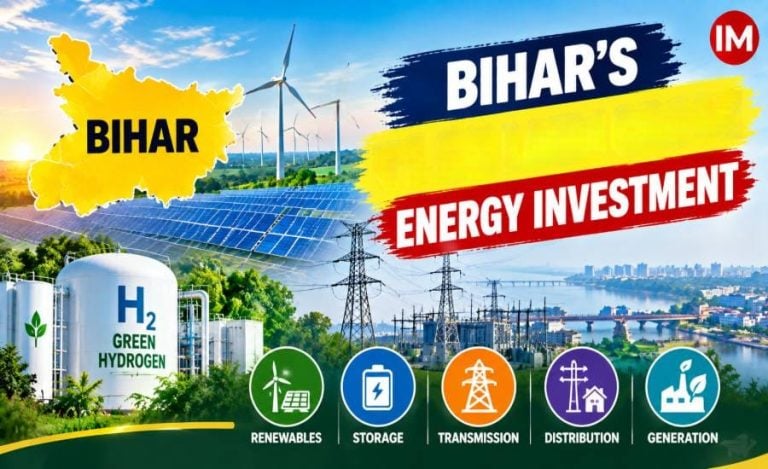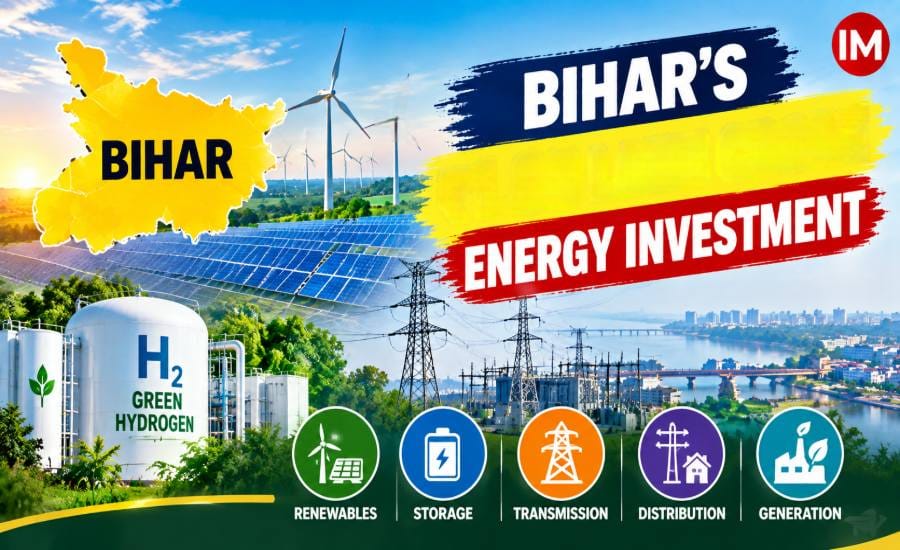
Patna: Bihar is targeting an annual green hydrogen production capacity of 1 lakh tonnes over the next five years under the Bihar Green Hydrogen Policy, 2026. Energy Minister Shailesh Kumar, popularly known as Bulo Mandal, said the policy aims to attract around ₹16,000 crore in investment, create more than 12,000 direct and indirect jobs, and support the state’s transition towards cleaner energy.
The state government has earmarked incentives worth ₹1,040.25 crore to encourage investment in the green hydrogen sector. The policy seeks to establish Bihar as an emerging destination for green energy projects while supporting industrial growth, employment generation and environmental protection.
Kumar said the initiative, being implemented under the leadership of Chief Minister Samrat Choudhary, would help strengthen Bihar’s energy sector and create new opportunities for industrial development.
Bihar Green Hydrogen Policy Targets 1 Lakh Tonnes of Production
The policy sets a target of developing an annual green hydrogen production capacity of 1 lakh tonnes within five years. Green hydrogen can serve as a cleaner energy source for industries and other applications, depending on how it is produced and used.
Green hydrogen is generally produced by using electricity from renewable or other low-emission sources to split water into hydrogen and oxygen through electrolysis. When produced using renewable electricity, it can help reduce emissions compared with hydrogen made from fossil fuels.
For Bihar, developing this sector could create opportunities across energy production, equipment supply, infrastructure development and industrial applications. The policy also aims to build a wider green hydrogen value chain, supporting activities linked to production and its use in industry.
The proposed capacity target will require investment in production facilities, electricity supply, supporting infrastructure and technologies that can make green hydrogen commercially viable.
Read also: REC Limited Wins Data Center Champion Award 2026 for Contribution to India’s Digital Infrastructure
₹1,040 Crore Incentives to Attract ₹16,000 Crore Investment
The Bihar government has set aside ₹1,040.25 crore in incentives to encourage companies to invest in green hydrogen projects. According to the energy minister, the package aims to make Bihar a competitive destination for investors in comparison with other states.
The government expects the policy to attract approximately ₹16,000 crore in investment over the next five years.
Such investment could support the development of new industrial facilities and related infrastructure. It may also create opportunities for businesses involved in engineering, equipment manufacturing, project development and energy services.
The effectiveness of the incentive package will depend on how successfully the state attracts investors, translates proposals into operational projects and develops the infrastructure required for green hydrogen production.
Policy Expected to Generate More Than 12,000 Jobs
Employment generation is one of the key objectives of the Bihar Green Hydrogen Policy, 2026. The government expects the initiative to create more than 12,000 direct and indirect employment opportunities.
Direct jobs could emerge in project development, plant operations, engineering, maintenance and technical services. Indirect employment may arise through construction, logistics, equipment supply and other businesses supporting the green hydrogen industry.
The expansion of this sector could also create demand for skilled workers and technical professionals. Training and skill development will be important to help local youth access these emerging employment opportunities.
If the government succeeds in attracting investment and establishing production facilities, the policy could contribute to industrial activity and broaden employment options beyond traditional sectors.
Bihar Aims to Reduce Carbon Emissions and Gas Import Dependence
The policy is expected to reduce carbon dioxide emissions in Bihar by approximately 10 lakh tonnes, according to the minister.
It also aims to reduce dependence on natural gas and lower expenditure on imported gas used to meet energy requirements. Developing alternative energy sources could help diversify the state’s energy mix and reduce exposure to fluctuations in imported fuel prices.
However, the actual environmental benefits will depend on the electricity source used to produce hydrogen, the efficiency of production processes and the extent to which green hydrogen replaces higher-emission fuels in practical applications.
The policy’s targets therefore connect clean energy development with broader objectives related to energy security, industrial competitiveness and environmental sustainability.
Link With India’s Climate Commitments
Kumar said the policy aligns with the Centre’s five-point action plan under India’s Nationally Determined Contributions (NDCs). These commitments include a target of reducing carbon dioxide emissions by one billion tonnes by 2030.
India is pursuing multiple measures to lower emissions and expand cleaner energy options. Green hydrogen is one of the technologies that could help reduce emissions in sectors where direct electrification may be difficult.
By encouraging investment in green hydrogen, Bihar aims to contribute to the country’s wider energy transition while developing new industrial capabilities within the state.
The policy’s success will depend on coordination between the government, investors, energy providers and industries that could use green hydrogen in their operations.
Green Hydrogen Could Support Bihar’s Industrial Growth
The Bihar Green Hydrogen Policy, 2026, places clean energy alongside investment and employment as priorities for the state’s development. Its production target, incentive package and job creation estimates reflect the government’s ambition to establish a stronger presence in the emerging green energy economy.
The proposed ₹16,000 crore investment could support industrial development if projects move from planning to implementation. The creation of a wider value chain could also open opportunities for local suppliers, technical service providers and skilled workers.
For Bihar, the next challenge will be to attract credible investors, develop the required infrastructure and ensure that new projects deliver measurable economic and environmental benefits.
If implemented effectively, the policy could help the state build a new industrial sector while supporting cleaner energy production, reducing emissions and creating employment opportunities for its people.
Read also: A New Way to Give Back: Bihar to Expand “Danveer” Asset Donation Drive