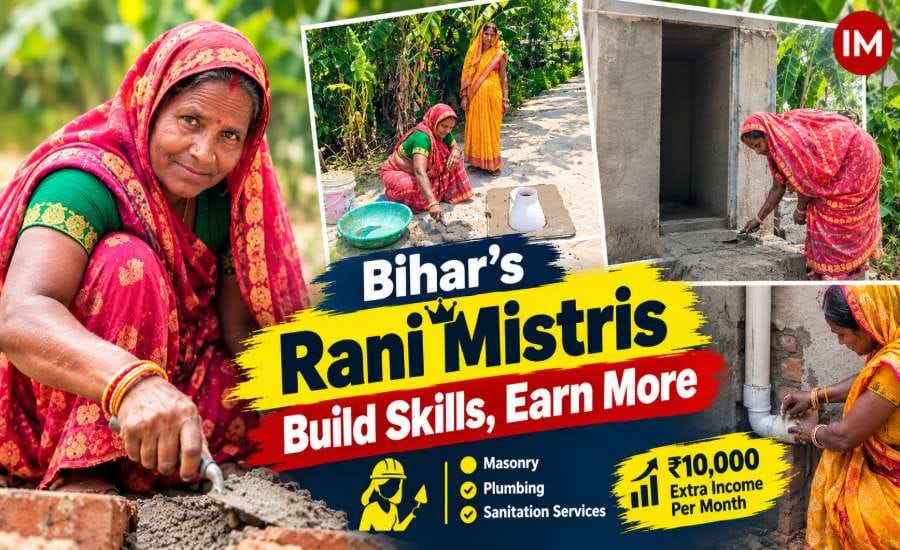
Patna: In a field long associated with men, women in Bihar are picking up masonry tools and building new livelihood opportunities for themselves. More than 250 Jeevika Didis are now working as trained ‘Rani Mistris’, providing masonry, plumbing, toilet repair and sanitation-related services across the state.
The initiative is helping rural women move beyond traditional livelihood activities and enter skilled work that has historically been considered a male-dominated domain. For many of these women, the work is also creating an additional monthly income of around ₹8,000 to ₹10,000.
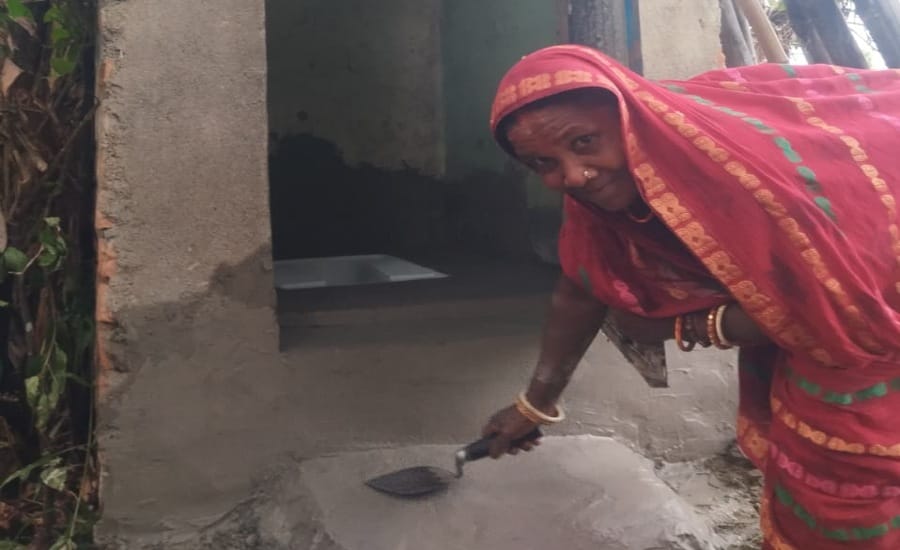
The women are working through Toilet Clinics, where their services range from technical toilet repairs and plumbing to retrofitting and small construction work.
From Toilet Clinics to ‘Rani Mistris’
The Toilet Clinic initiative was launched in Muzaffarpur in 2024 by the Rural Development Department with support from UNICEF. The programme has since expanded to different parts of Bihar.
Women associated with Jeevika groups received specialised training in construction and plumbing. They are now able to undertake technical tasks that require practical knowledge of sanitation systems and basic construction.
Their work includes fitting P-traps, drainage pipes and flush valves, ensuring the correct slope of pipes, making connections, using sealants properly and maintaining the gap between the toilet pan and P-trap.
They also handle ventilation-related work, repairs and other technical requirements associated with household toilets.
As their skills have grown, these women have increasingly come to be identified as Rani Mistris, reflecting their expanding role in construction and plumbing services.
Read Also: 85 Lakh+ NCD Screenings: Bihar Takes Early Disease Detection to the Doorstep
Taking on a Traditionally Male-Dominated Field
Masonry and construction work have traditionally been viewed as male occupations in rural communities. The entry of trained Jeevika women into this space is changing that perception.
These women are not limited to sanitation awareness or cleanliness-related activities. They are now involved in toilet connection repairs, septic tank improvements, retrofitting, plumbing and other small and medium construction-related tasks.
Their growing presence is also creating a local pool of trained workers who can provide services closer to rural households.
The initiative has attracted attention beyond Bihar as well. Trained Jeevika women have been involved in providing training to women in neighbouring states, including West Bengal and Jharkhand.
Skills Turning Into Additional Income
For the women involved, the programme has created a direct link between technical skills and income.
According to the Rural Development Department, individual Jeevika Didis working through these services can earn around ₹8,000–10,000 in additional income every month.
The earnings are giving rural women greater financial independence and allowing them to contribute more directly to household expenses.
For many families, this income can support children’s education, healthcare needs and other regular expenses. Independent earnings also give women a stronger role in household financial decisions.
The initiative therefore combines skill development with livelihood creation, allowing women to use a practical trade to generate income within their local communities.
From Toilet Clinics to Swachhata Clinics
The success of the Toilet Clinic model has prompted the department to expand its scope. The Rural Development Department plans to upgrade the initiative into Swachhata Clinics.
Under the expanded model, Jeevika women will not only maintain and repair toilets but will also take up maintenance-related work involving other sanitation assets.
These will include:
- Paddle rickshaws and e-rickshaws used for sanitation activities
- Waste management units
- Plastic waste management units
- Govardhan biogas plants
- Other sanitation-related fixed assets
This expansion could provide women with a wider range of technical services and create additional opportunities for local employment.
Training More Women Across Bihar
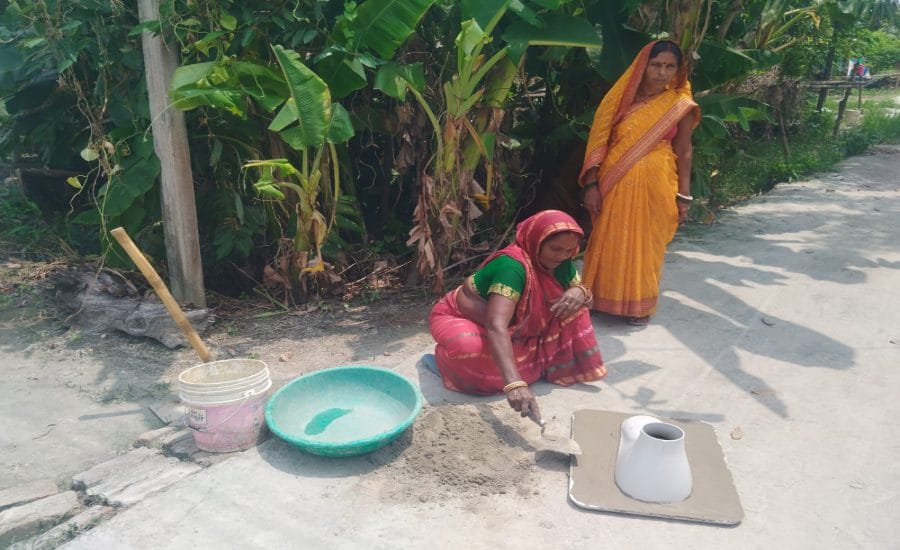
The success of the existing Rani Mistris is also encouraging more rural women to enter skilled trades.
Women in different districts are being trained in masonry and plumbing, creating a larger network of female workers capable of providing construction and sanitation services.
The model is also demonstrating that skill development can be linked directly to local demand. Instead of moving away from their villages in search of employment, trained women can provide services within their communities.
This can make technical services more accessible to rural households while creating livelihood opportunities for women at the same time.
Economic Independence Brings Wider Social Change
The Rural Development Department says the Rani Mistri model is opening new avenues for employment and economic empowerment among rural women.
Regular local work gives these women an independent source of income and strengthens their contribution to their families. Their growing involvement in technical occupations is also helping challenge established perceptions about which jobs women can perform.
Rural Development and Information & Public Relations Minister Shravan Kumar said the Jeevika initiative, whose foundation was laid under former Chief Minister Nitish Kumar, has helped women develop skills that they are now sharing with others.
He said skilled Jeevika women are not only undertaking construction and plumbing work themselves but are also training other women, helping them become economically self-reliant.
The emergence of Bihar’s Rani Mistris shows how a livelihood programme can evolve beyond conventional women-centric occupations. By combining technical training, sanitation services and income generation, the initiative is creating a new role for rural women in the local economy.
Read Also: From Vasbhumi Applications to Jamabandi Fixes: Bihar Steps Up Land Service Monitoring