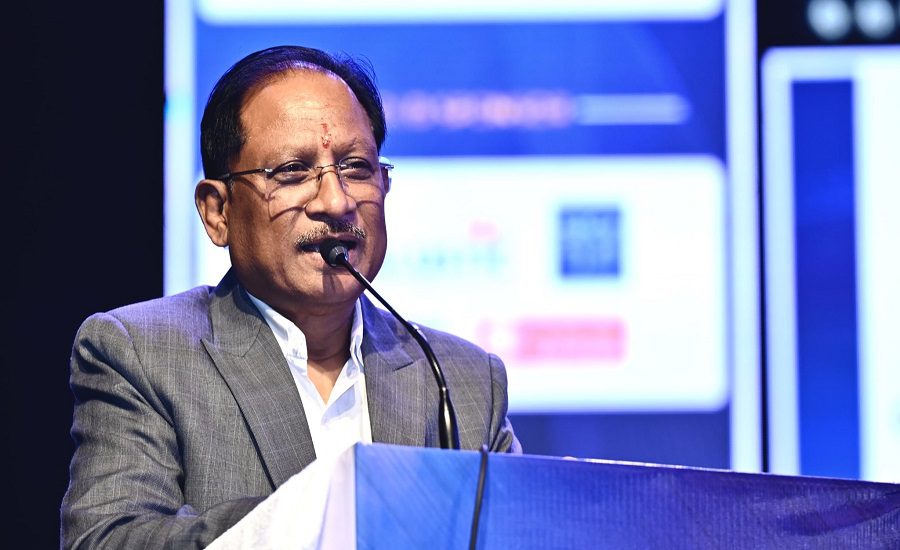
Raipur: Chhattisgarh is scripting a new chapter of inclusive and geographically balanced economic growth, moving beyond capital-centric development, Chief Minister Vishnu Deo Sai has said. In an interaction with Business Standard, the Chief Minister highlighted that since November 2024, the state has shaped 219 investment commitments worth ₹7.83 lakh crore, spread across 26 of Chhattisgarh’s 33 districts, reflecting growing investor confidence in the state’s decentralised development model.
Investment Beyond Raipur: Growth Across Districts
The Chief Minister emphasized that development in Chhattisgarh is no longer confined to Raipur or its surrounding areas. Instead, the state is witnessing a balanced distribution of industrial investments across multiple regions. Of the total investment commitments, around 33 percent are located in Raipur division, while 46 percent are spread across Bilaspur, Durg and Surguja divisions. Significantly, 21 percent of the investments have reached Bastar division, a region traditionally considered outside the mainstream of industrial development.
“This reflects rising investor confidence across a wide geographical spread of the state,” CM Sai said, underlining that Chhattisgarh’s growth story is inclusive by design.
Economic Logic Driving Location Choices
According to the Chief Minister, investors are increasingly selecting districts based on economic fundamentals rather than administrative proximity. Factors such as availability of land parcels, access to raw materials and ease of sourcing local labour are playing a decisive role. As a result, non-urban districts are now competing effectively with major cities in attracting investments.
Lower costs, expansion potential and the opportunity to build local industrial ecosystems from the ground up are making several districts attractive to industries, particularly in sectors such as agro and forest-based industries, food processing, textiles, healthcare and logistics.
Traditional and New-Age Industries Growing Together
CM Sai noted that Chhattisgarh is witnessing the parallel growth of traditional industries alongside new-age sectors. While power, steel, cement, food processing and healthcare remain strong pillars, emerging investments in AI data centres, semiconductors, electronics and IT services are also gaining momentum.
Healthcare companies are moving into Bastar, food processing units are expanding in agriculture-rich districts, and manufacturing clusters are developing beyond urban centres—indicating a structural transformation in the state’s industrial landscape.
Operational Projects Generating Local Employment
Highlighting tangible outcomes, the Chief Minister said that among the nine operational projects worth over ₹6,000 crore, many are located in districts such as Mungeli, Balodabazar, Rajnandgaon, Bemetara, Bilaspur and Balod. These projects are already generating employment for more than 5,500 people, primarily local youth.
Factories, hospitals, food processing units and service-sector enterprises are steadily coming up in these districts, contributing to job creation and local economic confidence.
₹2.10 Lakh Crore Pipeline Projects Across 24 Districts
The decentralisation trend is also evident in upcoming projects. Land has been identified for 109 projects across 24 districts, involving investments of ₹2.10 lakh crore. Once implemented, these projects are expected to generate employment for over 87,000 people, further strengthening district-level development.
Fast-Track Governance as the Key Enabler
Explaining the formula behind Chhattisgarh’s investment success, CM Sai said the core mantra is speed and simplicity in administrative processes. Reforms such as a one-click single-window clearance system, digital land management and automated land record mutations have significantly eased the process for investors.
“Whether an investor chooses Raipur, Bastar or Surguja, procedures are time-bound and transparent. This gives entrepreneurs the confidence to invest without hesitation,” he said.
A Blueprint for Inclusive Industrialisation
Since assuming office in December 2023, CM Vishnu Deo Sai has positioned Chhattisgarh as a case study for India’s development journey. Rather than relying on capital redistribution, he believes states should design policies that attract investment organically from the outset.
From Bastar to Bilaspur, Rajnandgaon to Raipur, Chhattisgarh is ensuring equitable capital flow across districts. “These are not headline-driven investment figures,” the Chief Minister said. “They are about creating jobs, building infrastructure where it is needed most, and restoring confidence at the district level.”
Towards Faster and Fairer Economic Growth
Chhattisgarh’s current investment landscape demonstrates that when governance prioritises ease of access along with regulatory standards, economic growth becomes not only faster but also more equitable. The state’s decentralised industrialisation model is increasingly being seen as a benchmark for balanced and sustainable development in India.
Read also: Chhattisgarh Govt Expands CM Rural Bus Service to Connect 1,000 Previously Unreachable Villages