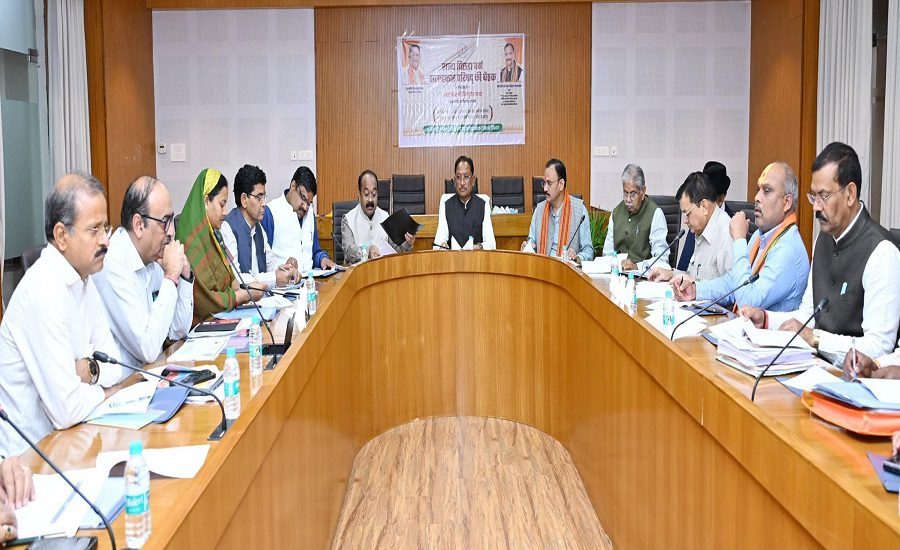
Raipur: In a significant step towards the development of backward communities, Chief Minister Vishnu Deo Sai chaired the State Backward Classes Advisory Council meeting today at the Assembly Committee Room. The meeting focused on various critical issues, including the establishment of a separate directorate for OBC welfare, construction of new hostels, scholarship disbursement, and other initiatives aimed at empowering backward classes across the state.
Focus on OBC Welfare and New Directorate Formation
During the meeting, Chief Minister Sai emphasized the government’s commitment to the holistic development of the backward class community. Highlighting the demographic significance, he noted that approximately 95 castes and subgroups of Other Backward Classes (OBCs) and minority communities reside in the state.
He stressed that the government is sensitive to the educational and socio-economic challenges faced by these communities and is dedicated to promoting their social, cultural, and overall development. To streamline efforts, the government has established the Backward Classes and Minority Development Department, which aims to accelerate welfare programs and implement innovative initiatives for these groups.
Development Boards and Commissions for Inclusive Growth
The state has also set up several development boards and commissions to ensure targeted growth. These include:
- Other Backward Classes Commission
- Backward Classes Welfare Commission
- Iron Crafts Development Board
- Rajak Community Development Board
- Oil Extraction (Telghani) Development Board
These institutions are tasked with addressing community-specific issues and integrating backward classes into the mainstream of development.
Educational Initiatives: Hostels, Scholarships, and Training Programs
Education and skill development for OBC students were a major highlight of the discussion. Key initiatives include:
- Construction of new hostel buildings and residential school institutions for educational advancement.
- Post-matric scholarships disbursed directly into students’ bank accounts via an online portal, with a budget allocation of ₹150 crore.
- Continuous monitoring and innovative systems to ensure scholarship approvals and payments within the same year.
- Financial assistance for competitive exam training, covering streams like Engineering, Medical, UPSC, CGPSC, SSC, Railways, and Banking.
- Support for academic excursions to promote understanding of Chhattisgarh’s geography, natural resources, and cultural heritage.
Chief Minister Education Support Scheme
In addition to these initiatives, the government has introduced the Chief Minister Education Support Scheme in the current budget. This program provides financial assistance to students who are unable to secure hostel accommodation, ensuring uninterrupted academic progress. Currently, 55 departmental hostels for Other Backward Classes are approved, and six new post-matric hostels have been sanctioned in Raigarh, Manendragarh-Chirmiri-Bharatpur, Dhamtari, Raipur, and Jashpur districts.
Participation of State Leaders and Officials
The meeting saw active participation from key state leaders and officials, including:
- Deputy Chief Minister Arun Saw
- Backward Classes & Minority Development Minister Shyam Bihari Jaiswal
- Revenue Minister Tank Ram Verma
- Women & Child Development Minister Laxmi Rajwarde
- School Education Minister Gajendra Yadav
- Finance Minister O.P. Chaudhary
- Chief Secretary Vikasheel and Principal Secretary to Chief Minister Subodh Singh**
Several representatives and officials shared valuable suggestions, reinforcing the government’s collaborative approach toward backward class development.
Commitment to Inclusive Development
Chief Minister Vishnu Deo Sai concluded by reaffirming the government’s resolve to promote the socio-economic and educational growth of backward communities. Through dedicated departments, development boards, and innovative educational programs, the state aims to ensure that OBCs and minority communities are fully integrated into Chhattisgarh’s path of inclusive growth.