New Delhi: Chhattisgarh has emerged as the top-performing state in the country in the third phase of the Ministry of Jal Shakti’s ‘Jal Sanchay Jan Bhagidari’ (JSJB) campaign, showcasing a public-participation-driven model focused on harvesting rainwater, recharging groundwater and strengthening water security for future generations.
The state has also achieved another significant distinction, with five Chhattisgarh districts—Surajpur, Mahasamund, Balod, Baloda Bazar-Bhatapara and Kabirdham—ranking among the country’s top 10 districtsin water conservation.
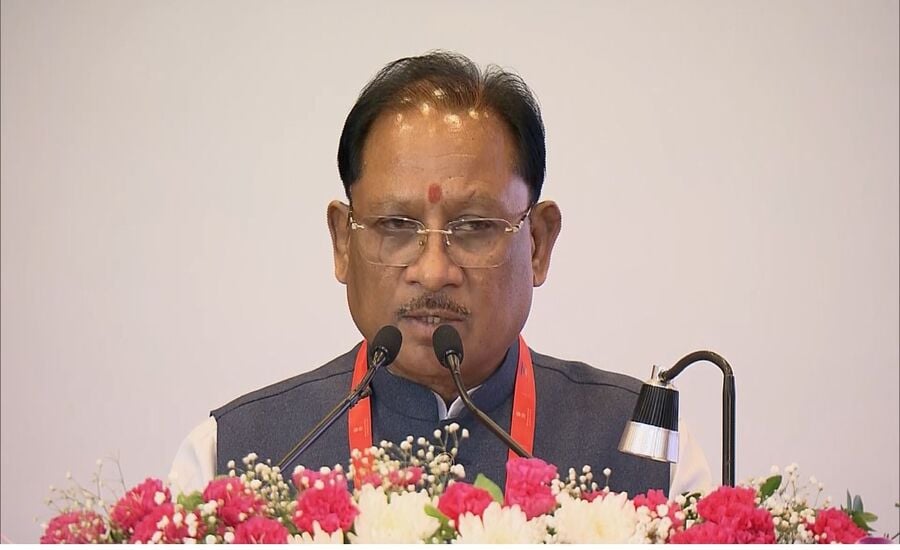
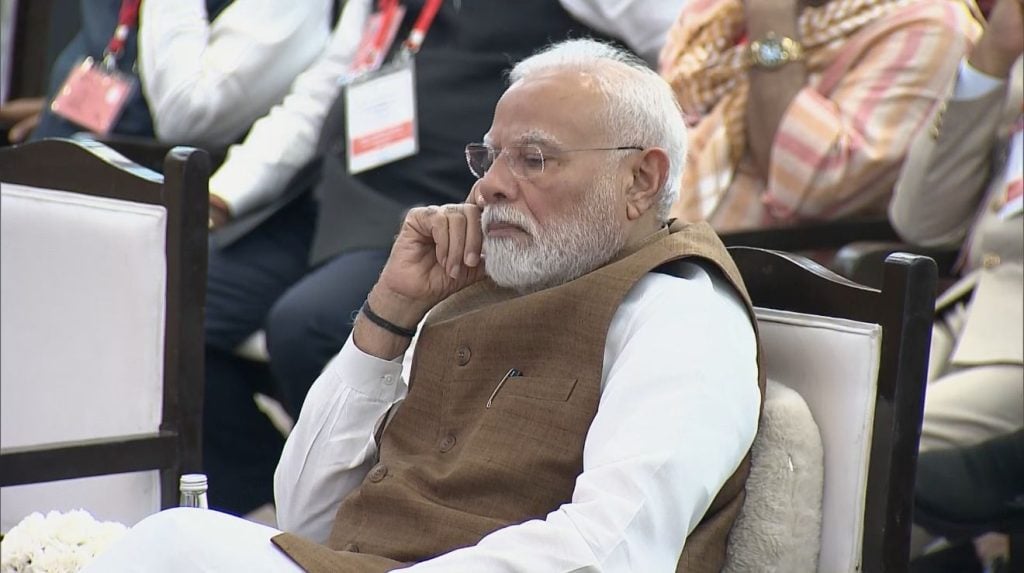
Chief Minister Vishnu Deo Sai presented Chhattisgarh’s public-participation-based water conservation model on a national platform in the presence of Prime Minister Narendra Modi.
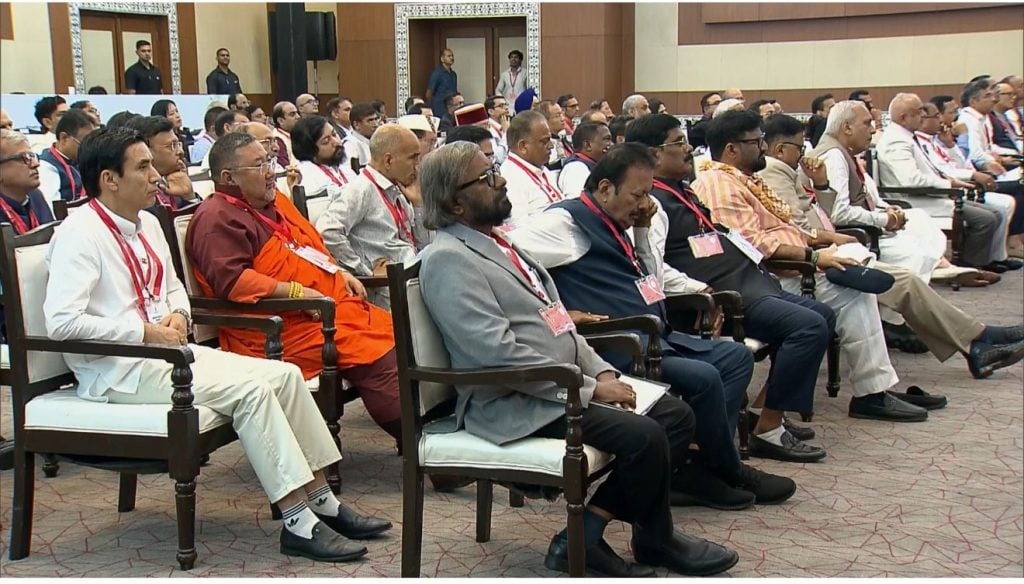
The presentation was made during a departmental summit organised by the Ministry of Jal Shakti at Sushma Swaraj Bhawan in New Delhi. During the summit’s ‘Catch the Rain’ session, Deputy Chief Minister Arun Sao detailed the initiatives being implemented in Chhattisgarh for rainwater harvesting, groundwater recharge and conservation of drinking water sources.
Union Minister for Jal Shakti C.R. Patil, along with Water Resources Ministers and senior officials from various states, also attended the summit.
Water Conservation Turned Into a Mass Movement
Chief Minister Vishnu Deo Sai said Chhattisgarh has moved beyond treating water conservation merely as a government programme involving the construction of water structures.
The state has actively involved farmers, Gram Panchayats, Jal Sakhis, Jal Mitras and local communities, turning water conservation into a broader mass movement.
Sai emphasised that his own background in a farming family has helped him understand the importance of water to agriculture and rural life. He said he has personally engaged in farming, including ploughing fields, in his native village, Bagiya.
For farmers, he noted, water is not simply a natural resource but is directly connected with their crops, families, livelihoods and future. This understanding has led Chhattisgarh to place farmers and villages at the centre of its water conservation initiatives.
Although Chhattisgarh accounts for approximately four per cent of India’s total geographical area, the state has consistently performed strongly in the Jal Sanchay Jan Bhagidari campaign. According to the state, its performance reflects not only the number of water structures created but also the growing public consciousness and participation around water conservation.
Koriya’s ‘5 Percent Model’: Farmers Voluntarily Give Land for Water Conservation
One of the key initiatives highlighted by Chief Minister Sai at the conference was the ‘5 Percent Model’ originating in Koriya district.
Under the model, farmers voluntarily dedicate around five per cent of their agricultural land to rainwater harvesting and groundwater recharge.
Water conservation structures are created on this portion of land to capture rainwater and prevent it from flowing away from agricultural fields. The retained water is then allowed to gradually seep into the ground, facilitating groundwater recharge.
The model is significant because it positions farmers not merely as beneficiaries of water conservation schemes but as active participants in their implementation.
Farmers provide the land, while panchayats and local communities extend support. Various government departments and schemes coordinate to construct the required water structures.
The campaign also incorporates geo-tagging of water structures, regular monitoring and periodic progress reviews. Jal Sakhis, Jal Mitras, farmers and panchayat representatives are playing an active role in taking the initiative forward at the village level.
By retaining rainwater within agricultural fields, the model is expected to promote groundwater recharge and improve water availability for irrigation. Over time, the initiative could help reduce agriculture’s dependence on rainfall and contribute to greater water security.
Chhattisgarh’s Performance Across JSJB Phases
Chhattisgarh has maintained a strong performance across all three phases of the Jal Sanchay Jan Bhagidari campaign.
The state ranked second nationally in both JSJB 1.0 and JSJB 2.0, before moving to the top position in the third phase.
During JSJB 1.0, Chhattisgarh created 4,05,561 water conservation structures, securing second position nationally.
In JSJB 2.0, a total of 24,07,456 water conservation structures were recorded in the state. Of these, work on 23,07,768 structures had been completed. Chhattisgarh again ranked second in the country.
The state has now secured the first position in JSJB 3.0. During the third phase, 79,775 water conservation structures were recorded in Chhattisgarh, with work completed on 77,719 structures.
The overall objective of these interventions is to reduce rainwater runoff, harvest rainwater locally and facilitate maximum groundwater recharge.
Five Chhattisgarh Districts Among Country’s Top 10
Chhattisgarh’s performance has also been reflected at the district level.
Surajpur, Mahasamund, Balod, Baloda Bazar-Bhatapara and Kabirdham have secured places among the country’s top 10 districts in water conservation.
In these districts, initiatives involving rainwater harvesting and groundwater recharge have been implemented at the village and panchayat levels with active participation from local communities.
Along with constructing water conservation structures, the state has focused on adapting interventions to local conditions and requirements.
Chief Minister Sai said the achievement demonstrates how government programmes can become mass movements when they are supported by active participation from society.
Water-Scarce Blocks Decline From 26 to 19
The state has also reported improvement in its groundwater situation.
The number of water-scarce blocks in Chhattisgarh has declined from 26 to 19. In addition, five blocks currently categorised as ‘critical’ are expected to move into the ‘normal’ category.
To further improve groundwater conditions, Chhattisgarh is focusing on constructing water harvesting structures, conserving existing water sources, promoting groundwater recharge, mapping water structures and strengthening regular monitoring at the local level.
‘Catch the Rain Where It Falls’ Being Implemented Locally
Chhattisgarh has sought to translate Prime Minister Narendra Modi’s ‘Catch the Rain’ message into local water conservation action.
Given the geographical diversity of the state, water harvesting and groundwater recharge structures are being developed according to the specific requirements of different regions, including local rainfall patterns and water availability.
The state aims to retain as much rainwater as possible within village and farm boundaries.
According to the state, this approach can strengthen groundwater recharge while improving water availability for irrigation, drinking water and other local needs.
Sai Calls for State-Specific ‘Catch the Rain’ Plans
At the national conference, Chief Minister Sai also proposed several measures to strengthen the nationwide water conservation campaign.
He suggested that every state should prepare its own ‘Catch the Rain’ plan, taking into account its geographical conditions, rainfall patterns, groundwater status and local requirements.
According to the Chief Minister, state-specific plans would allow governments to establish clear targets and strategies suited to their respective water conditions.
Sai also suggested introducing ‘State Water Awards’ to encourage states performing well in water conservation.
He recommended strengthening the mapping of water structures through BISAG-N and conducting quarterly reviews of campaign progress under the chairmanship of the Chief Secretary.
The Chief Minister said the combination of technology, regular monitoring and public participation could make water conservation efforts more result-oriented.
Water Conservation Can Strengthen Agriculture and Rural Economy
The national campaign has set a target of constructing 20 million, or two crore, new water structures across the country by May 31, 2027.
Chhattisgarh’s public-participation model could contribute to achieving this national target by demonstrating how communities can become active stakeholders in water conservation.
Retaining rainwater in farms and villages and facilitating groundwater recharge can improve groundwater levels and increase water availability for irrigation. This, in turn, can directly support agriculture and reduce farmers’ dependence on the monsoon.
Improved water availability can also strengthen agriculture-related livelihoods and the wider rural economy.
Better availability of drinking water in villages could additionally reduce the time and labour spent by families, particularly women, in fetching water.
Chhattisgarh’s model therefore places water conservation beyond infrastructure creation, presenting it as a shared responsibility involving the government, farmers, panchayats and local communities.
The state’s approach of dedicating even a small portion of agricultural land to water retention has the potential to become the foundation for a wider effort towards long-term water security.
Chhattisgarh Ready to Share Water Conservation Model
Chief Minister Sai said Chhattisgarh is ready to share its experiences, innovations and successful water conservation models with other states.
The state’s rise from second position in the first two phases of the Jal Sanchay Jan Bhagidari campaign to the number one position in JSJB 3.0 has highlighted its emphasis on community participation, localised interventions and technology-backed monitoring.
The combination of farmer participation, panchayat involvement, geo-tagging, groundwater recharge and local monitoring forms the core of Chhattisgarh’s approach to harvesting rainwater and improving water security.
Senior officials from relevant departments, including Chief Minister’s Principal Secretary Subodh Kumar Singh and Water Resources Department Secretary Rajesh Sukumar Toppo, were also present at the summit.