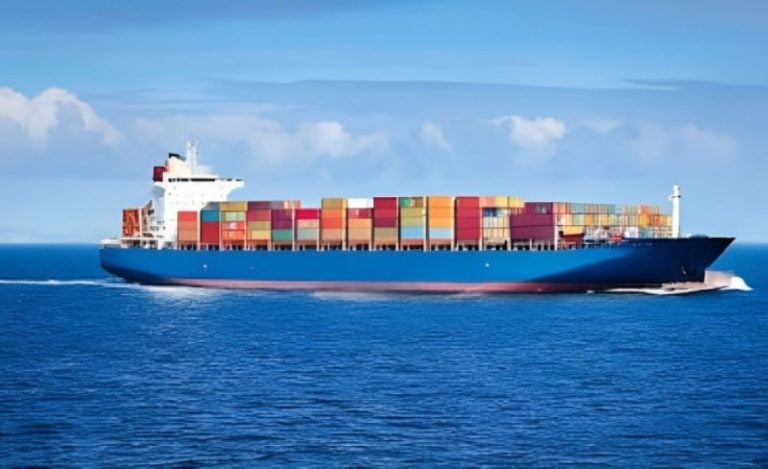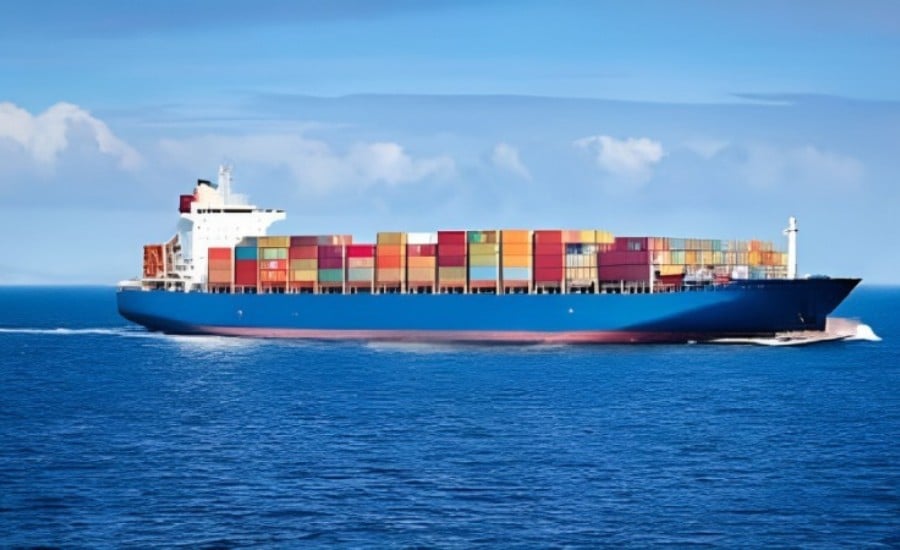
New Delhi: The Union Cabinet, chaired by Prime Minister Narendra Modi, has approved the ₹10,000-crore Container Manufacturing Promotion Scheme (CMPS) to establish India as a globally competitive manufacturing hub for shipping containers and strengthen the country’s maritime logistics supply chain.
Announced in the Union Budget 2026–27, the scheme will run from the financial year 2027–28 to 2039–40. It provides for three years of manufacturing facility development, followed by ten years of production support.
The initiative aims to expand India’s annual container manufacturing capacity from approximately 70,000 twenty-foot equivalent units (TEUs) to 7.5 lakh TEUs, a nearly tenfold increase. It will support both the establishment of new factories and the expansion of existing manufacturing facilities.
Union Minister for Ports, Shipping and Waterways Sarbananda Sonowal welcomed the decision, crediting the Prime Minister’s Make in India initiative with encouraging domestic manufacturers to scale up production.
“I express my heartfelt gratitude to Prime Minister Narendra Modi for his visionary leadership. His Make in India push is giving our container manufacturers the confidence to build at scale, and this scheme is a strong step to reduce import dependence,” Sonowal said.
₹10,000 Crore Scheme Divided Across Four Support Components
The CMPS combines financial assistance for manufacturing, operational support, testing infrastructure and scheme administration. The objective is to help Indian manufacturers compete with imported containers while developing domestic production capabilities.
Read Also: Adani Green’s Khavda Project: How India Is Building the World’s Largest Renewable Energy Plant
The scheme’s financial allocation is divided as follows:
- Operational expenditure assistance — ₹8,891 crore: Support for eligible containers manufactured to global shipping standards and sold by participating manufacturers. The assistance is intended to help bridge the cost gap between domestic production and imports.
- Interest subvention — ₹859 crore: Annual interest support of 3% on eligible term loans for qualifying greenfield manufacturing facilities and brownfield expansions.
- Testing and certification — ₹150 crore: Funding for common testing facilities, including dynamic longitudinal impact testing, to reduce reliance on overseas certification infrastructure.
- Scheme management — ₹100 crore: Support for administration, monitoring and capacity-building activities.
Together, these components account for the scheme’s total outlay of ₹10,000 crore.
Financial Incentives for New Plants and Existing Manufacturers
The scheme provides interest subvention to eligible manufacturers undertaking new investments or expanding existing production facilities.
The prescribed minimum annual capacities for interest assistance are:
- Greenfield projects: At least 1,00,000 TEUs of annual manufacturing capacity.
- Brownfield expansions: At least 25,000 TEUs of additional annual capacity, as specified under the scheme.
Eligible projects can receive interest assistance at 3% annually on qualifying term loans, subject to the applicable guidelines.
The government also plans to provide land-leasing support at major ports at 25% of the notified rate, helping manufacturers explore locations with access to maritime transport and logistics infrastructure.
An Inter-Ministerial Steering Committee chaired by the Secretary of the Ministry of Ports, Shipping and Waterways will oversee the scheme’s implementation framework, approve guidelines and sanction assistance.
Domestic Content Requirement to Rise From 70% to 90%
A key feature of the programme is its emphasis on strengthening the domestic supply chain for container manufacturing.
Under the scheme, the domestic content requirement is to increase from 70% to 90%. The higher threshold is intended to encourage manufacturers to source more materials and components from Indian suppliers.
Potential beneficiaries across the supporting industrial ecosystem include manufacturers of:
- Specialised steel and fabricated components.
- Corner castings used in shipping containers.
- Wooden flooring and frames.
- Industrial paints and protective coatings.
- Other components required for container production.
Developing these supporting industries could reduce dependence on imported inputs and create opportunities for domestic suppliers to participate in global maritime manufacturing networks.
The proposed testing and certification infrastructure is also expected to help manufacturers meet international shipping standards without depending as heavily on overseas facilities.
India Targets 7.5 Lakh TEUs as Container Demand Expands
India’s maritime trade relies heavily on shipping containers, but domestic manufacturing capacity currently remains limited compared with the scale of container demand.
According to the government, India’s container manufacturing capacity stands at approximately 70,000 TEUs annually. The new scheme seeks to raise this figure to 7.5 lakh TEUs, improving the availability of domestically manufactured containers.
The government has also highlighted the projected growth in container traffic. Under the Maritime Amrit Kaal Vision, India’s container traffic is expected to increase from approximately 24 million TEUs in 2024 to 175 million TEUs by 2047.
The expansion of manufacturing capacity is intended to support this long-term growth by creating a stronger domestic base for producing containers used in international trade.
Bharat Container Shipping Line and New Ports Could Drive Demand
The government expects demand for Indian-made containers to come from several sources, including replacement of the existing global container fleet, the Bharat Container Shipping Line and the development of new ports.
Major port projects such as Vadhavan Port in Maharashtra and Galathea Bay in Great Nicobar Island are among the infrastructure developments cited in the broader maritime expansion agenda.
A larger domestic manufacturing base could support shipping companies, exporters and port operators by improving access to containers and strengthening the links between manufacturing and maritime logistics.
However, the actual scale of demand will depend on the pace of port development, shipping fleet requirements and the ability of Indian manufacturers to meet quality, cost and delivery expectations.
Scheme Targets More Than 50,000 Indirect Jobs
The Container Manufacturing Promotion Scheme is expected to generate approximately 3,000 direct jobs and more than 50,000 indirect employment opportunities.
Direct employment is expected to arise from the establishment and operation of manufacturing facilities, while indirect opportunities could emerge across steel production, component manufacturing, transport, logistics and other supporting industries.
The government estimates that the scheme could generate around ₹75,000 crore in economic output by FY 2039–40, exceeding seven times the financial support provided under the programme.
These estimates reflect the expected economic contribution of the manufacturing ecosystem and associated supply chains; the actual outcomes will depend on investment, production growth and market demand.
Sonowal Links Container Manufacturing to Maritime Self-Reliance
Welcoming the Cabinet decision, Sonowal emphasised the importance of domestic container production for India’s trade and shipping infrastructure.
“Containers are the backbone of our trade. By making them in India, we strengthen the maritime logistics supply chain on which our ports, our exporters and our shipping lines depend, and we take another step towards a self-reliant India and the goals of Maritime Amrit Kaal Vision 2047,” he said.
The scheme forms part of the government’s broader effort to strengthen domestic manufacturing under the Make in India initiative while supporting the country’s long-term maritime development goals.
With implementation scheduled to begin in FY 2027–28, the next steps will involve finalising operational guidelines, establishing the required manufacturing and testing infrastructure, and enabling eligible companies to access financial assistance.
The programme’s long-term objective is to develop a domestic container industry capable of serving India’s growing trade requirements while creating manufacturing jobs and reducing reliance on imports.
Read Also: Sonowal Sets Out Plan to Add 100 Ships to India’s Fleet, Cut $75 Billion Foreign Freight Bill