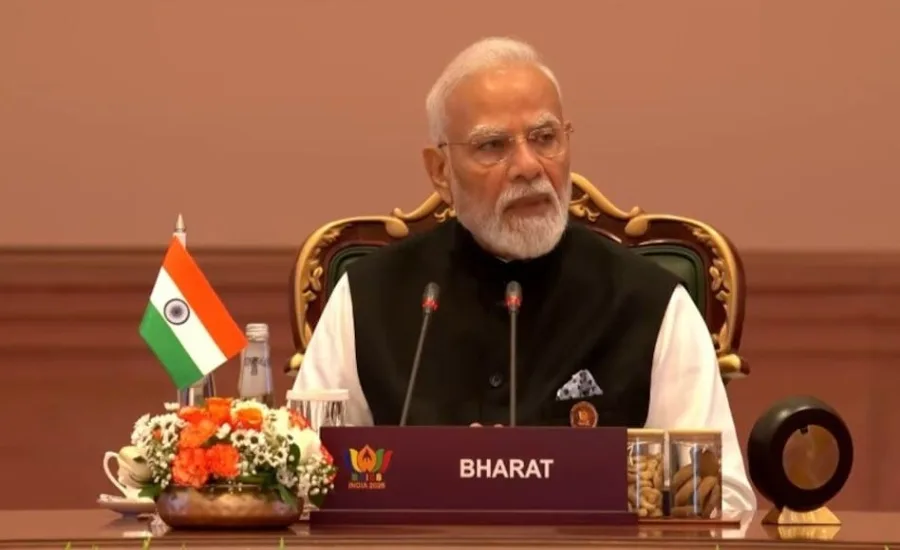
New Delhi: The BRICS delhi declaration 2026 was adopted unanimously at the BRICS Summit in New Delhi. Prime Minister Narendra Modi said the declaration reflects the shared vision of BRICS nations and stressed that the next step is to convert commitments into real outcomes.
The declaration focuses on peace, multilateral cooperation, global governance reforms, trade, technology, and strengthening the voice of the Global South.
The announcement came during the closing session of the 18th BRICS Summit held at Bharat Mandapam in New Delhi. Leaders of BRICS member countries agreed on a common roadmap despite differences on several international issues.
Details of BRICS Delhi Declaration 2026
Prime Minister Narendra Modi said the world can no longer be governed through outdated institutions alone. He emphasized that global institutions must become more representative, accountable, and responsive to modern challenges.
Read also: Inside Russia’s Massive Defence Proposal For India During BRICS 2026
He stated that BRICS countries have successfully reached consensus on the New Delhi Declaration and that member nations must now ensure its decisions are implemented effectively.
According to Modi, the declaration reflects discussions held during the summit and outlines priorities for future BRICS cooperation.
Key Highlights Of The BRICS Delhi Declaration 2026
BRICS leaders reiterated that global disputes should be resolved through dialogue, diplomacy, consultation, and peaceful means. The declaration supports efforts to reduce tensions and prevent conflicts across different regions.
Commitment To Multilateralism
The member countries backed a stronger multilateral world order where decisions are taken through cooperation and consensus rather than unilateral actions.
Reforms In Global Institutions
One of the major themes of the declaration is reforming international institutions such as the United Nations, World Bank, IMF, and WTO. BRICS leaders argued that these institutions should better reflect current global realities and provide greater representation to developing countries.
Greater Voice For The Global South
The declaration highlights the need to strengthen the participation of emerging and developing economies in global decision-making processes. Modi emphasized that the Global South should have a larger role in shaping international policies.
BRICS Position On Trade And Economic Issues
The BRICS countries expressed concern about unilateral trade restrictions and tariff-related measures that may affect global trade flows. The bloc stressed the importance of following international trade rules and maintaining a fair trading system.
Support For Economic Cooperation
Member nations reaffirmed their commitment to strengthening trade, investment, energy cooperation, financial collaboration, and sustainable development.
The leaders also discussed improving payment systems, boosting connectivity, and increasing economic cooperation among BRICS members.
BRICS Delhi Declaration 2026: Technology And Future Governance
PM Modi highlighted the importance of involving developing countries in creating future technology standards and governance frameworks. He said nations that use emerging technologies should also have a voice in shaping the rules governing them.
Need For Institutional Modernization
The Prime Minister argued that international organizations must adapt to changing global realities. According to him, reforms can no longer be delayed if global institutions want to remain effective and credible.
BRICS At 20 Years: Special Commemoration
The summit also marked 20 years of BRICS cooperation. To commemorate the milestone, a special postage stamp was issued. Leaders reflected on the bloc’s journey and discussed ways to deepen cooperation in the coming years.
BRICS today represents a significant share of the world’s population, economy, and international trade, making it one of the most influential multilateral groupings globally.
Why BRICS Delhi Declaration 2026 Matters
The Delhi Declaration is significant because it demonstrates that BRICS nations were able to reach consensus despite geopolitical tensions and differing national interests. The agreement strengthens the bloc’s position on global governance reforms, economic cooperation, and peace initiatives.
The declaration also reinforces India’s effort to place Global South priorities at the center of international discussions and to push for reforms in global institutions.
Read also: How PM Modi Empowered The Military Before Operation Sindoor, Ex-CDS Reveals Key Details
FAQs
The BRICS Delhi Declaration 2026 is a joint statement adopted unanimously by BRICS member countries during the New Delhi Summit. It outlines common positions on peace, trade, global governance reforms, and international cooperation.
PM Modi said that the declaration reflects the shared vision of BRICS nations and that member countries must now convert its commitments and resolutions into practical results.
The declaration is important because it presents a common BRICS position on global issues, supports reforms in international institutions, and strengthens the role of developing nations in global decision-making.