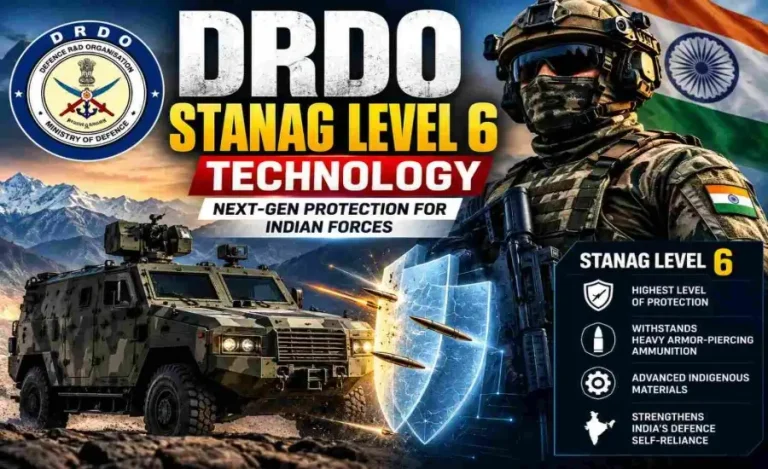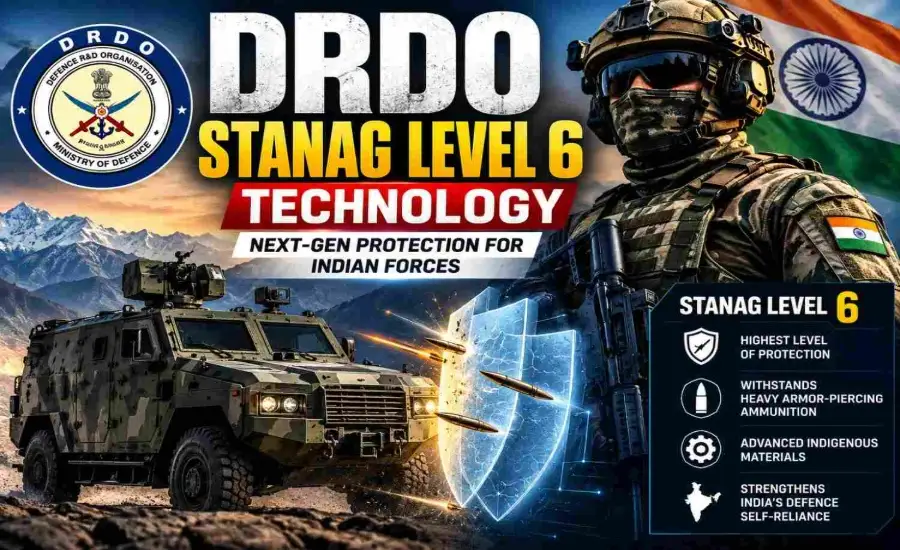
New Delhi: India’s defence manufacturing sector has received a major boost as the Defence Research and Development Organisation (DRDO) offers its STANAG Level 6 30mm armour-piercing (AP) protection technology to Indian industries. The technology is designed for military vehicles that need strong protection without adding excessive weight.
Developed by DRDO’s Research & Development Establishment (Engineers), or R&DE(E), the technology is listed in DRDO’s official Transfer of Technology offerings. The initiative could help Indian manufacturers develop advanced armour solutions for future combat vehicles and strengthen the country’s defence manufacturing capabilities.
Details of DRDO STANAG Level 6 Technology
DRDO is making its advanced armour-panel manufacturing technology available to Indian companies through its Transfer of Technology (ToT) programme.
According to the organisation’s official technology-transfer listing, the technology is called Manufacturing Technology for STANAG-6 (30mm AP) Armour Panels and is associated with R&DE(E).
This move creates an opportunity for eligible Indian manufacturers to explore the production of advanced armour panels for military applications. The initiative also supports India’s broader goal of developing defence equipment within the country and reducing dependence on imported technologies.
What Is DRDO’s STANAG Level 6 Armour Technology
STANAG 4569 is a NATO standard used to classify protection levels for military vehicles against specified battlefield threats.
Its protection requirements cover different types of threats, including ballistic attacks and mine blasts. The exact protection depends on the relevant protection level and test conditions.
The Level 6 designation in this technology refers to a high level of ballistic protection against specified threats, including 30mm armour-piercing ammunition.
Such protection is important for military vehicles that may operate in dangerous combat environments. However, the actual protection offered by an armour system depends on its design, the ammunition used in testing, the impact conditions and the vehicle’s overall structure.
Why Lightweight Armour Is Important For Military Vehicles
Military vehicles need strong armour to protect soldiers from enemy fire. However, adding more armour can significantly increase a vehicle’s weight.
A heavier vehicle may face challenges with mobility, fuel consumption, transportability and carrying additional equipment.
Lightweight armour technology aims to balance protection and weight. This can help vehicle designers make better use of the available payload capacity.
For example, military vehicles may need to carry communication systems, sensors, electronic equipment and other mission-related systems in addition to their protective armour.
Reducing the weight of armour, where technically possible, can help engineers manage these requirements without unnecessarily increasing the vehicle’s overall weight.
How DRDO STANAG Level 6 Technology Could Help India’s Defence Industry
Making advanced armour technology available for transfer to Indian industry could support the development of domestic manufacturing capabilities.
Indian companies that meet the relevant technical and licensing requirements may be able to explore manufacturing opportunities under DRDO’s technology-transfer framework.
Local production can help build specialised manufacturing skills, encourage collaboration between defence laboratories and private companies, and support domestic supply chains.
It may also create opportunities for Indian manufacturers to contribute to future military vehicle programmes. However, the commercial impact will depend on factors such as technology-transfer terms, industrial readiness, production costs, testing requirements and actual demand from defence customers.
Possible Applications In Future Combat Vehicles
Advanced lightweight armour could be relevant to different types of military vehicles, depending on the protection requirements and the final design. Potential areas of application include:
Light Tanks
Light tanks require a careful balance between protection, firepower and mobility. Lightweight armour may help designers manage this balance while meeting the required protection standards.
Infantry Combat Vehicles
Infantry combat vehicles carry soldiers and support operations on the battlefield. Their designs must consider crew protection, mobility, payload and mission equipment.
Advanced armour technology could be useful where the system meets the vehicle’s specific operational requirements.
Wheeled And Tracked Military Platforms
Both wheeled and tracked vehicles require protection against battlefield threats. However, the armour system must be suitable for the vehicle’s structure, weight limits and intended role.
The availability of manufacturing technology does not automatically confirm its integration into any particular vehicle. Specific applications would require further engineering assessment and qualification.
Read also: This Defence Technology Could Make Indian Armoured Vehicles Faster And Safer
FAQs
STANAG 4569 is a NATO standard that classifies protection for military vehicles against specified threats. Level 6 indicates a high level of ballistic protection under the standard’s applicable test conditions.
DRDO is offering manufacturing technology for STANAG Level 6 armour panels designed to provide protection against specified 30mm armour-piercing threats. The technology is associated with its Research & Development Establishment (Engineers).
Indian manufacturers can explore the technology through DRDO’s Transfer of Technology programme. Actual manufacturing rights, eligibility, licensing conditions and production requirements depend on the applicable technology-transfer arrangements.