New Delhi: India’s possible acquisition of the Russian Su-57 stealth fighter has become a major defence discussion as China expands its fifth-generation fighter fleet and Pakistan explores advanced Chinese aircraft.
Russian defence commentators believe that purchasing the Su-57 could help the Indian Air Force (IAF) address its growing air combat challenges while its indigenous Advanced Medium Combat Aircraft (AMCA) programme is still under development.
The proposal comes at a time when India is working to strengthen its fighter fleet, improve combat readiness and reduce the growing technological gap with its regional rivals.
Indian Air Force Faces A Growing Fighter Squadron Shortage
The Indian Air Force is facing a serious shortage of fighter squadrons. It currently operates around 29 fighter squadrons against an authorised strength of 42.
Read also: Why Russia Is Suddenly Offering Its Su-57 Stealth Fighter To India Again
This shortage is a major concern because India must maintain strong air defence capabilities along its borders with China and Pakistan.
The retirement of older fighter aircraft has increased the pressure on the IAF to induct new combat aircraft quickly. Although India is expanding its indigenous fighter production, replacing older aircraft and restoring squadron strength will take considerable time.
China’s J-20 And J-35 Fighters Increase Regional Concerns
China is rapidly modernising its military aviation capabilities. Its Chengdu J-20 is a fifth-generation stealth fighter designed for air superiority and long-range combat missions.
Beijing is also developing the Shenyang J-35 family of stealth fighters, including a naval version designed for aircraft carrier operations.
These aircraft could improve China’s ability to conduct advanced air operations in the Indo-Pacific region. Meanwhile, Pakistan is reportedly pursuing China’s J-35 stealth fighter. If this acquisition moves forward, it could introduce another advanced combat platform into South Asia.
However, the reported Pakistan-J-35 acquisition should be distinguished from a confirmed operational induction. For India, these developments highlight the importance of strengthening its air combat capabilities and maintaining technological superiority.
Russian Media Suggests Fast-Track Su-57 Fighter Jet Acquisition
Russian defence commentators have suggested that India should consider purchasing the Su-57E, the export version of Russia’s fifth-generation stealth fighter.
According to the proposal discussed in the defence report, India could initially acquire around 50 Su-57E aircraft. The proposal also suggests a much larger licensed production programme in India, potentially involving 450 aircraft. However, these numbers represent a Russian media proposal, not an approved Indian government procurement plan.
Russian commentators argue that the Su-57 could provide India with an advanced fighter capability while its domestic fifth-generation aircraft remains under development. They also believe that cooperation with Russia could help India access advanced aviation technologies and strengthen its domestic aerospace manufacturing industry.
Why Russia Believes The Su-57 Fighter Jet Could Benefit India
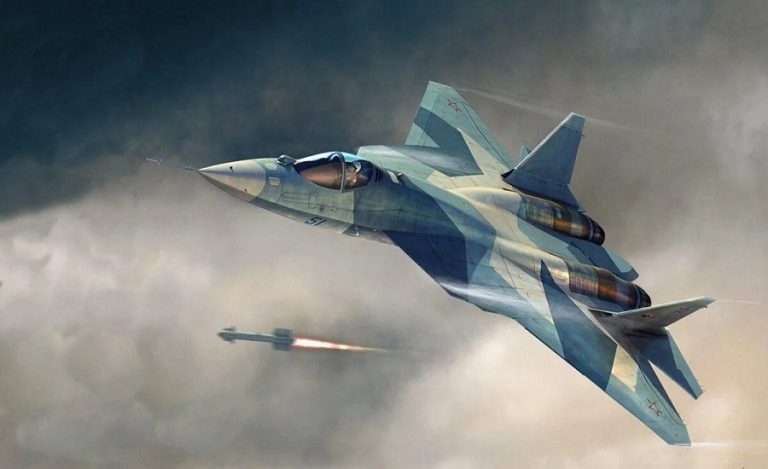
The Su-57 is designed as a fifth-generation multirole stealth fighter. It combines reduced radar visibility, advanced sensors, modern avionics and the ability to carry different types of weapons.
Russia believes the aircraft could help India respond to the growing presence of Chinese stealth fighters. Another argument involves India’s existing experience with Russian aircraft.
The Indian Air Force already operates the Su-30MKI, which was developed through cooperation between India and Russia.
According to Russian commentators, this existing relationship could provide some advantages in maintenance, technical support and training. However, introducing a completely new fighter would still require major investment in infrastructure, weapons integration, pilot training and maintenance systems.
The aircraft’s actual performance, operating costs and technology transfer arrangements would also need careful evaluation.
AMCA Programme Still Has A Long Development Journey
India is developing its own fifth-generation stealth fighter under the Advanced Medium Combat Aircraft programme.
The AMCA is being developed by the Aeronautical Development Agency (ADA) under India’s indigenous defence manufacturing initiative.
In May 2025, the Ministry of Defence approved an industry-partnership model for the programme. It allows eligible Indian public and private companies to participate in its development.
In May 2026, the government also laid the foundation stone for an AMCA Core Integration and Flight Testing Centre in Andhra Pradesh.
The programme is an important step towards India’s long-term goal of developing advanced fighter aircraft using domestic technology. However, designing, testing and producing a fifth-generation fighter is a complex process. The IAF may need other fighter aircraft to maintain its combat strength while the AMCA moves towards operational readiness.
Read also: What is VAYU Vision, How Ashutosh Dixit Plans To Transform Indian Air Force
FAQs
India needs advanced stealth fighters to address emerging aerial threats, including China’s J-20 and J-35 programmes. Such aircraft can offer reduced radar visibility, advanced sensors and improved combat capabilities.
India has not officially approved the purchase of the Russian Su-57. In September 2026, Defence Secretary R. K. Singh confirmed that no decision had been taken on acquiring a foreign fifth-generation fighter.
India’s AMCA programme is under development through an industry-partnership model. The government is building specialised testing infrastructure, but the aircraft must complete development, testing and certification before entering operational service.