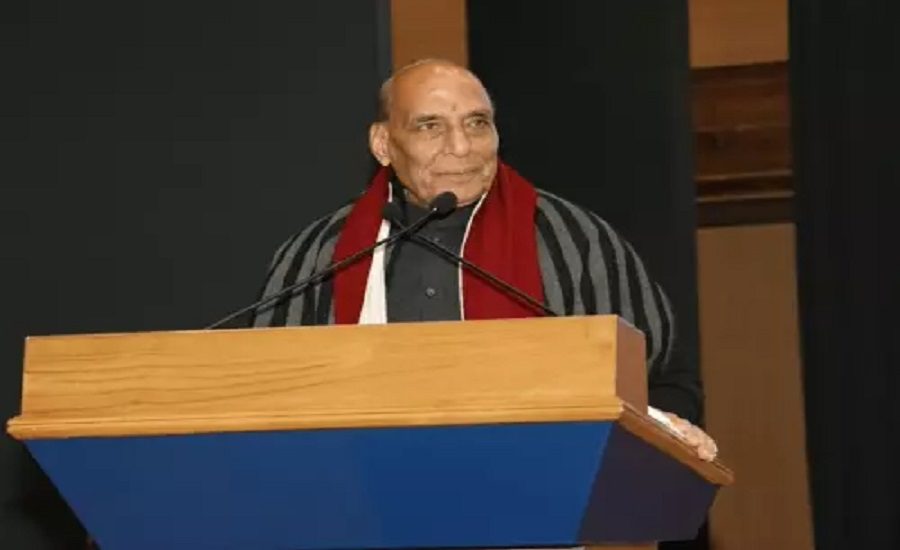
Prayagraj: Rajnath Singh future warfare strategy took center stage as Defence Minister emphasized the urgent need for research, innovation, and the element of surprise in modern warfare. Speaking at the North Tech Symposium in Prayagraj, he highlighted how rapidly evolving technologies are reshaping global conflicts.
The government, through agencies like DRDO, is focusing on advanced defence technologies to maintain a decisive edge.
Details of Rajnath Singh Speech in North Tech Symposium
Rajnath Singh clearly stated that defence research is now at the core of India’s national security strategy.
- Over 2,200 technologies have already been transferred from DRDO to industries
- Strong push toward self-reliance (Atmanirbhar Bharat)
- Increasing collaboration with startups, private companies, and innovators
Read also: Why Did India Stop Operation Sindoor? Rajnath Singh Reveals the Real Reason Behind the Decision
This shows that India is not just preparing for today’s threats but building long-term technological strength.
Why “Surprise” Matters in Modern Warfare
According to the Defence Minister, wars are no longer fought in traditional ways.
- Conflicts like the Russia-Ukraine war show rapid change
- Drones and sensors have replaced many conventional weapons
- Everyday tools can now be turned into weapons
He stressed that the ability to launch unexpected actions can decide victory. This is why India must develop agile and unpredictable defence capabilities.
Emerging Technologies Shaping Future Wars
India is actively working on next-generation defence systems. Key focus areas include:
- Directed Energy Weapons
- Hypersonic Weapons
- Underwater Warfare Systems
- Space-based Defence Technologies
- Quantum Technology
- Artificial Intelligence & Machine Learning
These technologies will define how wars are fought in the next decade.
Record Growth in Defence Production and Exports
India’s defence sector is seeing massive growth:
- Defence production reached ₹1.54 lakh crore (FY 2025-26)
- Defence exports touched an all-time high of ₹38,424 crore
This growth reflects India’s shift from an importer to a global defence manufacturing hub.
Lessons from Global Conflicts
Rajnath Singh pointed out important lessons:
- Warfare evolves quickly—within just 3–4 years
- Civilian technologies are now part of military strategies
- Attacks in regions like Lebanon and Syria show changing tactics
These developments demand constant readiness and adaptability.
India’s Proactive Defence Approach
The government is focusing on:
- Building capabilities for pre-emptive and surprise responses
- Strengthening defence forces with cutting-edge technology
- Encouraging innovation through collaboration
The aim is simple: be prepared before threats emerge.