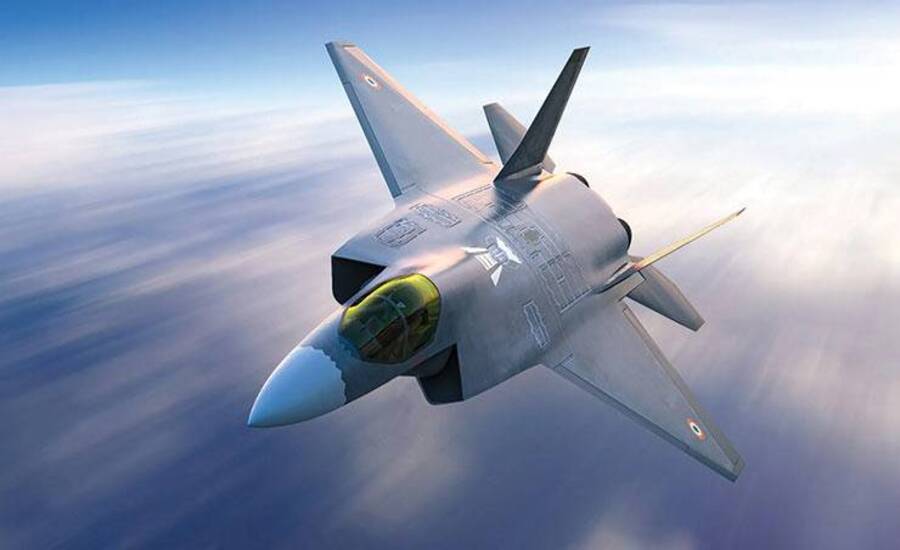
New Delhi: The Safran-GTRE engine partnership for AMCA Mk2 is reportedly nearing final approval from the Cabinet Committee on Security (CCS), marking a major step in India’s effort to develop an indigenous high-thrust fighter jet engine. If approved, the project will strengthen India’s self-reliance in defence technology and support the Advanced Medium Combat Aircraft Mk2 programme. However, as of now, the CCS has not officially announced the final approval.
The proposed partnership between France’s Safran Aircraft Engines and the Defence Research and Development Organisation’s (DRDO) Gas Turbine Research Establishment (GTRE) aims to jointly develop a new-generation fighter engine with advanced technology and significant Indian participation.
What Is The Safran-GTRE Engine Partnership
The proposed collaboration is a joint venture between Safran Aircraft Engines and DRDO-GTRE to develop a new turbofan engine capable of producing around 110-130 kN of thrust.
Read also: Russia Wants to Help India Build a More Powerful AMCA Fighter with AL-51F1 Technology
Unlike earlier arrangements, the project is expected to involve joint research, technology development, manufacturing, testing, and intellectual property sharing between India and France. The engine is primarily being designed to power the AMCA Mk2, India’s fifth-generation stealth fighter aircraft currently under development.
Why Does India Need A New Fighter Engine
India has long depended on imported fighter aircraft engines. The AMCA Mk1 is expected to fly using the American GE F414 engine as an interim solution because an indigenous engine with the required thrust is not yet available.
The proposed Safran-GTRE engine is intended to provide India with a sovereign engine solution for future AMCA variants and other advanced military aircraft.
Safran-GTRE Engine Partnership: Key Features Of The Proposed Engine
According to available project details, the proposed engine is expected to include:
- 110-130 kN thrust class.
- Completely new engine core designed for AMCA requirements.
- Advanced high-temperature materials.
- Single-crystal turbine blade technology.
- Modular architecture for future upgrades.
- Potential adaptation for future naval aircraft programmes.
These capabilities would significantly improve India’s long-term aerospace manufacturing ecosystem.
Technology Transfer And Indian Manufacturing
One of the biggest highlights of the proposal is the reported 100% transfer of technology (ToT) model. If implemented as planned, Indian engineers would gain access to advanced manufacturing processes, including:
- High-temperature metallurgy.
- Precision turbine manufacturing.
- Engine testing technologies.
- Advanced aerospace materials.
The manufacturing partner is expected to be Hindustan Aeronautics Limited (HAL), which already has experience producing military aircraft and aero engines.
Safran-GTRE Engine Partnership: Estimated Cost And Timeline
Current estimates suggest the programme could cost between ₹30,000 crore and ₹57 billion (approximately US$7 billion) over its lifetime, depending on the final project structure. The development programme is expected to take around 10 to 12 years, including:
- Engine design.
- Prototype development.
- Ground testing.
- Flight qualification.
- Serial production.
If timelines remain unchanged, production could begin around 2036.
Why Is CCS Approval Important
The Cabinet Committee on Security (CCS) is India’s highest decision-making body for major defence acquisitions and strategic programmes. A CCS approval would allow:
- Final project contracts.
- Budget allocation.
- Technology-sharing agreements.
- Detailed manufacturing planning.
- Long-term execution of the programme.
At present, reports indicate that the proposal is awaiting final CCS clearance. No official approval has yet been announced by the Government of India.
Strategic Importance of Safran-GTRE Engine Partnership For India
A successful indigenous high-thrust engine programme would reduce India’s dependence on foreign suppliers for one of the most complex aerospace technologies. It would also strengthen India’s “Aatmanirbhar Bharat” initiative by building domestic capability in advanced military aviation.
The programme could benefit future fighter aircraft, naval aviation projects, and India’s defence exports.
Read also: DRDO Strengthens AMCA Project with Critical Thermal Management Technology Transfer to BHEL