New Delhi: DRDO transfers critical thermal management and liquid cooling technologies to BHEL in a major step towards India’s fifth-generation Advanced Medium Combat Aircraft (AMCA) programme. The technology transfer will help Bharat Heavy Electricals Limited (BHEL) manufacture advanced cooling systems required for future fighter jets. This move supports the government’s “Aatmanirbhar Bharat” vision by bringing important defence technologies from the laboratory to large-scale industrial production.
Details of DRDO BHEL ToT
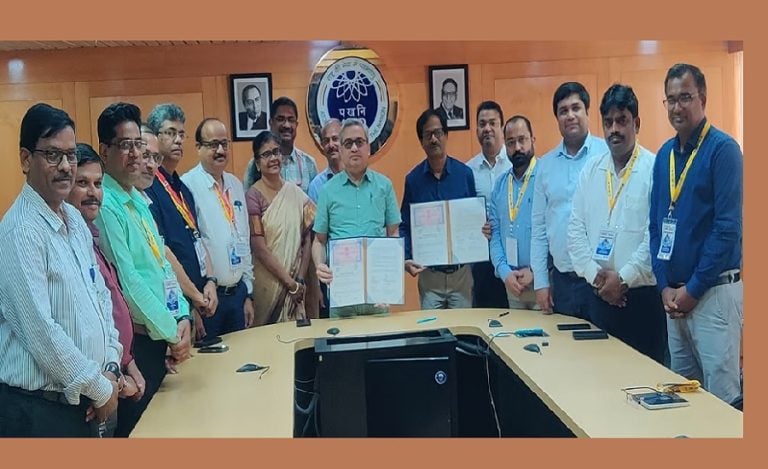
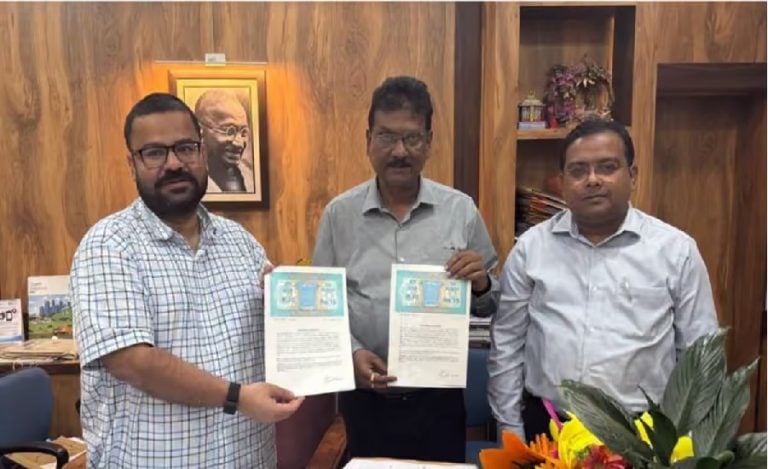
The Defence Research and Development Organisation (DRDO) has transferred two advanced thermal management technologies to BHEL.
Read also: India Gets a Powerful Surveillance Boost With IIT Delhi-DRDO Tactical Aerostat
These systems are designed to support the Environmental Control System (ECS) of next-generation combat aircraft such as the AMCA and the Tejas Mk2.
The transfer allows BHEL to manufacture these highly specialized systems at an industrial scale, ensuring a reliable domestic supply chain for India’s future fighter aircraft programmes.
Technology 1: Combined Pre-Cooler and Primary Heat Exchanger (CPPH)
One of the transferred technologies is the Combined Pre-Cooler and Primary Heat Exchanger (CPPH), developed by DRDO’s Aeronautical Development Establishment (ADE). The system performs the first stage of aircraft cooling.
It receives extremely hot air from the engine, with temperatures ranging between 200°C and 400°C, and removes much of the heat before the air enters the Environmental Control System. The system works by using outside air as a cooling medium, similar to a highly efficient aircraft radiator.
After passing through the CPPH, the air moves to the Air Cycle Machine, where it is compressed and cooled again through multiple heat exchange stages before reaching sensitive aircraft equipment.
Technology 2: Combined Condenser and Liquid Air Heat Exchanger (CCLA)
The second important technology transferred to BHEL is the Combined Condenser and Liquid Air Heat Exchanger (CCLA). Its primary role is to remove moisture from cooled air.
Dry air is essential because condensation or ice formation inside electronic compartments can damage expensive avionics and mission systems. The CCLA ensures that dry, temperature-controlled air reaches the cockpit, radar systems, mission computers, oxygen generation system and other sensitive electronic equipment.
Why Thermal Management Is Important in Modern Fighter Jets
Modern fighter aircraft produce an enormous amount of heat. Powerful Active Electronically Scanned Array (AESA) radars, electronic warfare systems, mission computers, infrared sensors and internal weapon bays generate high temperatures during flight.
If this heat is not controlled properly, aircraft performance can reduce significantly. Sensitive electronics may overheat, radar efficiency can decline, and stealth characteristics may also be affected.
For fifth-generation stealth fighters like the AMCA, advanced cooling is therefore a mission-critical capability rather than just a comfort feature.
DRDO BHEL ToT: Strong Link with Tejas Mk2
The transferred technologies are not entirely new. They were originally developed for the upcoming Tejas Mk2 programme. Since both the Tejas Mk2 and AMCA use similar Environmental Control System architecture, these technologies can now be adapted for India’s fifth-generation fighter with improved cooling performance.
This common design approach also simplifies manufacturing and maintenance while reducing development costs.
BHEL’s Growing Role in India’s Defence Sector
BHEL’s Heavy Plates and Vessels Plant (HPVP) at Visakhapatnam has decades of experience in manufacturing cooling systems for Indian military aircraft. The company has supplied cooling units for the Tejas programme and is now expanding its aerospace manufacturing capabilities to meet international AS9100 aerospace quality standards. The latest technology transfer further strengthens BHEL’s role in India’s defence manufacturing ecosystem.
What Does DRDO BHEL ToT Means for the AMCA Programme
Although the technology transfer itself does not mean AMCA production has started, it is an important readiness milestone. Thermal management systems are among the most complex subsystems in fifth-generation fighter aircraft.
With BHEL now prepared to manufacture these technologies domestically, India moves one step closer to establishing a complete indigenous production ecosystem for the AMCA programme.