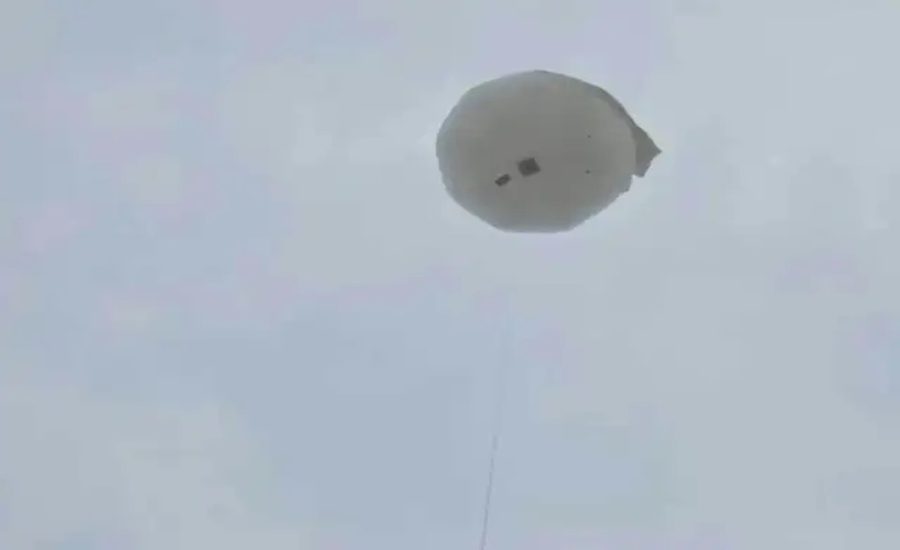
New Delhi: IIT Delhi DRDO tactical aerostat is India’s latest indigenous defence innovation designed to improve surveillance and communication capabilities. Developed jointly by the Indian Institute of Technology (IIT) Delhi, the Defence Research and Development Organisation (DRDO), and a domestic startup, the low-cost tactical aerostat can carry payloads at altitudes of up to 20 km. The project aims to reduce India’s dependence on imported defence systems while opening new opportunities for civilian use.
Details of IIT Delhi-DRDO Tactical Aerostat
The Indian Institute of Technology (IIT) Delhi has successfully demonstrated an indigenous tactical aerostat built in collaboration with DRDO and an Indian startup.
Read also: India’s Biggest Indigenous Air Defence Deal? ₹30,000 Crore Anant Shastra QRSAM Explained
According to IIT Delhi Professor Bhupen Singh Bhatola, the aerostat is a lighter-than-air platform capable of carrying surveillance and communication payloads to an altitude of 20 kilometres.
What Is a Tactical Aerostat
A tactical aerostat is a large balloon filled with lighter-than-air gas. Unlike drones, it does not require continuous engine power to stay in the air. It can lift equipment such as:
- Surveillance cameras
- Infrared (IR) sensors
- Communication devices
- Other lightweight monitoring systems
Because it remains at high altitude for longer periods, it can monitor a much larger area than many conventional drones.
Key Features of the IIT Delhi-DRDO Tactical Aerostat
The newly developed aerostat offers several important advantages:
- Carries surveillance and communication payloads up to 20 km altitude
- Can stay airborne longer than drones
- Carries heavier payloads
- Supports defence logistics operations
- Built using indigenous technology to reduce import dependence
- Developed through collaboration between IIT Delhi, DRDO and an Indian startup
How Is It Different From a Drone?
Professor Bhatola explained that drones consume power continuously to remain airborne, while an aerostat naturally floats because it is filled with lighter-than-air gas. This allows the aerostat to:
- Stay in the air for longer durations
- Carry larger payloads
- Provide continuous surveillance over wide areas
- Reduce operational costs in some missions
These features make it suitable for border monitoring, disaster response and long-duration observation tasks.
Developed With Indian Startup Support
The project also involved an Indian startup led by Dr. Neeraj Mandlekar, who contributed to developing the material and structural design needed to shape the aerostat.
According to IIT Delhi, the innovation represents a combined effort by academia, DRDO and India’s startup ecosystem to create a cost-effective indigenous solution.
Civilian Applications Also Possible
Although the aerostat has been developed primarily for defence purposes, researchers believe it also has strong civilian potential. Possible future applications include:
- Disaster management
- Emergency communication networks
- Large-event surveillance
- Environmental monitoring
- Infrastructure inspection
Its ability to remain airborne for extended periods could make it useful in many public-sector operations.
What is the Importance of IIT Delhi-DRDO Tactical Aerostat
India has been working to strengthen its indigenous defence manufacturing under the Atmanirbhar Bharat initiative. The successful demonstration of this tactical aerostat highlights growing collaboration between research institutions, government agencies and startups. If deployed successfully, it could enhance India’s surveillance capabilities while reducing dependence on imported aerostat systems.