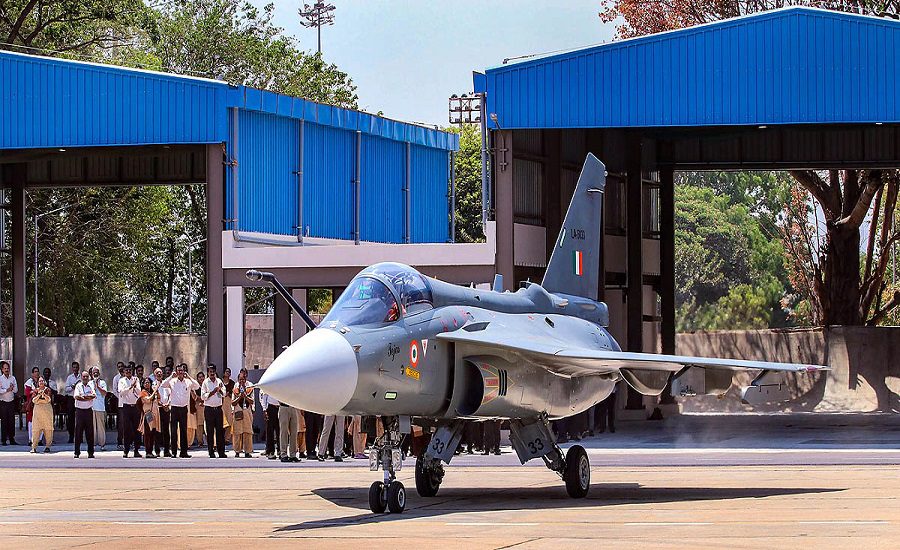
New Delhi: Hindustan Aeronautics Limited (HAL) has shown fresh progress in the Tejas Mk1A fighter jet programme despite the ongoing shortage of GE F404-IN20 engines. New visuals from HAL’s production facility reveal that the 28th and 32nd Tejas Mk1A aircraft are moving steadily through the assembly line. The latest development highlights HAL’s commitment to keeping production on schedule while waiting for engine deliveries.
The visuals suggest that HAL is completing almost every part of the aircraft before the engines arrive. This will allow the company to finish and deliver the fighter jets much faster once the engines are available.
Details of Tejas Mk1A Manufacturing
The latest footage from HAL’s manufacturing facility shows two aircraft at different stages of assembly. Aircraft LA-5060, believed to be the 28th Tejas Mk1A, is already on the production line. Another aircraft, LA-5064, believed to be the 32nd Tejas Mk1A, is also visible further inside the factory.
Read also: IAF Plans Major Sulur Air Base Upgrade to Support More Tejas Mk1A Fighter Jets
The presence of multiple aircraft in different assembly bays shows that HAL is building several fighter jets at the same time instead of slowing production because of engine delays.
This reflects a strong production strategy aimed at reducing delivery time once engines become available.
Why Are Tejas Mk1A Manufacturing Delayed
The main reason behind the delayed delivery of Tejas Mk1A fighter jets is the shortage of GE F404-IN20 engines supplied by GE Aerospace. The engine manufacturer faced global supply chain disruptions after restarting production of the F404 engine line, which had remained inactive for several years.
Because of this, completed aircraft have been waiting for engines before they can begin final flight testing and be delivered to the Indian Air Force (IAF).
HAL’s Smart Production Strategy
Instead of stopping work, HAL has adopted a practical approach. The company is completing almost every major section of the aircraft except engine installation. Engineers are already fitting:
- Airframe structure
- Cockpit systems
- Avionics
- AESA radar integration
- Hydraulic systems
- Electrical wiring
- Landing gear
- Mission equipment
When engines arrive, only engine installation, final integration, ground testing and flight testing will remain before delivery. This approach saves valuable production time and keeps the assembly line active.
Official Update on GE F404 Engine Supply
According to recent official updates, HAL has started receiving new GE F404-IN20 engines. Key developments include:
- HAL has received the seventh GE F404-IN20 engine.
- One engine that earlier developed a minor technical issue has now been repaired and cleared for operational use.
- Engine deliveries are expected to improve gradually over the coming months.
These developments are expected to speed up Tejas Mk1A deliveries.
Several Tejas Mk1A Jets Are Already Waiting for Engines
HAL has already completed the manufacturing and preliminary flight testing of several Tejas Mk1A aircraft using Category-B development engines.
These aircraft are now stored safely and are waiting only for production-standard engines before they can be delivered to the Indian Air Force. Once engine supplies become regular, these fighter jets can be completed within a much shorter time.
HAL Expands Tejas Mk1A Manufacturing Capacity
HAL is not only continuing production but also expanding its manufacturing capability. The company has already started its third Tejas production line at Nashik.
With three production lines operating together, HAL aims to manufacture 24 to 30 Tejas Mk1A fighter jets every year once engine supplies stabilize. This will help meet the Indian Air Force’s growing demand for indigenous fighter aircraft.
Read also: HAL Receives Seventh GE F404-IN20 Engine for Tejas Mk1A: Everything You Need to Know