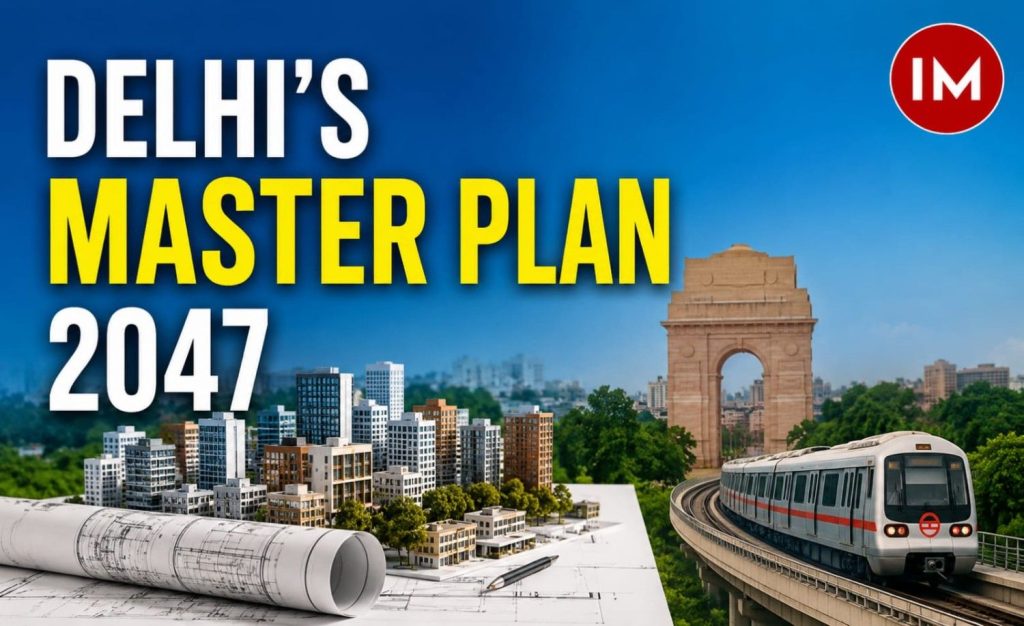
New Delhi: The Delhi Development Authority (DDA) approved the draft Delhi Master Plan 2047 on August 12, 2026, setting out a new framework for land use, housing, transport, infrastructure, environmental protection and urban development in the national capital.
The proposed plan will replace the earlier draft of the Delhi Master Plan 2041 and has been prepared in alignment with the Centre’s Viksit Bharat @ 2047 vision. The approved draft will now be sent to the Ministry of Housing and Urban Affairs for final notification.
What the Draft Master Plan Proposes
The draft includes several changes to land use and development regulations across Delhi.
Read Also: Delhi: ₹2,574-Crore Wazirabad Water Project Gets In-Principle Nod After Years of Delay
Key provisions include:
- Commercial construction in 70 villages: Commercial development has been permitted in 70 villages located in Delhi’s outer areas.
- Yamuna floodplain provisions: Certain development-related safeguards applicable to a portion of the Yamuna floodplain have been relaxed.
- Rithala-Kundli corridor: A land-use change has been included in Narela in connection with a metro depot for the Rithala-Kundli corridor.
- Redevelopment of older DDA housing: A uniform policy has been approved for the reconstruction and redevelopment of DDA two-storey houses that are more than 50 years old and structurally weak.
Under the redevelopment policy, eligible properties will receive redevelopment rights equivalent to those available for vacant residential plots.
Land Pooling Rules Simplified
The draft also proposes changes to Delhi’s land pooling framework.
Under the earlier 2019 rules, landowners in a sector were required to form a cooperative association with at least 70 per cent participation before proceeding with a development plan.
The new framework removes this requirement and allows landowners to approach the DDA directly for development plans.
Changes to Building Approval Rules
The DDA has also approved amendments to the Unified Building Bye-Laws, 2016.
The changes are aimed at reducing procedural requirements and simplifying the process for approval of building plans.
Key areas covered include:
- Land pooling procedures
- Building plan approvals
- Redevelopment of older DDA housing
- Land-use changes
- Development regulations
DDA Meeting and Next Step
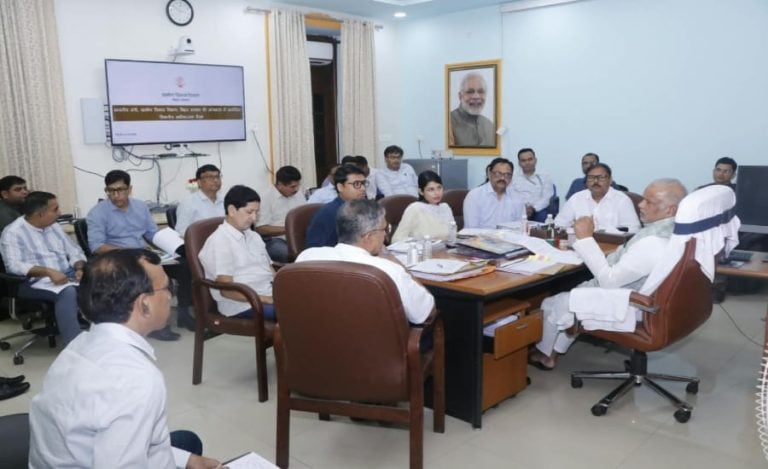
The DDA meeting was chaired by Delhi Lieutenant Governor and DDA Chairman Taranjit Singh Sandhu. DDA Vice Chairman N. Saravana Kumar (IPS: 2000: BH) was also present.
Following approval of the draft, the next step is its submission to the Ministry of Housing and Urban Affairs for final notification.
Until that process is completed, the approved DDA draft remains subject to the statutory notification process.
Why the Master Plan Matters
The Delhi Master Plan is a statutory urban planning document that provides the framework for land use and development control in the national capital.
The previous Master Plan 2041 draft was approved on February 28, 2023. However, it was not ultimately notified and subsequently missed several deadlines set by the Centre.
The Master Plan 2047 now seeks to establish a new planning framework covering land use, housing, infrastructure, transport, environmental considerations and development regulations.
Key Facts Related to Delhi Master Plan 2047
- DDA established: The Delhi Development Authority was established in 1957 under the Delhi Development Act, 1957.
- Master Plan: It is a statutory planning document governing land use and development control in Delhi.
- Unified Building Bye-Laws: The Unified Building Bye-Laws, 2016 provide the regulatory framework for building construction and approvals in Delhi.
- Yamuna floodplain: The floodplain is an environmentally sensitive area with significance for flood management and urban planning.
- Previous plan: The draft Delhi Master Plan 2041 was approved by the DDA in February 2023 but did not reach final notification.
The next significant step for the Delhi Master Plan 2047 is its consideration by the Ministry of Housing and Urban Affairs before final notification.
Read Also: Delhi Launches 4 New Tourism Circuits to Transform Capital From ‘Transit City’ to ‘Destination City’