New Delhi: Delhi is taking its mechanised road-cleaning drive beyond major roads, with the government approving the deployment of 30 electric vehicle-based mechanical sweeping machines on smaller roads that currently lack such cleaning facilities.
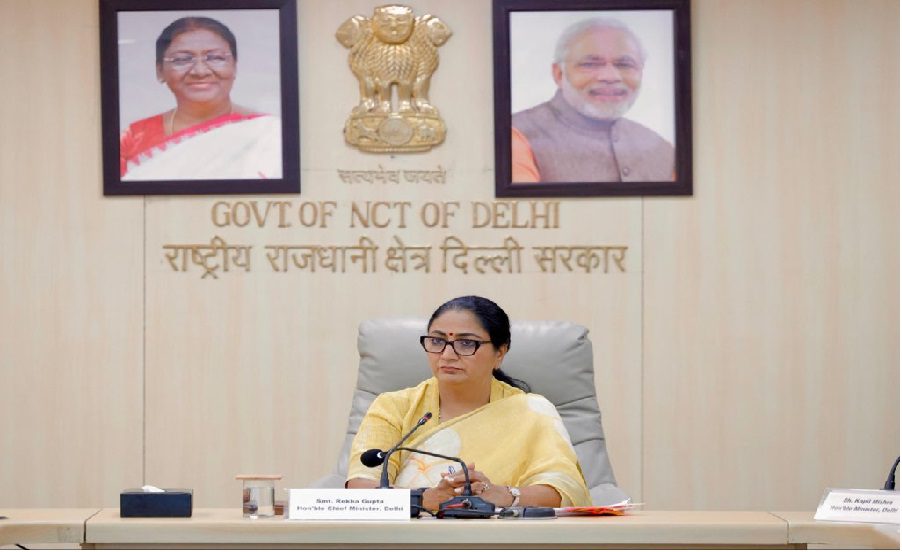
The move is part of the Winter Action Plan 2026-27 and aims to tackle road dust, identified as an important contributor to particulate pollution in the national capital. The Delhi Cabinet approved the measure at a meeting chaired by Chief Minister Rekha Gupta.
The initiative will cover around 609 km of smaller roads, including roads with a right of way of less than 10 metres. Around 854 roads across 250 wards have been identified for the expanded mechanised cleaning programme.
30 EV Sweepers for Smaller Roads
The new machines are designed to reach roads where conventional large road sweepers may face difficulties.
Under the plan, the Delhi government will provide a grant to the Municipal Corporation of Delhi (MCD) to procure the 30 electric-based mechanical road sweeping machines. The civic body will operate and deploy the machines on the identified roads.
The use of electric machines is also intended to keep the cleaning operation aligned with the broader shift towards cleaner mobility while addressing dust accumulated on smaller roads.
The estimated cost of the road-cleaning initiative is around ₹393.73 crore over 10 years.
Read Also: Delhi Launches ₹8,300 Crore Clean Air Programme with World Bank Support to Combat Pollution
Why Smaller Roads Matter
Delhi’s road-cleaning operations have traditionally focused heavily on larger and more accessible roads. However, dust can also accumulate on narrower roads, residential stretches and other areas that are difficult for large mechanical sweepers to access.
The government has therefore decided to extend mechanised cleaning to these smaller stretches.
The objective is to reduce the amount of dust that gets lifted into the air by passing vehicles, construction activity and other movement on roads.
Road dust is considered one of the important local sources contributing to particulate pollution. The Union Environment Ministry had earlier stressed the need to intensify mechanised road sweeping and dust suppression in Delhi as part of efforts to improve air quality ahead of winter.
609 Km Across 854 Roads
The scale of the new programme is significant because it focuses specifically on roads that currently do not have adequate access to mechanised cleaning.
The government has identified:
- 854 roads for the initiative
- Around 609 km of road length
- Roads with a right of way of less than 10 metres
- 30 EV-based mechanical sweepers for deployment
The machines will be managed by the MCD once procured through the government-supported programme.
The expansion is expected to strengthen ground-level dust control during the winter months, when Delhi typically faces deteriorating air quality.
Pollution Monitoring to Get a Scientific Upgrade
The mechanised cleaning decision is part of a wider pollution-control approach approved by the Delhi Cabinet.
Alongside the road-cleaning initiative, the government has approved a five-year collaboration with IIT Delhi for continuous, real-time identification and analysis of PM2.5 and PM10 pollution sources.
The project will examine the contribution of different sources, including vehicular emissions, road dust and biomass burning. A real-time dashboard and mobile laboratory will support the analysis, while the Rouse Avenue supersite will be reactivated for scientific operations.
The project has an estimated cost of ₹19.22 crore over five years and will also support capacity-building for officials of the Delhi Pollution Control Committee.
From Cleaning Roads to Tracking Pollution
The combination of physical cleaning and scientific monitoring is intended to give Delhi a more targeted approach to pollution control.
While the new sweepers will work on reducing dust on smaller roads, the IIT Delhi collaboration is expected to help authorities understand where particulate pollution is coming from and how much different sources contribute.
This can allow future measures to focus more closely on specific pollution sources instead of relying only on broad seasonal restrictions.
The government has also emphasized that pollution control should not remain limited to the winter season. The broader approach includes road dust, vehicles, construction activity, industries, waste burning and other sources.
Part of Delhi’s Wider Winter Pollution Push
The mechanised cleaning expansion comes as Delhi prepares for another winter pollution season.
The government has already been strengthening road-cleaning operations, pollution monitoring and enforcement measures. An Integrated Command and Control Centre launched by the Delhi government is also being used to track pollution sources, monitor road-sweeping operations and coordinate field-level action.
The centre uses real-time data and GPS-based monitoring to track mechanical road-sweeping machines, while field teams are being deployed for enforcement during winter.
The latest decision therefore adds another layer to Delhi’s pollution-control strategy by bringing smaller roads into the mechanised cleaning network.
A More Local Approach to Road-Dust Control
For residents, the expansion could mean more regular mechanised cleaning on roads that previously received less coverage from large sweeping machines.
The larger objective is to reduce dust at the source and improve the cleanliness of roads across neighbourhoods rather than concentrating only on major stretches.
If implemented effectively, the programme could strengthen Delhi’s ability to deal with one of the city’s recurring pollution challenges while also making road-cleaning operations more technology-driven.
The combination of 30 electric sweepers, 609 km of targeted smaller roads and real-time pollution-source analysis with IIT Delhi reflects a broader shift towards using both ground-level action and data to manage Delhi’s air-quality challenges.
Read Also: Delhi CM Rekha Gupta Approves 1,000 Acres of Southern Ridge for Reserved Forest Notification