8 November 2026
ADVERTISEMENT
ADVERTISEMENT

Exercise Dweep Shakti: Key Operations, Technology and Strategic Importance for India

Exercise Dweep Shakti 2026 highlights India’s growing military power through joint operations by the Army, Navy, and Air Force, focusing on coastal and island defence readiness.
Exercise dweep shakti
Indian Masterminds Stories

New Delhi: Exercise Dweep Shakti, a high-intensity tri-service military drill conducted by India from 24 to 28 March 2026, highlights the country’s growing focus on coastal and island defence. Led by the Indian armed forces this exercise showcased advanced coordination, modern warfare tactics, and rapid response capabilities. 

The operation reflects India’s commitment to strengthening maritime security and improving joint operational readiness in sensitive coastal regions.

What is Exercise Dweep Shakti

Exercise Dweep Shakti is a joint military exercise designed to test and improve coordination between India’s three armed forces. 

Read also: Sigma 4.0 Camouflage System Explained: DRDO’s New Technology That Helps Indian Army Evade Radar, Infrared and Drone Surveillance

It focuses mainly on:

  • Coastal defence operations
  • Island security preparedness
  • Rapid deployment during emergencies
  • Multi-domain warfare integration

The exercise was officially conducted under the supervision of India’s Ministry of Defence, ensuring alignment with national security priorities.

Key Highlights of the Exercise

1. Seamless Tri-Service Coordination

The three forces worked together in perfect synchronization. This included:

  • Joint planning and execution
  • Real-time communication between units
  • Rapid response strategies

This level of coordination is crucial for modern warfare, especially in coastal and island regions.

2. Amphibious Assault Operations

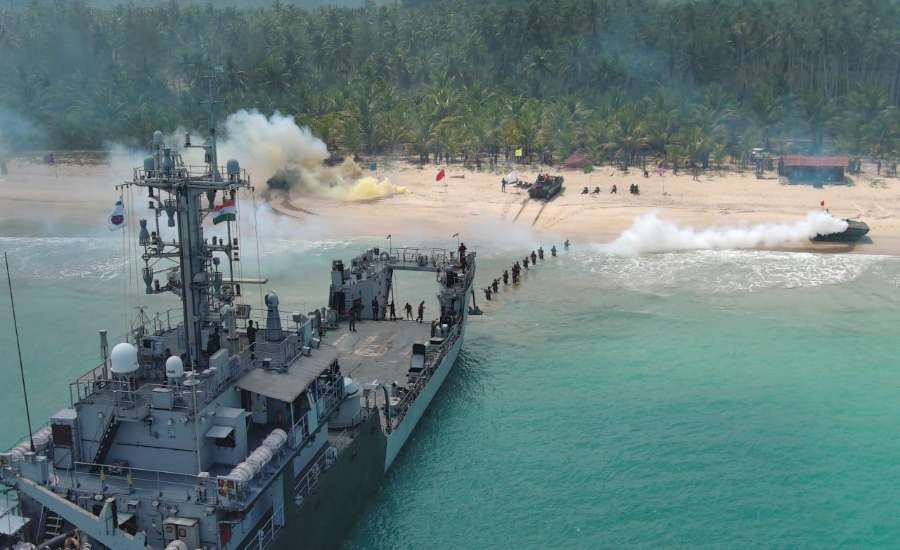
One of the most important parts of Exercise Dweep Shakti was amphibious warfare training.

  • Troops were deployed from sea to land
  • Simulated enemy-held beach landings
  • Complex combat scenarios were practiced

These drills help prepare forces for real-life invasion or defence situations along coastlines.

3. Maritime Dominance & Naval Strength

The exercise emphasized maritime superiority, a key factor in India’s security strategy.

  • Warships controlled sea lanes
  • Surveillance operations were carried out
  • Enemy threats were simulated and neutralized

This ensures India can protect its maritime borders effectively.

4. Use of Next-Generation Technology

Modern warfare tools played a big role in the exercise:

  • Advanced drones for surveillance
  • High-tech communication systems
  • Precision targeting equipment

This shows India is rapidly upgrading its defence technology.

5. Complex Beach Landing Drills

Troops conducted highly challenging beach landing operations, which included:

  • Coordinated air and naval support
  • Precision timing for troop deployment
  • Tactical movement under simulated enemy fire

These drills test both planning and execution under pressure.

What is the Importance of Exercise Dweep Shakti

Strengthening Coastal Security

India has a long coastline and several island territories. This exercise ensures:

  • Better protection of coastal areas
  • Quick response to threats
  • Improved disaster response capabilities

Boosting Multi-Domain Warfare Capability

Modern wars are fought across land, sea, air, and cyber domains. Exercise Dweep Shakti improves:

  • Integrated combat strategies
  • Faster decision-making
  • Joint operational efficiency

Enhancing National Defence Readiness

The exercise reinforces India’s preparedness against:

  • External threats
  • Maritime conflicts
  • Strategic security challenges

Official Statement & Strategic Importance

According to official defence sources, the exercise helped refine Tactics, Techniques, and Procedures (TTPs). It also highlighted India’s commitment to:

  • Securing maritime frontiers
  • Protecting island territories
  • Building a future-ready armed force

The initiative is part of India’s broader vision of defence modernization under the “Decade of Transformation”.

Read also: Explained: How India’s Integrated Air Defence Command Network Will Shape Future Wars


Indian Masterminds Stories
Join our WhatsApp Channel
ADVERTISEMENT
ADVERTISEMENT
Related Stories
ADVERTISEMENT
ADVERTISEMENT
NEWS
Bhopal Growth Corridor Feature
Bhopal's Draft Master Plan Proposes 51-Km Growth Corridor, ₹20,000-Crore Project Estimate
IAS Abhay Singh
Who Is IAS Abhay Singh? 2007-Batch UP Officer Removed as MLC Poll Observer After Complaint
PMGSY Bihar rural road connectivity
Bihar Plans Development Roadmap for 264 Urban Local Bodies, Puts Social Infrastructure in Focus
DDA
DDA Rolls Out New Housing Scheme With 445 MIG Flats Across Delhi
Gujarat-government resized
Gujarat Sets 20% Green Cover Growth Target for Cities Over Next Decade
Rajasthan Illegal Mining Case
Rajasthan Illegal Mining Case: SC Orders Probe Into Luni, Jojari And Bandi Rivers, Flags Role Of Officials 
Specialised IP Courts
What are Specialised IP Courts? And Why Do India Need These Courts
Judge Aman Sharma Death Case
Judge Aman Sharma Death Case: Supreme Court Seeks Delhi Police Crime Branch Update
ADVERTISEMENT
ADVERTISEMENT
Videos
Five years after Kargil, India sent its cricketing heroes to Pakistan where terrorism posed a deadly threat. The man guarding them, former Special Director of Intelligence Bureau, Mr. Yashovardhan Azad, reveals what all went behind the scenes during that crucial tour. 
Trust No One, Said His Instinct in Pakistan
Gajendra Singh Shekhawat
How India Plans to Boost Tourism, Create Jobs and Ease Overcrowding : Gajendra Singh Shekhawat on the Road to 2047
Dr Saket Badola IFS
Beyond Tigers and Safaris: How Corbett Literature Festival Wants to Change the Conservation Conversation
ADVERTISEMENT
UPSC Stories
Aniket Sagar ICoAS
No Coaching, Full-Time Job and Two Attempts: How Aniket Sagar Cleared ICoAS
Aniket Sagar, a chartered accountant from Bundelkhand, cleared UPSC ICoAS 2025 after working at PwC,...
IDAS Himanshu Tembhekar
Should UPSC Aspirants Give Up Their Hobbies? IDAS Officer Himanshu Tembhekar Explains
Should UPSC aspirants give up their hobbies? IDAS officer Himanshu Tembhekar explains how hobbies help...
UPSC Story
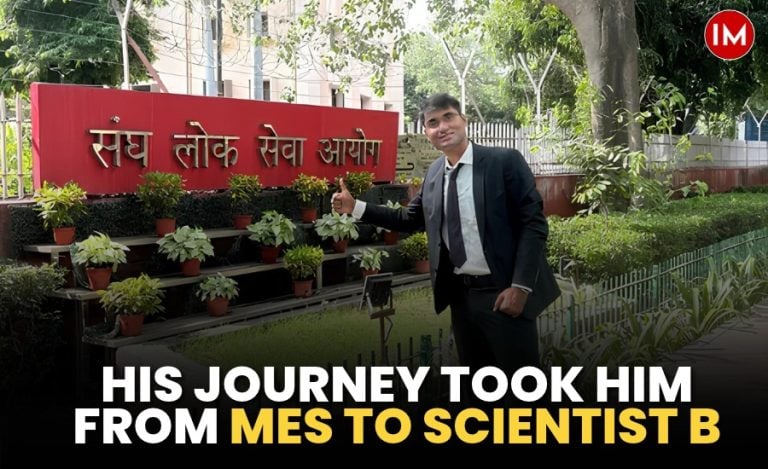
He Taught Students to Meet Expenses. Today, Sachin Bhadouria is a Scientist ‘B’ at CWPRS
Sachin Bhadouria overcame financial challenges and a Hindi-medium background to secure AIR 2 in a UPSC...
CSR NEWS
NCL CSR Blood Bank Project
NCL Signs ₹1.16 Crore CSR MoU to Establish Blood Bank at District Hospital in Singrauli
The project will fund essential medical equipment, furniture and renovation of the existing building...
REC Foundation Solar Street Light
REC Foundation to Install 350 Solar Street Lights Across Six Districts of West Bengal to Improve Rural Safety 
The CSR initiative, undertaken in partnership with Y4D Foundation, aims to improve night-time safety...
nalco
NALCO Signs MoU with SDI Bhubaneswar to Provide Skill Training to 60 Youths in Odisha
The three-month CSR programme will benefit youths from villages near NALCO's Angul and Koraput complexes,...
ADVERTISEMENT
ADVERTISEMENT
ADVERTISEMENT
Latest
vishwas zargad
He Took His Late Mother's Photo to the UPSC Interview | Vishwas Jhargad AIR 145 | CAPF 2025
Bhopal Growth Corridor Feature
Bhopal's Draft Master Plan Proposes 51-Km Growth Corridor, ₹20,000-Crore Project Estimate
ADVERTISEMENT
ADVERTISEMENT
ADVERTISEMENT
ADVERTISEMENT
ADVERTISEMENT
ADVERTISEMENT
ADVERTISEMENT
Videos
Five years after Kargil, India sent its cricketing heroes to Pakistan where terrorism posed a deadly threat. The man guarding them, former Special Director of Intelligence Bureau, Mr. Yashovardhan Azad, reveals what all went behind the scenes during that crucial tour. 
Gajendra Singh Shekhawat
Dr Saket Badola IFS
ADVERTISEMENT
ADVERTISEMENT