Partnered Content
In the hyperconnected world of today, internet access is no longer a luxury but a necessity. Internet access has become a lifeline for everyone, including students attending online classes, professionals working remotely, families staying in touch across continents, and users accessing various services. Public WiFi has emerged as a bridge between those connected to the internet and those not.
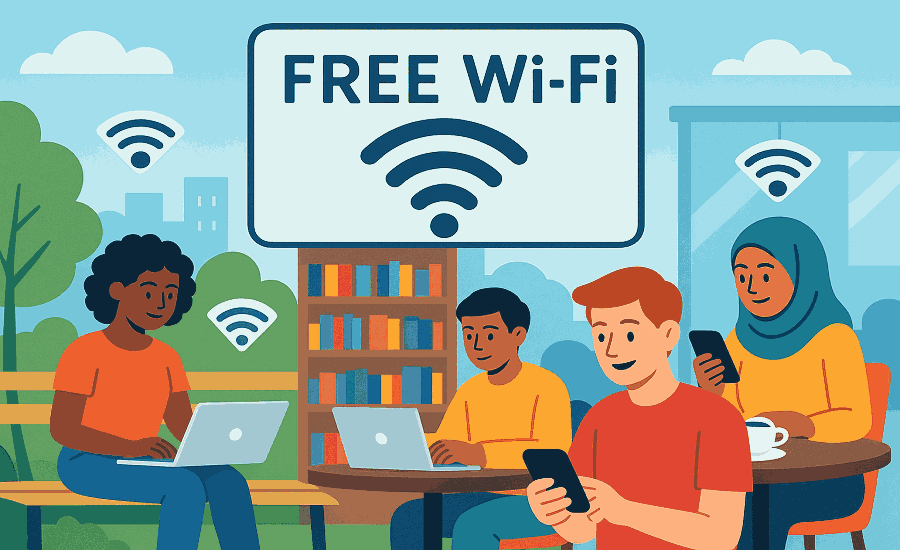
The ability to access the internet and go online freely in public spaces like parks, libraries, transport stations, and cafés can help in ensuring equal digital participation. Public WiFi access should be considered a human right in today’s era, but unfortunately, that is not the case in many countries across the world.
Let us explore why public WiFi access is essential and discuss several reasons why public WiFi access should be considered a human right in the digital age.
1. Equals Access to Information
The world’s largest library and information hub is the internet, and the gateway to it for everyone is public WiFi. On the internet, you can find information on every topic, including education, health, finance, current affairs, technology, and so on, but this information is accessible only to those who can connect to and access the internet.
Denying people free or affordable access to the internet hinders their ability to stay informed, educated, and aware about various topics, including how to set up your own WiFi router through 192.168.1.1, while public WiFi can ensure that everyone can access the same global knowledge pool regardless of their income, location, or socioeconomic status.
2. A Tool for Education and Learning
Nowadays, education is no longer restricted to classrooms only. Online learning platforms, tutorials, and digital libraries have transformed the way we learn and gain knowledge. Public WiFi can provide students, especially those in developing regions, with quick and easy access to these resources. Whether it is watching lectures, downloading study materials, or joining group discussions, access to free WiFi can level the academic playing field for everyone and promote lifelong learning.
3. Boosting Economic and Employment Opportunities
Public WiFi does not just connect devices; it connects people to opportunities, too. Freelancers, small business owners, and job seekers depend on the internet for work and networking. With public Wi-Fi access, individuals can search for jobs, apply online, and even make a living without having to worry about internet access or data costs. This connectivity can help bridge the economic and digital divide by empowering people to learn, earn, and grow, no matter where they are from.
4. Empowering Remote Workers and Digital Nomads
The modern-day workforce has become increasingly mobile, especially post-COVID. Remote workers, freelancers, and digital nomads rely on stable internet connections to stay productive, as a stable internet connection is as essential for them as electricity, and free public WiFi can enable them to work from anywhere without having to worry about data costs or limited connectivity, as they just need to log into the public WiFi network through 192.168.0.1 to gain access to the internet.
Public WiFi can turn cafés, libraries, and co-working spaces into flexible work zones, helping tons of individuals from around the world to make a living while on the move without having to worry about internet access.
5. Bridging the Urban-Rural Divide
One of the biggest challenges in modern development is the digital divide between urban and rural areas, which can be bridged with the use of free public WiFi. Urban centres typically have access to free high-speed internet at various places, while those in rural areas struggle with limited or weak connectivity and high costs. Public WiFi access can help bridge this gap by providing the same level of internet access to rural communities so that farmers, students, and small entrepreneurs in those areas can gain access to the same tools and information as their urban counterparts.
(This is a third-party article, and Indian Masterminds is not liable for any of the details mentioned.)