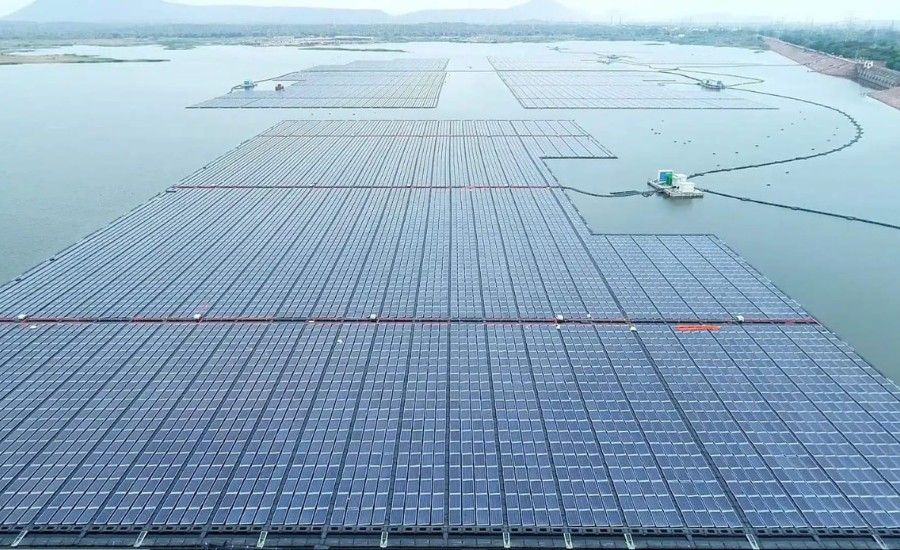
New Delhi: The Union Cabinet, chaired by Prime Minister Shri Narendra Modi, has approved the Pradhan Mantri Surya Sarovar Yojana (PM-SSY), a flagship scheme to promote the development of Floating Solar Photovoltaic (FSPV) Projects integrated with Energy Storage Systems (ESS). With a total outlay of ₹5,070 crore, the scheme aims to significantly expand India’s renewable energy capacity while making productive use of reservoirs and other inland water bodies.
The scheme envisions the development of 5,000 MW of floating solar capacity with co-located energy storage systems having a minimum storage capacity of 10,000 MWh, equivalent to at least two hours of storage. Projects will be sanctioned between FY 2026-27 and FY 2030-31, while financial assistance will continue to be disbursed up to FY 2032-33.
Floating Solar Capacity Set for Major Expansion
The approval comes after an assessment by the National Institute of Solar Energy (NISE), which estimated India’s floating solar potential at approximately 102.18 GWp across reservoirs and other suitable inland water bodies.
At present, India’s installed floating solar capacity stands at around 700 MW. With the implementation of PM-SSY, the country aims to add another 5,000 MW, substantially strengthening its renewable energy portfolio.
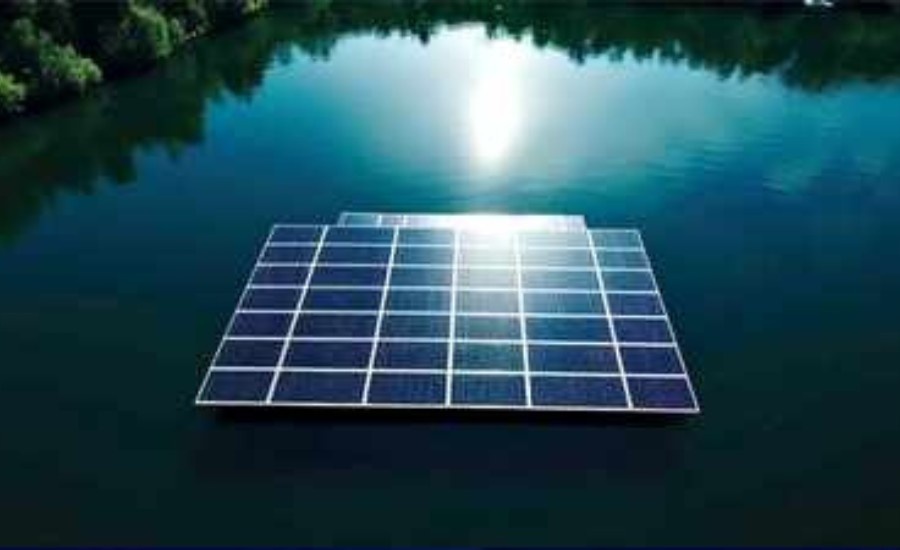
The initiative is also expected to optimise the use of existing reservoirs and industrial ponds for clean energy generation while reducing dependence on scarce land resources for solar power projects.
Financial Assistance for Project Development
To encourage project implementation, the Centre will provide financial support for eligible projects through Central Financial Assistance (CFA).
The scheme provides:
- ₹1 crore per MW for eligible Floating Solar Photovoltaic projects after successful commissioning.
- Up to ₹50 lakh per project for feasibility studies, including bathymetry and hydrography assessments, environmental studies and other preparatory activities required for project development.
The government said the support aims to reduce project risks while encouraging faster implementation of floating solar infrastructure across the country.
Benefits for States, Grid and Environment
The scheme will benefit all States and Union Territories, providing them with opportunities to expand renewable energy generation through floating solar projects.
According to the government, integrating Energy Storage Systems (ESS) with floating solar projects will improve grid reliability by enabling better management of renewable power generation.
The initiative is also expected to deliver significant environmental benefits, including:
- Reduction of around 10 million tonnes of CO₂ emissions annually.
- Generation of approximately 16,000–17,000 full-time equivalent employment opportunities across the project value chain.
Boost to Domestic Manufacturing
The Cabinet said the scheme will also support the growth of India’s clean energy manufacturing ecosystem by promoting domestic production of key components required for floating solar projects.
This includes the manufacturing of:
- Floatation systems
- Solar photovoltaic (PV) cells
- PV modules
- Energy Storage Systems (ESS)
- Other components across the floating solar value chain
The initiative aligns with the government’s vision of Aatmanirbhar Bharat by strengthening indigenous manufacturing capabilities in the renewable energy sector.
Supporting India’s Clean Energy and Climate Goals
According to the government, the Pradhan Mantri Surya Sarovar Yojana will contribute significantly to renewable energy capacity addition while supporting India’s national energy and climate commitments.
The scheme is expected to facilitate optimal utilisation of water resources, strengthen clean energy infrastructure and accelerate the country’s transition towards sustainable development, advancing the vision of Viksit Bharat.