Jaisalmer: The conservation programme for the critically endangered Great Indian Bustard (GIB) has entered a new phase with the initiation of the process to release captive-bred birds into the wild at the Desert National Park in Jaisalmer, Rajasthan.
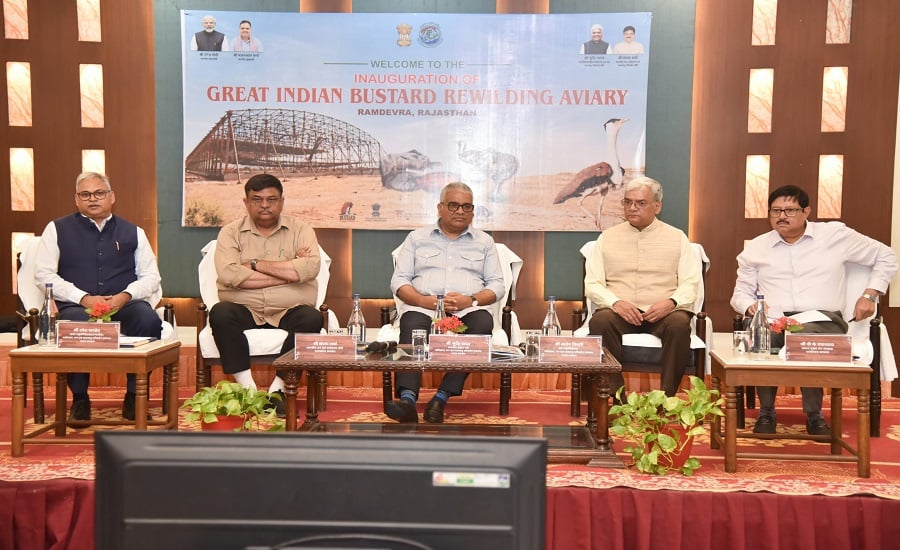
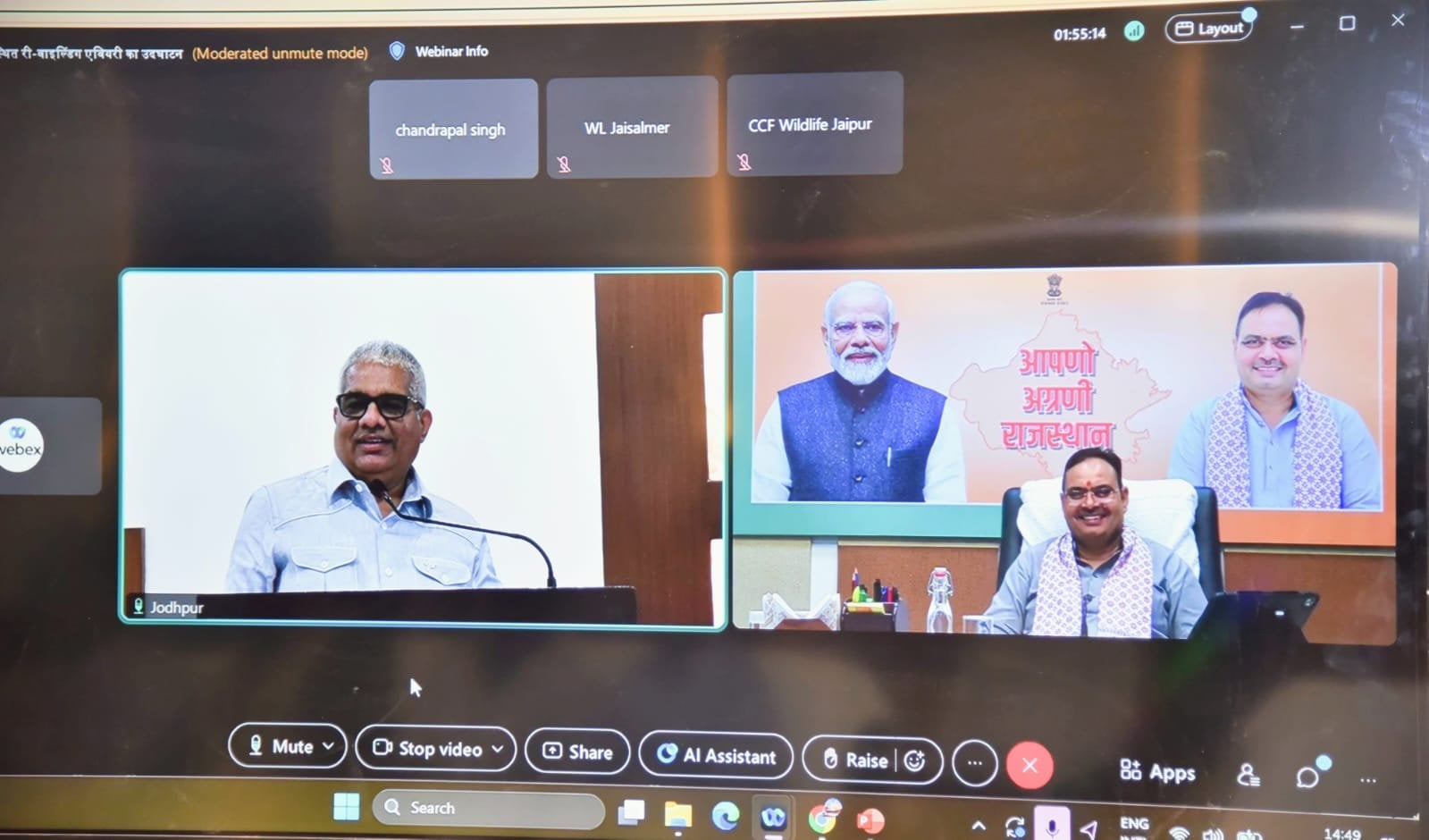
During Wildlife Week 2026, Union Environment, Forest and Climate Change Minister Bhupender Yadav and Rajasthan Chief Minister Bhajan Lal Sharma, who participated through video conferencing, joined the initiation of the process for releasing two captive-bred GIBs from a soft-release facility. The actual release is scheduled to be undertaken the following day.
The development marks a transition from building a viable conservation-breeding population towards rewilding and strengthening the species in its natural habitat.
Great Indian Bustard Rewilding Process Begins in Jaisalmer
The release initiative is being undertaken in a carefully controlled manner to minimise human disturbance at the release site.
The pilot release is expected to provide scientific learnings that can be used to progressively refine protocols for future reintroduction of captive-bred Great Indian Bustards into their natural habitat.
The initiative comes after nearly a decade of conservation-breeding and habitat-management efforts involving government agencies, scientists and local communities.
97 Great Indian Bustards Currently Housed at Sam and Ramdevra
The conservation-breeding programme has recorded significant progress at the GIB facilities in Sam and Ramdevra.
According to the Ministry of Environment, Forest and Climate Change:
- The facilities currently house 97 Great Indian Bustards.
- 40 birds originated from wild-laid eggs.
- 57 birds have been bred in captivity.
- 86 birds are being maintained for captive reproduction.
- 11 birds have been earmarked for release into the wild.
- Captive reproduction resulted in 24 live chicks in 2025 and 29 in 2026.
These developments have helped the programme move towards the next stage of restoring captive-bred birds to their natural habitat.
New Rewilding Aviary Developed at Ramdevra
During the visit, the Union Environment Minister reviewed the conservation-breeding facilities at Ramdevra and Sam and inaugurated a newly developed Rewilding Aviary.
The large aviary measures 160 metres × 64 metres × 14 metres and has been constructed by the Rajasthan Forest Department through the Rajasthan State Road Development and Construction Corporation Ltd. (RSRDC).
The project has a sanctioned budget of ₹9.25 crore from the Rajasthan Government and was developed in consultation with experts and scientists from the Ministry and the Wildlife Institute of India (WII).
The pillar-less facility provides unobstructed flight space for captive-bred GIBs. It is designed to help the birds develop flight muscles, adapt to natural conditions and exhibit natural behaviour before their eventual release.
GIB Conservation Programme Focuses on Breeding and Habitat Restoration
The Bustard Recovery Programme is a collaborative initiative of the Ministry of Environment, Forest and Climate Change, Rajasthan Forest Department and the Wildlife Institute of India.
The programme also has technical collaboration from the International Fund for Houbara Conservation and funding support from National CAMPA.
The ongoing National Action Plan focuses on:
- Conservation breeding
- Scientifically informed habitat management
- Threat mitigation
- Habitat restoration
- Community engagement
The programme is aimed at building a viable population while addressing threats to the species and improving its natural habitat.
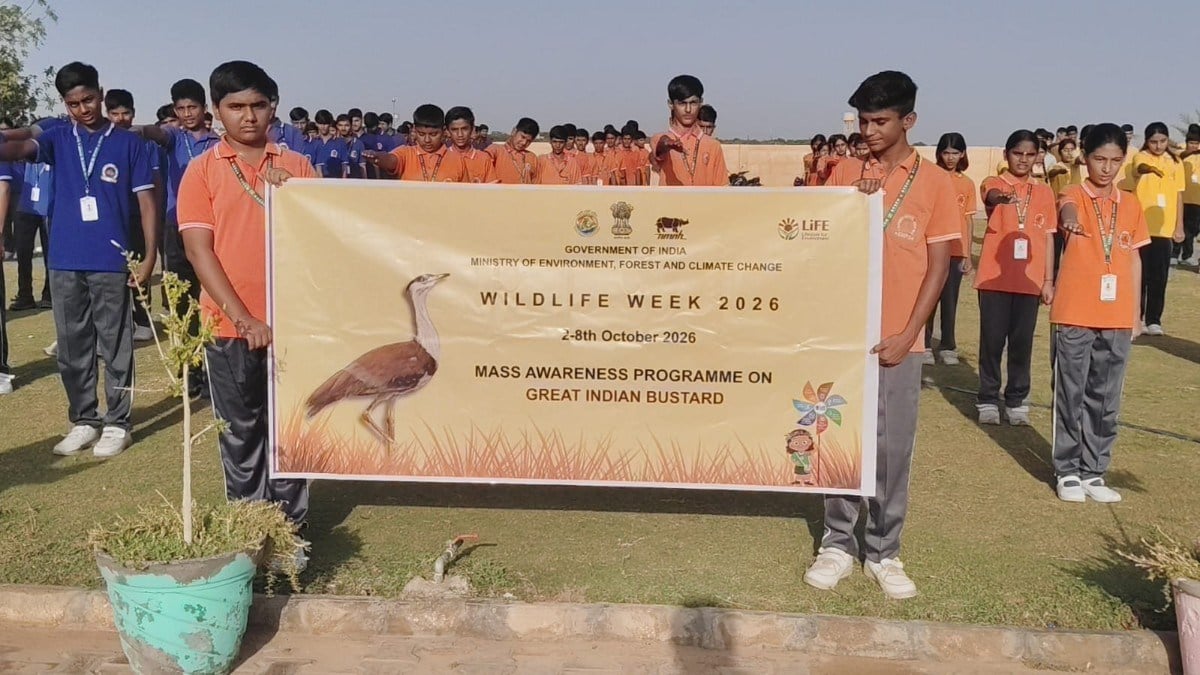
‘Jumpstart’ Approach Supports GIB Recovery
Scientific interventions such as the ‘jumpstart’ approach are also supporting the recovery programme.
Under this approach, captive-laid eggs are placed in wild nests and accepted by incubating female GIBs. According to the Ministry, six chicks in Rajasthan and two in Gujarat have been hatched through this intervention.
The approach is intended to support the species’ recovery while contributing to genetic diversity and improving conservation outcomes.
200 Sq Km of Grassland Enclosures Established in Desert National Park
Habitat restoration is another major component of the GIB conservation programme.
The Rajasthan Forest Department has established approximately 200 sq km of fenced grassland enclosures inside the Desert National Park. According to long-term telemetry studies by WII, these areas serve as important breeding habitats for the species.
The habitat-management measures are being undertaken alongside conservation breeding and other interventions to support the long-term recovery of the Great Indian Bustard.
GIB Conservation Enters Rewilding Phase
The planned release of captive-bred GIBs represents an important transition in the recovery programme—from establishing a conservation-breeding population to reintroducing birds into their natural habitat.
The pilot release is expected to generate scientific data and practical learnings for developing and refining future reintroduction protocols. The approach will allow conservation authorities and scientists to assess the adaptation of captive-bred birds to natural conditions and improve subsequent releases.
The initiative follows earlier progress in Gujarat, where the Union Environment Minister reviewed the GIB soft-release and conservation facilities at Naliya, Kutch, in September 2026.
Great Indian Bustard Conservation and Local Communities
The Great Indian Bustard is closely associated with the Thar Desert ecosystem and Rajasthan’s cultural heritage.
Bhupender Yadav highlighted the ecological importance of the species, including its role in grassland conservation and the broader Thar ecosystem. The programme also has potential economic benefits for local communities through eco-tourism, according to the Ministry.
The conservation of GIB habitat also supports wider objectives related to grassland management, land degradation neutrality and migratory bird habitats along the Central Asian flyways.
A Decade of Great Indian Bustard Conservation Efforts
The latest rewilding initiative is the result of sustained conservation efforts over nearly a decade.
The programme combines captive breeding, habitat restoration, scientific monitoring, threat mitigation and community participation. The Supreme Court of India’s directions, based on recommendations of an Expert Committee constituted for GIB conservation, also guide conservation actions for the species.
With the release of captive-bred birds now entering the programme, the focus is shifting towards using scientific evidence from the pilot to strengthen future reintroduction efforts.
Read also: Tiger Reserves Face New Management Test: MEE-TR 2026 Adds Solid Waste as Key Criterion