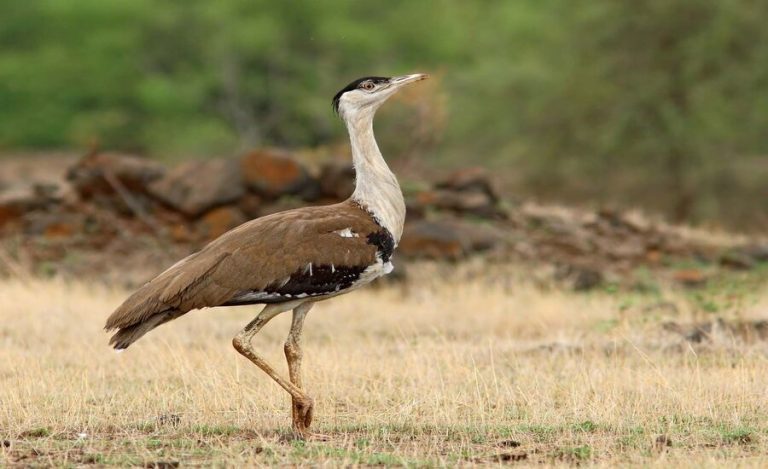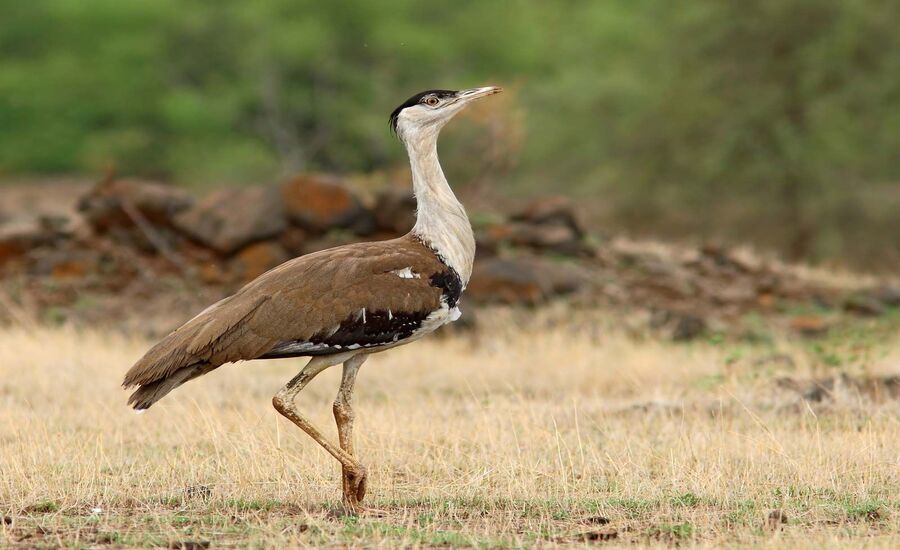
Jaisalmer: The experimental rewilding programme for the critically endangered Great Indian Bustard (GIB) has suffered a setback after a desert fox killed a six-month-old male bird in Rajasthan’s Desert National Park in Jaisalmer on Sunday.
The bird had been released into the wild just last Wednesday and was at a natural watering hole when the attack occurred, according to forest officials. The incident has prompted scientists from the Wildlife Institute of India (WII) and forest department officials to review release protocols and conservation safeguards.
Satellite Tracking Helped Officials Locate the Site
Scientists and forest department officials monitoring the birds from a control room at the GIB breeding centre in Sam were alerted to the incident through satellite tracking.
By the time a team reached the location, only the bird’s remains and feathers were left. The desert fox was no longer at the site. Officials collected blood samples for examination and retrieved the satellite-tracking device attached to the bird.
Following the incident, the release of seven other GIBs planned for rewilding will take place only after a thorough review of the programme’s safeguards.
A forest official described the incident as a natural predation event that occurred despite regular patrols and protective measures. Desert foxes are native predators in the park’s landscape.
Read also: Great Indian Bustard Rewilding Begins as Two Males Released in Rajasthan Desert
WII Director Says Incident Will Strengthen Conservation Efforts
WII director Gobind Sagar Bharadwaj said predation was a natural part of life in the wild and emphasised the commitment of teams working on the conservation programme.
“Predation in the wild is natural and bound to happen. Our teams on the ground are well motivated, and such incidents will only serve to further strengthen their determination to achieve the objectives laid out in the GIB conservation plan,” he said.
The incident has underlined the challenges of reintroducing captive-bred birds into their natural habitat, where they face threats from native predators and other environmental factors.
11 Captive-Bred Great Indian Bustards Identified for Release
The first phase of the experimental rewilding programme identified 11 captive-bred Great Indian Bustards, all approximately six months old, for release into the wild.
On October 4, Union Environment Minister Bhupender Yadav flagged off the release of two satellite-tagged male birds at the Sudasari release site in the Sam region of Jaisalmer. Both birds were bred at WII’s Sam breeding centre.
Two more male GIBs were released at the same site last Wednesday. One of these was the bird killed in Sunday’s incident.
Forest department sources said the remaining three birds released into the wild are safe and continue to move across the park. Their movements are being routinely monitored through satellite tracking.
The setback highlights the challenges involved in restoring the population of the critically endangered Great Indian Bustard through captive breeding and carefully managed releases into the wild.