Gandhinagar: Gujarat is rapidly emerging as a major aviation training hub, with five Flying Training Organisations (FTOs) already operational and another five under development. Once the new facilities become operational, the state will have 10 FTOs, creating greater capacity to train commercial pilots and meet the growing demand for aviation professionals in India.
The expanding network has already trained more than 5,200 aviation students and produced over 3,200 Commercial Pilot Licence (CPL) holders. More than 200 aspiring pilots are currently undergoing training across Gujarat.
Gujarat Builds a Larger Pilot Training Network
The expansion is taking place as India’s civil aviation sector enters a period of sustained growth. Rising passenger traffic, stronger regional connectivity and large aircraft orders by domestic airlines are expected to increase the need for trained pilots and other aviation professionals.
Under Chief Minister Bhupendra Patel, the Gujarat government is developing a broader aviation-skills ecosystem through policy support, public-private partnerships and better use of state-owned aviation infrastructure.
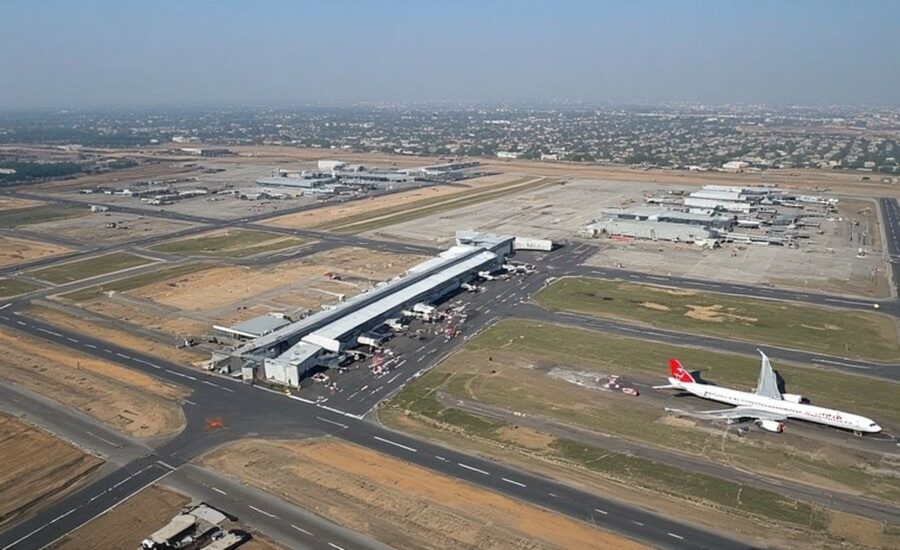
The Civil Aviation Department and Gujarat State Aviation Infrastructure Company Limited (GUJSAIL) are working to turn airports and airstrips into training centres that can contribute to the country’s growing pilot-training requirements.
Gujarat currently has five operational FTOs. Four operate from state-owned airstrips at Mehsana and Amreli, while one operates from Bhavnagar Airport on land allotted by the Airports Authority of India.
Read Also: Gujarat CM Bhupendra Patel Links Gandhi’s Ideals to Cleanliness and Self-Reliance
Five More FTOs in the Pipeline
The state’s aviation training capacity is now set for another expansion, with five additional FTOs under development.
These include:
- Silver Oak Flying Training Institute at Mehsana
- Aero Freyr Inc. at Amreli
- Adiyogi Enterprise at Mandvi
- Vision Flying Training Institute at Ankleshwar
- JITM Skills Pvt. Ltd. at Ankleshwar
Once these facilities become operational, Gujarat will have 10 FTOs spread across multiple locations.
The existing operators include Skynex Aero Pvt. Ltd. and Blue Ray Aviation Pvt. Ltd. at Mehsana; Vision Flying Training Institute and Gujarat Flying Club at Amreli; and Dunes Aviation Pvt. Ltd. at Bhavnagar, according to K.L. Bachani, Commissioner, Civil Aviation Department, Gujarat.
PPP Model to Attract Private Investment
Gujarat is using a Public-Private Partnership (PPP) model to accelerate the development of pilot-training infrastructure.
Under the model, around 1,500 square metres of land at state-owned airports and airstrips is allotted to eligible operators through a transparent bidding process.
The objective goes beyond increasing the number of pilot-training seats. The government also aims to attract private investment, create skilled employment, improve the utilisation of existing aviation assets and develop a wider aviation-services ecosystem around the training centres.
The approach allows the government to make better use of its existing aviation infrastructure while giving private operators an opportunity to establish training facilities.
India’s Airline Expansion Is Driving Pilot Demand
Gujarat’s aviation training expansion comes at a time when Indian airlines are significantly increasing their fleets.
Domestic airlines have placed orders for nearly 1,700 aircraft, creating an estimated requirement for around 25,000 to 30,000 commercial pilots in the coming years.
This growing demand makes the availability of quality flying-training infrastructure increasingly important.
For aspiring pilots, Gujarat’s expanding FTO network could also reduce the need to travel outside the state or overseas for training. A larger local training ecosystem can provide students with access to flight schools, infrastructure and aviation-related services closer to home.
3,200 CPL Holders Already Produced
Gujarat’s existing FTO network has already created a substantial training base.
Collectively, flying-training institutions in the state have trained more than 5,200 aviation students and produced over 3,200 CPL holders. More than 200 students are currently undergoing training.
The Gujarat Flying Club, one of the institutions contributing to this legacy, was established in 1958 at Vadodara Airport. It continues to operate as a DGCA-approved flying training organisation.
The combination of long-standing institutions and new private operators is giving Gujarat an aviation ecosystem that connects established training experience with newer investment and infrastructure.
Why Gujarat Is Attracting FTOs
Gujarat offers several advantages for aviation training. The state generally enjoys favourable flying weather for much of the year, while its network of airports and airstrips provides multiple locations for flight-training operations.
State-owned aviation infrastructure is another important advantage. Strong road connectivity, industrial support and an investor-friendly policy environment can help FTOs establish and expand their operations.
Locations such as Mehsana, Amreli, Mandvi and Ankleshwar could therefore become increasingly important centres for aviation training as demand for pilots rises.
Aviation Training Could Boost Local Economies
The economic impact of the expansion could extend well beyond pilot training.
FTOs require aircraft, simulators, maintenance facilities, fuel infrastructure, classrooms, accommodation and administrative facilities. This creates employment opportunities for flying instructors, aircraft maintenance engineers, flight dispatchers, operations staff, safety professionals, administrative workers and ground-support personnel.
The arrival of students and aviation professionals can also increase demand for local services. Hotels, hostels, restaurants, rental housing, transport operators, healthcare facilities, banks and retail businesses could benefit from higher economic activity around training centres.
The growing ecosystem may also create opportunities for allied sectors such as Maintenance, Repair and Overhaul (MRO), aviation fuel services, flight simulators, aerospace manufacturing, drone pilot training, aviation software and consultancy.
Better Use of Existing Aviation Assets
The expansion also offers the state an opportunity to improve the utilisation of government-owned airports and airstrips.
Greater use of these assets can generate long-term revenue through land rentals, lease premiums, aircraft parking, hangar facilities and fuel sales while supporting aviation-related economic activity.
For the government, the model combines infrastructure utilisation with private investment and skill development.
A Stronger Aviation Ecosystem for Gujarat
With five FTOs already operating and five more in development, Gujarat is building a larger aviation-training network at a time when India’s airline industry is expanding rapidly.
The initiative can create a stronger domestic pipeline of commercial pilots while opening up employment and business opportunities around aviation training. For students, it can also mean greater access to professional pilot training without having to depend as heavily on institutions outside Gujarat.
If the planned FTOs become operational as expected, Gujarat’s aviation infrastructure could play a larger role in meeting India’s future pilot requirements while strengthening the state’s position in the country’s growing civil aviation ecosystem.
Read Also: Gujarat UCC Bill Gets President Murmu’s Assent, Paving Way for Implementation