Gandhinagar: Gujarat has emerged as one of India’s leading renewable energy states, recording 67,655 million units of green electricity generation and reducing carbon emissions by nearly 49.79 million tonnes during the financial year 2025-26. The state’s renewable energy push is also contributing to India’s clean energy transition and the goal of achieving net-zero emissions by 2070.
Over the past five years, Gujarat has managed to reduce around 179 million tonnes of carbon emissions, according to the state government. The achievement has been supported by policies promoting solar and wind energy, increased green investments and the implementation of central renewable energy schemes.
Gujarat Records 67,655 Million Units of Green Electricity
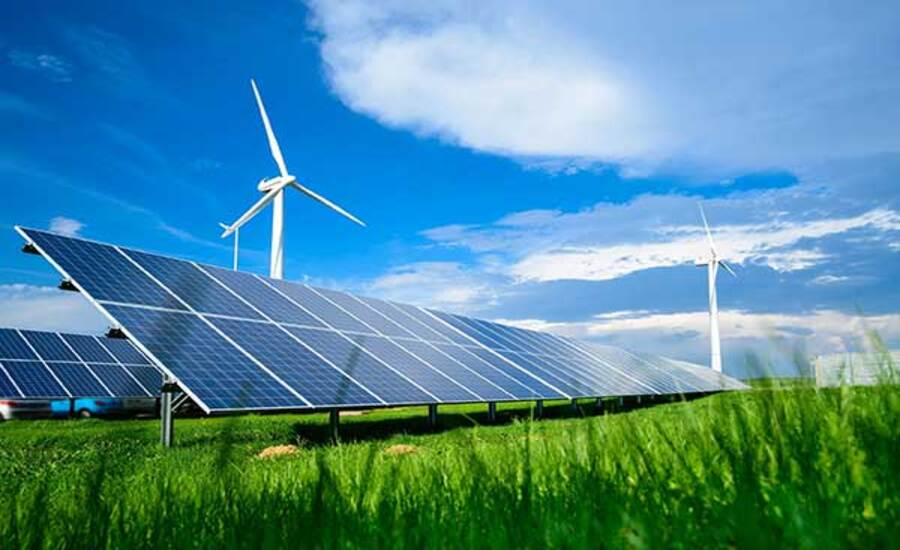
Gujarat generated a record 67,655 million units of green electricity in FY 2025-26, helping the state reduce its dependence on conventional energy sources and lower carbon emissions.
Energy Minister Rishikesh Patel said green power generation helped Gujarat reduce 49.80 million tonnes of carbon emissions in 2025-26, while generating 67,655 million units of electricity. The state’s renewable energy expansion has been supported by a combination of government policies, investments and initiatives aimed at increasing solar and wind power generation.
Gujarat Achieves 179 Million Tonnes Carbon Reduction in Five Years
The state’s renewable energy initiatives have delivered significant environmental benefits over the past five years.
According to the figures shared by the state:
- Gujarat reduced around 179 million tonnes of carbon emissions over five years.
- The state reduced 49.79 million tonnes of carbon emissions in FY 2025-26.
- Gujarat generated 67,655 million units of green electricity during FY 2025-26.
- The state currently has around 52 GW of renewable energy production capacity.
- Gujarat is working towards its target of establishing 100 GW of renewable energy capacity by 2030.
PM Surya Ghar and PM-KUSUM Boost Green Energy Adoption
Central government schemes such as PM Surya Ghar Muft Bijli Yojana and PM-KUSUM have also contributed to Gujarat’s renewable energy growth. The PM Surya Ghar scheme encourages households to install rooftop solar systems, helping consumers reduce their electricity expenses while promoting clean energy generation.
The PM-KUSUM scheme encourages farmers to install solar pumps for agricultural activities. The initiative provides farmers with access to solar-powered irrigation while helping reduce their dependence on conventional electricity.
Beneficiaries Highlight Benefits of Solar Energy
Solar energy beneficiaries in Gujarat have reported significant savings in their electricity expenses.
Bharatbhai Padhiar, a beneficiary, said his monthly electricity bill earlier ranged between ₹6,000 and ₹7,000. After installing a solar system with 50% subsidy, he said his household can run appliances such as a television, fan, bell and air conditioner, while also charging an electric vehicle.
He said his electricity bill has now come down to zero.
Farmer beneficiary Khalpabhai Chaudhary said the solar pump has helped him avoid the electricity expenses associated with agricultural water supply. He said the solar pump is providing a continuous water supply for farming.
Gujarat Expands Solar, Wind and Green Hydrogen Initiatives
Gujarat is pursuing multiple initiatives to expand its renewable energy ecosystem, including solar power, wind energy and green hydrogen.Gujarat Energy Development Corporation Limited (GUVNL) Managing Director Shalini Agarwal said renewable energy, green energy and hydrogen initiatives are being implemented on a large scale across the state.
Government Institutions Driving Gujarat’s Green Energy Transition
The state’s renewable energy expansion is being supported by several government organisations working in coordination.
Key institutions include:
- Gujarat Urja Vikas Nigam Limited (GUVNL)
- Gujarat Energy Development Agency (GEDA)
- Gujarat Power Corporation Limited (GPCL)
The state is also implementing policies such as the Integrated R Policy 2026 and Green Hydrogen Policy to encourage investment and accelerate the development of clean energy infrastructure.
Gujarat Targets 100 GW Renewable Energy Capacity by 2030
Gujarat is moving towards its target of establishing 100 GW of renewable energy capacity by 2030.
The state government’s focus on renewable energy, green hydrogen, energy efficiency and environmental protection is aimed at creating a sustainable energy ecosystem.
With rising renewable energy generation and declining carbon emissions, Gujarat is positioning itself as a model state for clean energy, climate action and sustainable development.