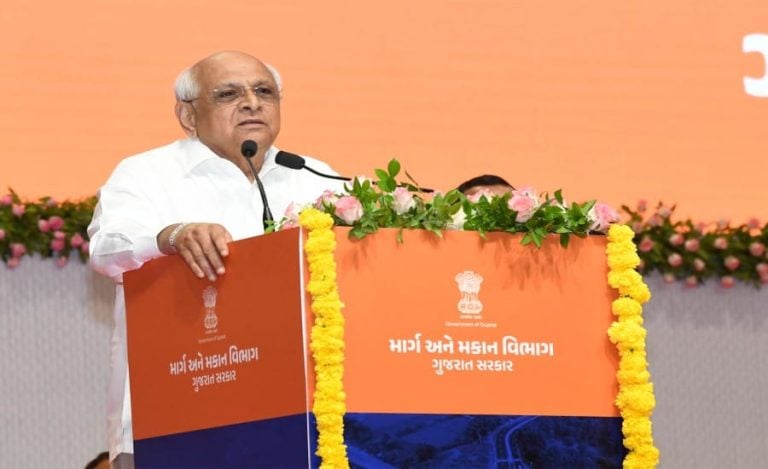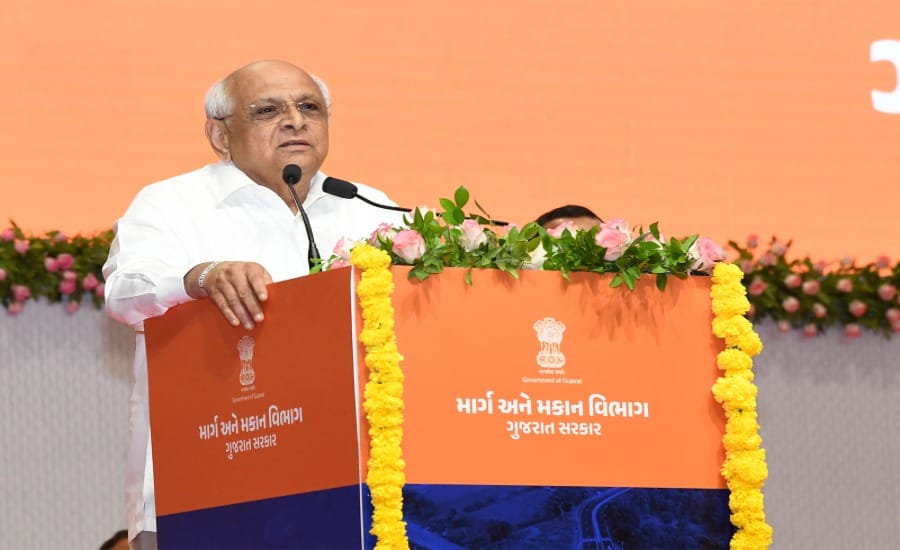
Gandhinagar: Gujarat Chief Minister Bhupendra Patel inaugurated the state government’s first two-day Chintan Shibir for the Roads and Buildings Department on October 8, 2026, calling for collective efforts to improve infrastructure quality and strengthen road and bridge connectivity across the state.
Held in Gandhinagar under the theme “Gati-Gunvatta-Gaurav: Accelerating Infrastructure for Viksit Gujarat 2047,” the programme brings together officials at different levels, from work assistants to secretaries, to discuss departmental performance, infrastructure development and better delivery of public services.
The Chief Minister stressed that the department must maintain high standards in construction and maintenance, follow established procedures and complete projects on time. The discussions also focus on accountability and the role of infrastructure in Gujarat’s long-term development.
CM Stresses Quality, Accountability and Timely Work
Addressing officials at the inaugural session, Bhupendra Patel said collective deliberation and coordinated action were essential to maintain the quality of Gujarat’s roads and infrastructure.
He referred to the Chintan Shibir tradition initiated by Prime Minister Narendra Modi in 2003 and highlighted the principles of “Main Nahin, Hum” and “Swayam thi Vyam,” which emphasise collective responsibility and moving beyond individual interests.
The Chief Minister said the Roads and Buildings Department plays a crucial role in developing roads, bridges and other connectivity infrastructure that directly affects citizens’ daily lives.
He also underlined the need to take public feedback seriously. Since people quickly notice shortcomings in infrastructure, the department must ensure that its work meets the highest possible standards.
Patel said officials should correct unintentional mistakes but must not tolerate deliberate lapses. He called for careful attention to tendering procedures, compliance with standard operating procedures (SOPs) and timely completion of projects.
These measures are important to improve the quality of public infrastructure and strengthen accountability in government works.
Read Also: Gujarat UCC Bill Gets President Murmu’s Assent, Paving Way for Implementation
Department Maintains 1.29 Lakh Km Road Network
The Roads and Buildings Department manages an extensive infrastructure network across Gujarat, making its performance significant for both urban and rural communities.
According to the information shared at the event, the department maintains and repairs approximately 1.29 lakh kilometres of roads, more than 11,000 bridges and various government buildings across villages and cities.
Its responsibilities also extend to rural connectivity through the Mukhyamantri Gram Sadak Yojana. Under the scheme, the department covers more than 18,000 villages and 14,000 hamlets.
The scale of this network highlights the importance of regular maintenance, effective monitoring and timely repairs. Better roads and bridges can improve access to schools, healthcare facilities, markets and workplaces while supporting the movement of goods and services.
For rural residents in particular, reliable connectivity can reduce travel difficulties and help connect smaller settlements with essential services and economic opportunities.
New Publications Focus on Building and Bridge Monitoring
At the beginning of the Chintan Shibir, the Chief Minister released publications on Building Health Monitoring and Bridge Asset Management.
These publications highlight the department’s focus on monitoring public infrastructure and managing its assets. Regular assessment can help officials identify maintenance needs, address structural concerns and plan repairs more effectively.
The programme also recognised engineers and officials for outstanding performance based on the Governance Performance Index (GPI).
The felicitation aimed to acknowledge departmental performance and encourage officials to maintain standards in project execution, infrastructure management and public service delivery.
Chief Secretary Highlights Department’s Role in Development
Gujarat Chief Secretary MK Das congratulated the department and described it as a key driver of the state’s development.
He also highlighted its role in responding to disasters and emergencies, when roads, bridges and other public infrastructure become critical for rescue operations, relief distribution and restoring connectivity.
As one of the government’s oldest and most prominent departments, the Roads and Buildings Department has responsibilities that extend beyond construction. Its work also involves maintaining existing infrastructure and ensuring that public assets remain functional and accessible.
The Chintan Shibir provides a platform for officials to discuss these responsibilities and identify ways to improve coordination across different levels of the department.
Chintan Shibir Links Infrastructure Development with Gujarat 2047 Vision
Patel urged officials to use the discussions for professional improvement as well as personal reflection. He said such programmes could encourage positive change by helping participants assess their work and approach to responsibilities.
The Chief Minister also reiterated his commitment to keeping Gujarat at the forefront of efforts to achieve Prime Minister Narendra Modi’s vision of Viksit Bharat 2047. He called for collective action towards Viksit Gujarat as part of the broader national development goal.
The two-day Chintan Shibir places infrastructure quality, procedural discipline, accountability and teamwork at the centre of the department’s priorities.
For residents, the impact of these discussions will ultimately depend on how effectively officials apply the ideas to road maintenance, bridge safety, construction quality and project delivery. With an extensive network serving cities, villages and remote settlements, improvements in the department’s functioning could support safer travel, stronger connectivity and more reliable public infrastructure across Gujarat.
Read Also: Gujarat CM Bhupendra Patel Links Gandhi’s Ideals to Cleanliness and Self-Reliance