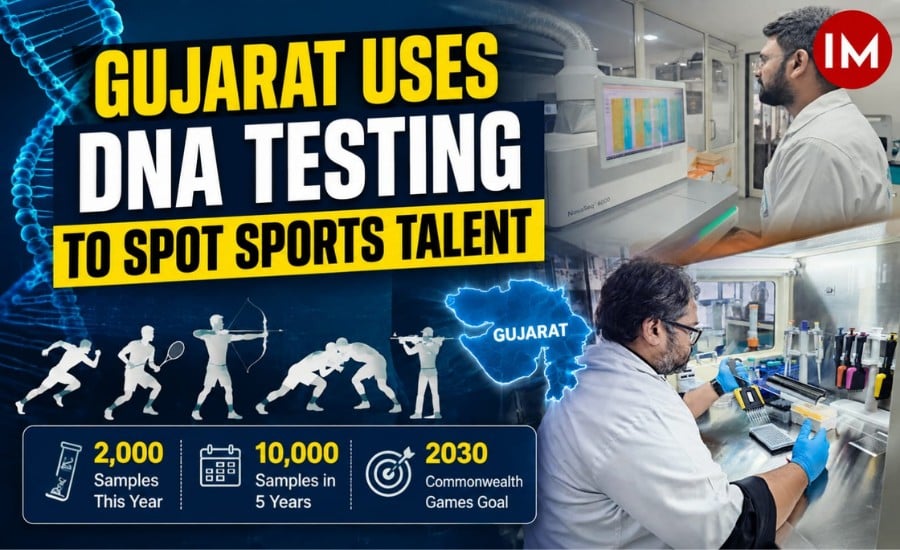
Gandhinagar: Gujarat has launched a state-level Sports Genomics Programme to study athletes’ genetic, physiological and performance-related characteristics, bringing genomics into the state’s approach to sports talent identification and athlete development.
The programme is being implemented by the Gujarat Biotechnology Research Centre (GBRC) under the Department of Science and Technology. Gujarat has described it as the first state-level Sports Genomics Programme in India.
The initiative combines genomic analysis with sports science, physiology and nutrition. It comes as Gujarat prepares for the 2030 Commonwealth Games, which are scheduled to be held in Ahmedabad.
First athlete samples already collected
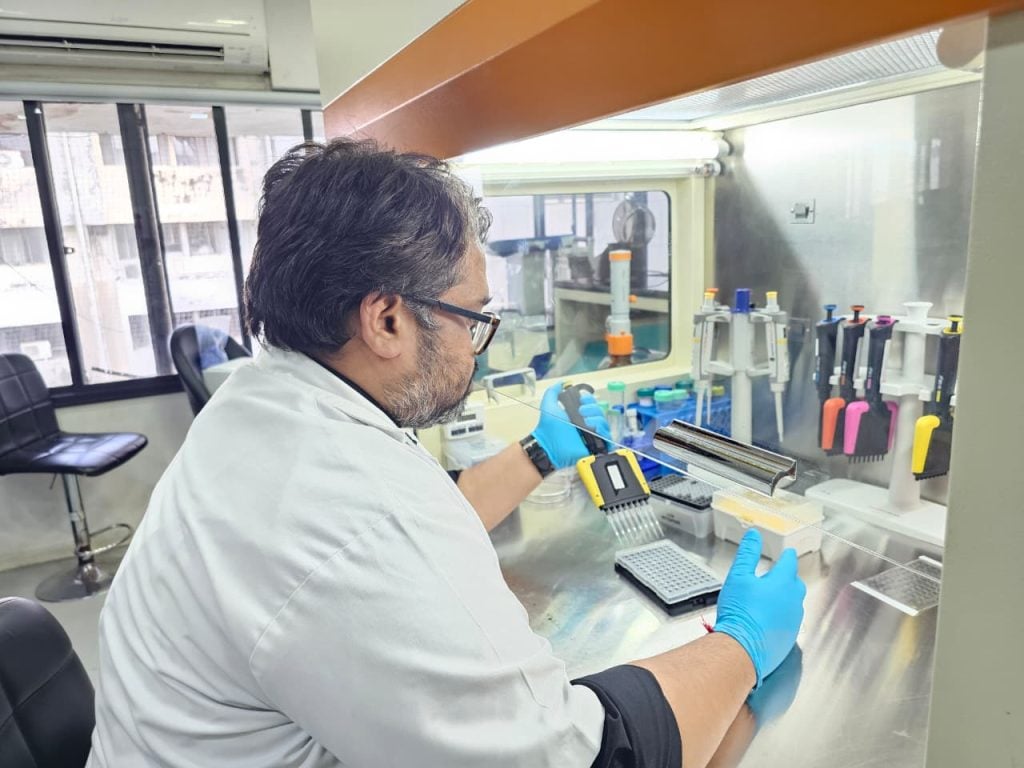
Gujarat Science and Technology Minister Arjun Modhwadia said GBRC scientists have begun collecting samples from athletes.
Read Also: Gujarat Leads India in Renewable Energy, Cuts 49.79 Million Tonnes of Carbon Emissions
The first set of samples has been collected from tennis players associated with the Gujarat State Tennis Association (GSTA). The next set is planned from athletes in archery, fencing, judo and shooting associated with the Vijayi Bharat Foundation.
The state plans to collect approximately 2,000 samples during the first year, with the programme targeting around 10,000 samples over five years.
What the programme will study
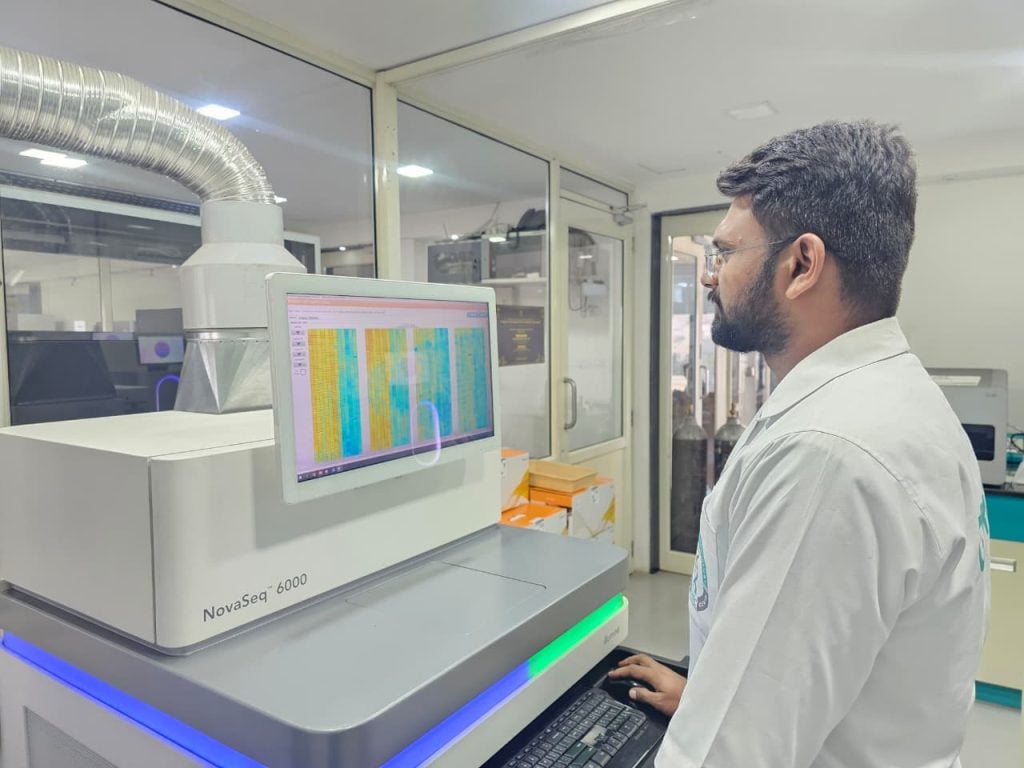
The programme proposes the use of whole-genome sequencing and other genomic analysis to examine genetic variations associated with characteristics relevant to sports performance.
These include:
- Endurance and power-related traits
- Muscle composition and metabolism
- Response to exercise and training
- Recovery patterns
- Genetic factors potentially associated with injury susceptibility
- Nutrigenomics and the relationship between genetics and nutrition
- Lifestyle and circadian-rhythm-related factors
Officials have stressed that genetic information will be considered alongside physical, physiological and performance data rather than being treated as the sole indicator of athletic potential.
Wide range of sports and age groups proposed
The programme envisages covering athletes from a broad range of disciplines, including athletics, swimming, boxing, wrestling, judo, taekwondo, gymnastics and fencing.
Team and ball sports such as football, hockey, handball, volleyball and basketball are also included, along with badminton, table tennis, lawn tennis, kabaddi and kho-kho. Archery, shooting and chess are among the precision- and skill-based disciplines covered by the broader plan.
Athletes below 14, those aged 14 to under 18, and those above 18 are proposed to be covered. State and national champions have been identified as a priority group.
Gujarat Athlete Genome Database planned
A major proposed component of the programme is the Gujarat Athlete Genome Database (G-AGD).
The database is intended to bring together genetic, physiological and sports-performance information. Officials envisage it as a long-term resource for athlete profiling and research.
The programme also proposes using the combined data to explore more individualised approaches to training, nutrition and recovery, based on differences in athletes’ responses to exercise and training loads.
Genetics to complement conventional sports assessment
The programme does not assume that a particular gene can determine whether an athlete will succeed. Sporting performance is influenced by several factors, including genetics, training, coaching, nutrition, infrastructure and environmental conditions.
The proposed model therefore seeks to add genomic and biological information to existing methods of talent identification and athlete assessment.
Data privacy and ethical safeguards
Because genomic information is sensitive personal data, the programme also envisages safeguards for protecting athletes’ identities and information.
The proposed framework includes informed consent, data-security measures, controlled access and a two-level barcoding system for samples.
With the programme combining biotechnology, sports science and athlete-performance data, its implementation will also involve managing the ethical and privacy considerations associated with genomic information.
Read Also: Gujarat Bioeconomy 2030 Report: GRIT Gujarat Pushes for Biotechnology Hub Vision in India