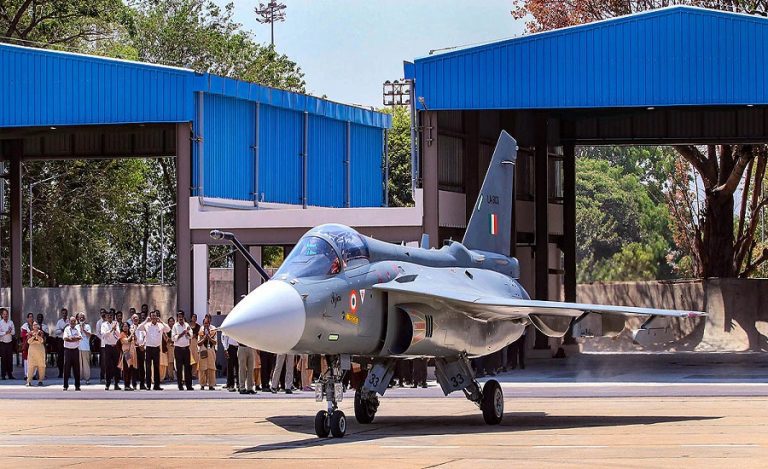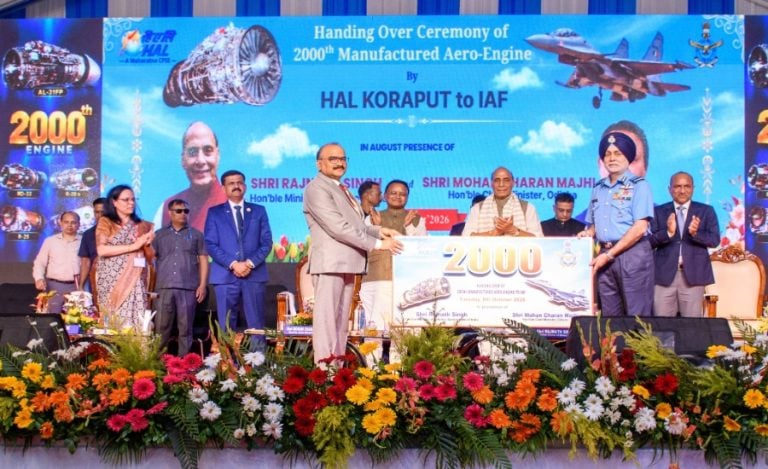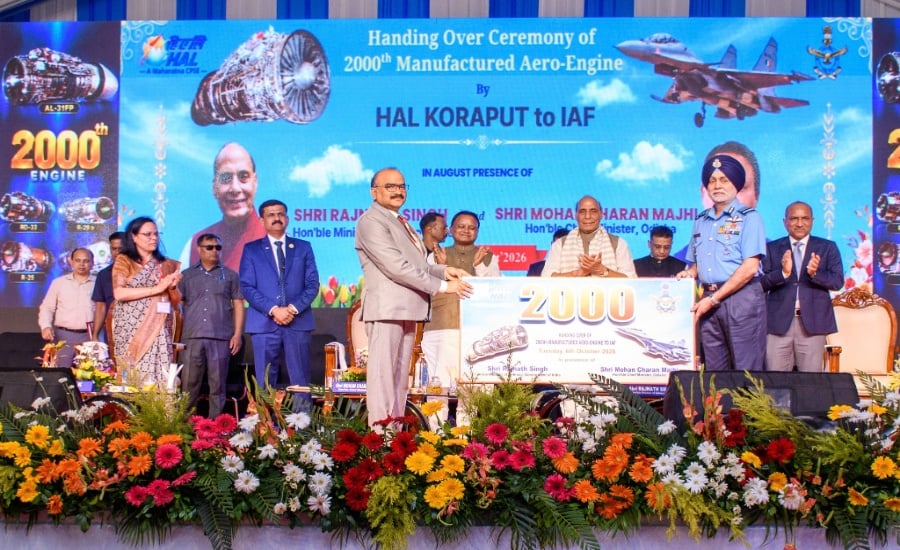
New Delhi: India has taken another important step towards defence self-reliance as Hindustan Aeronautics Limited (HAL) delivered its 2,000th aero-engine from its Koraput Division in Odisha on October 6, 2026. The milestone has also highlighted the growing role of Mishra Dhatu Nigam Limited (MIDHANI) in producing advanced materials for Indian aircraft engines. MIDHANI is developing critical superalloys, titanium alloys and special steels that can help reduce India’s dependence on foreign suppliers and strengthen the domestic aerospace manufacturing industry.
HAL 2000 Aero Engine Delivery Marks Six Decades Of Manufacturing
HAL’s Koraput Division has played an important role in India’s military aviation industry since its establishment in 1964.
Read also: MIDHANI Boosts Indigenous Aero-Engine Development With Critical Alloys and Advanced Materials
The delivery of the 2,000th aero-engine marks nearly six decades of engineering experience, skilled manpower and contribution to the operational readiness of the Indian Armed Forces.
According to the Ministry of Defence, the Koraput facility has also overhauled more than 9,000 engines. Engine overhaul involves inspecting, repairing and restoring engines to extend their service life. The facility has manufactured engines used in aircraft such as the MiG-21, MiG-27, MiG-29 and Su-30MKI.
MIDHANI’s Indigenous Superalloys Strengthen Aero-Engine Manufacturing
MIDHANI, a Defence Public Sector Undertaking under the Ministry of Defence, supplies advanced materials that are important for manufacturing modern aircraft engines.
According to MIDHANI’s official update dated October 6, 2026, the company has contributed to the development of single-crystal superalloys and other high-temperature materials for different aero-engine programmes. These materials are designed to perform under demanding conditions, including extreme heat and high mechanical stress inside an engine.
What Makes Superalloys Important For Aircraft Engines
Superalloys are special metal materials that can retain their strength at very high temperatures. They are important in engine components that face intense heat and pressure.
Single-crystal superalloys are particularly valuable for certain turbine blades. Their specialised structure helps them withstand the difficult operating conditions inside gas turbine engines. Developing these materials within India can strengthen the domestic supply chain and reduce dependence on imported aerospace materials.
HAL And MIDHANI Work Together To Reduce Import Dependence
HAL and MIDHANI play different but complementary roles in India’s aerospace industry.
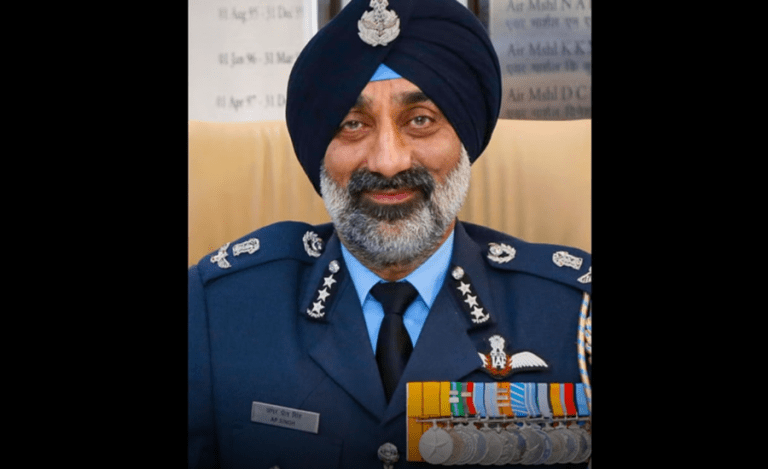
HAL manufactures and supports aircraft engines, while MIDHANI develops specialised metals and alloys required for demanding aerospace applications. Their cooperation helps build domestic capabilities across the supply chain, from critical raw materials to finished engine systems. MIDHANI Chairman and Managing Director Dr. S. V. S. Narayana Murty highlighted the importance of developing critical materials within India to achieve self-reliance in aero-engine technology.
HAL 2000 Aero Engine: India Expands Aero-Engine Production Capacity
The 2,000th engine milestone also coincided with major announcements to increase engine production at HAL’s Koraput facility. According to the Ministry of Defence, the government announced investments to expand production of engines for fighter aircraft and indigenous helicopters.
India Plans To Strengthen Indigenous High-Thrust Engine Technology
India’s long-term aerospace ambitions also depend on developing more advanced engines within the country. The Ministry of Defence highlighted a proposed investment of around ₹5,000 crore for an indigenous high-thrust engine programme. It also referred to plans for India’s first indigenous high-thrust engine testing facility.
These efforts are important for future aircraft programmes, including the Advanced Medium Combat Aircraft (AMCA). Developing a high-performance fighter engine requires expertise in advanced metallurgy, precision manufacturing, cooling systems, testing and quality control.
Domestic materials development by MIDHANI can support this wider effort, although building a complete indigenous engine capability remains a complex, long-term technological challenge.
FAQs
MIDHANI develops advanced materials, including single-crystal superalloys and other high-temperature alloys, for aero-engine programmes. These materials help engine components withstand extreme operating conditions and support India’s efforts to reduce dependence on imported materials.
HAL’s 2,000th aero-engine delivery on October 6, 2026, marked nearly six decades of engine manufacturing at its Koraput Division in Odisha. It highlighted India’s growing aerospace manufacturing capabilities and the facility’s contribution to military aviation.
HAL plans to increase annual AL-31FP engine production capacity from 30 to 50 engines with a ₹335 crore investment. A second Shakti engine production line, backed by ₹218 crore, is planned to manufacture up to 100 engines annually by 2028–29.