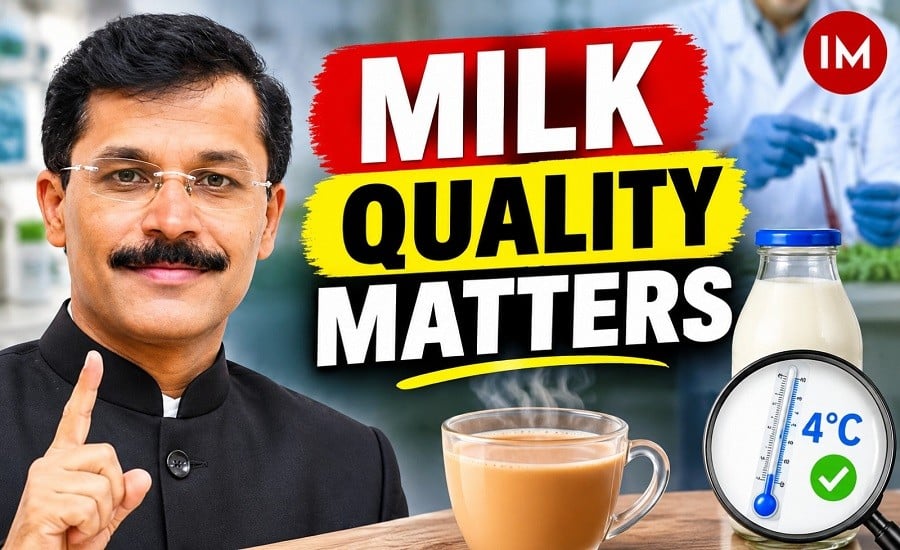
Mumbai: Most Indians begin their day with a cup of tea, and many drink it several times throughout the day. But have you ever considered how safely the milk used in your tea has been handled before reaching your kitchen?
IAS officer Tukaram Mundhe, a 2005-batch Maharashtra cadre officer, has drawn attention to this everyday concern while speaking about milk quality and food safety. Since taking charge at Maharashtra’s Food and Drug Administration (FDA), Mundhe has been in the spotlight for action against food adulteration, with inspections being conducted across hotels, restaurants, bakeries and other food establishments.
During a public event, he explained the different stages through which milk passes before reaching consumers and why maintaining proper temperature and hygiene throughout the supply chain is crucial.
IAS Tukaram Mundhe Explains How Milk Reaches Your Home
Mundhe pointed out that milk does not reach consumers directly after packaging. It passes through several stages, including transportation to shops and storage at retail outlets, before being purchased and brought home.
At each stage, maintaining the right temperature and hygienic conditions is essential. However, consumers generally have little information about how the milk was transported, whether it was kept chilled during transit or whether it was stored properly at the shop.
He also observed that although tea is a regular part of most people’s daily routine, the beverage often contains more milk and sugar than tea leaves. But before focusing on how much tea one drinks, it is important to pay attention to the quality and safety of the milk being used.
Why Should Milk Be Stored at 4°C or Below?
According to Mundhe, milk should be maintained at approximately 4°C or lower to preserve its quality. Keeping it chilled helps slow bacterial growth and reduces the chances of deterioration.
If milk remains at a higher temperature for an extended period, the risk of spoilage increases. Therefore, checking the packaging alone is not enough to determine whether milk has been handled safely. Its storage conditions during transportation and at the retail outlet also matter.
The cold chain needs to be maintained until the milk reaches the consumer. Once purchased, it should be taken home promptly and stored in a refrigerator according to the instructions on the packaging.
What Should Tea Drinkers Keep in Mind?
Mundhe’s message is not necessarily about giving up tea. Rather, it is about becoming more conscious of the quality and safety of everyday food products.
Consumers should buy milk from reliable sources, read the storage instructions printed on the packet and refrigerate it as required after purchase. They should also avoid using milk if they notice unusual changes in its colour or smell.
The larger concern is that milk safety depends not only on its source or packaging but also on how it is handled throughout its journey. For regular tea drinkers, paying attention to these details is an important part of making an informed choice about what goes into their daily cup.