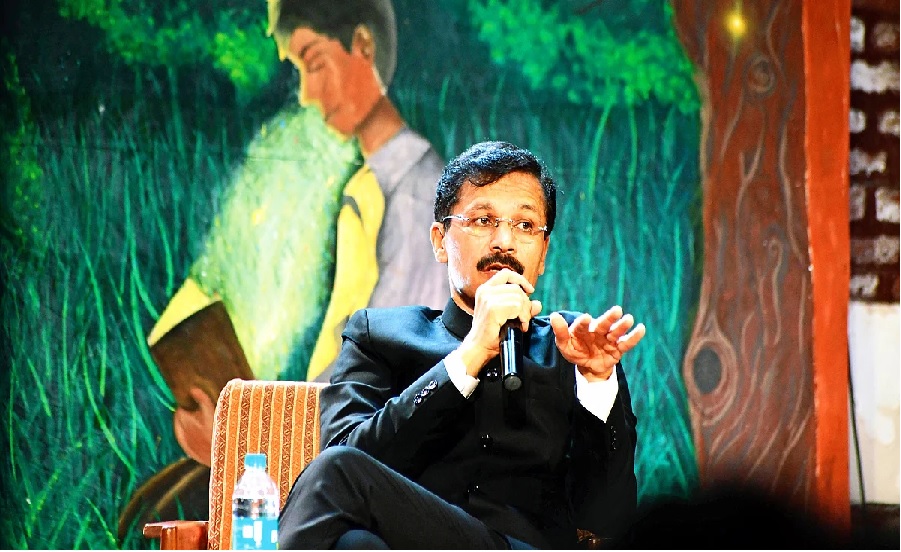
Mumbai: Maharashtra Food and Drug Administration (FDA) Commissioner and senior IAS officer Tukaram Mundhe, known for his uncompromising administrative style and frequent transfers, has sparked discussion with an unusual piece of career advice for his own children: do not become IAS officers.
Speaking during an interview in Pimpri-Chinchwad, the 2005-batch Maharashtra-cadre officer said he would discourage his children from pursuing a career in the Indian Administrative Service. Instead, he would prefer that they become entrepreneurs or public leaders capable of contributing to society with greater independence.
His remarks have attracted attention because they come from an officer whose career has been closely associated with strict enforcement of rules, administrative reforms and repeated transfers across Maharashtra.
Behind his statement, however, lies a personal account of the sacrifices his family has made during his two-decade career in public service.
‘Don’t Become IAS’: What Tukaram Mundhe Said
During the interview, Mundhe was asked whether he would encourage his children to follow in his footsteps and join the civil services or pursue careers as entrepreneurs.
His response was unequivocal.
“If my own children ask me in the future, ‘Should we become IAS?’ I will directly advise them, ‘Don’t become IAS’,” Mundhe said, according to media reports.
Read Also: MP IAS Transfer: 4 Officers Shifted, Ramprakash Ahirwar Appointed Bhopal Municipal Commissioner
The statement was not presented as a rejection of public service itself. Rather, Mundhe expressed a preference for careers in which his children could exercise greater independence and contribute to society without being restricted by the administrative framework of government service.
He suggested that becoming a public leader or entrepreneur could offer opportunities to make a meaningful difference while retaining greater freedom in decision-making.
Why Mundhe Wants His Children to Become Public Leaders or Entrepreneurs
Mundhe believes that young people today possess considerable energy, knowledge and the ability to work at a faster pace.
Referring to Generation Z, he said the younger generation should not necessarily confine itself to traditional career structures that may limit independence or keep individuals operating within a fixed framework.
His preference for public leadership and entrepreneurship reflects his view that social development is not limited to government service.
While an IAS officer works within an established administrative system, entrepreneurs and public leaders may have greater flexibility to develop ideas, take initiatives and pursue different approaches to solving problems.
For Mundhe, the choice of career is therefore not simply about professional status. It is also about the freedom to work, make decisions and create an impact.
25 Transfers in 21 Years: The Personal Cost of an IAS Career
One of the most striking aspects of Mundhe’s career has been the frequency of his transfers.
The 2005-batch officer has reportedly faced around 25 transfers during approximately 21 years of service.
His frequent changes of assignment have often attracted public attention, particularly because of his reputation for strict implementation of rules and resistance to administrative and political pressure.
However, Mundhe has also spoken about the impact of these transfers on his family.
Repeated relocations meant that his wife and children had to adjust to new places, schools and living arrangements, often with little certainty about how long they would remain in one location.
Although he chose the civil services voluntarily and accepted the demands of the profession, he acknowledged that his family had to make sacrifices because of his career.
His Son Changed Schools Six Times Before Class 5
Mundhe shared a particularly revealing example of how frequent transfers affected his children.
According to his account, his son had to change schools six times before reaching Class 5.
Each relocation meant adjusting to a different school environment, new teachers and unfamiliar classmates.
The frequent moves also made it difficult for his children to develop stable and lasting friendships.
For a family accustomed to sudden transfers, maintaining continuity in education and social life became a recurring challenge.
Mundhe also described how his wife was repeatedly forced to abandon personal and household plans whenever a transfer required the family to relocate.
These experiences help explain why, despite his own commitment to public service, he would prefer a different professional path for his children.
Who Is IAS Officer Tukaram Mundhe?
Tukaram Mundhe is a 2005-batch Indian Administrative Service officer of the Maharashtra cadre.
He secured All India Rank 20 in the UPSC Civil Services Examination 2004 and subsequently joined the IAS.
Over the years, he has become one of Maharashtra’s widely discussed bureaucrats, particularly for his strict administrative approach, anti-corruption measures and emphasis on enforcing rules.
His working style has earned him the nickname ‘Singham’, reflecting his reputation as a tough administrator.
He has also been referred to as the ‘Waterman of Maharashtra’, a name associated with his work and public image in administration.
Throughout his career, Mundhe has emphasised the importance of implementing existing laws and regulations rather than allowing administrative systems to remain ineffective.
Major Postings During Tukaram Mundhe’s IAS Career
During his service, Mundhe has held several important administrative positions across Maharashtra.
He has served as Municipal Commissioner of Navi Mumbai, Nashik and Nagpur, handling responsibilities related to urban governance, civic administration and enforcement.
He has also worked as Chief Executive Officer of the Nagpur and Washim Zilla Parishads, where his responsibilities included district-level administration and public service delivery.
Another significant assignment was his tenure as Managing Director of Pune Mahanagar Parivahan Mahamandal Limited (PMPML), the public transport undertaking serving Pune and Pimpri-Chinchwad.
He has additionally served as Secretary of the Persons with Disabilities Welfare Department, also known as the Divyang Kalyan Department.
Across these assignments, his administrative approach has frequently involved surprise inspections, close monitoring of public institutions and strict compliance with government regulations.
His inspections of schools and hospitals, in particular, have contributed to his reputation as an officer who places considerable emphasis on accountability.
Took Charge as Maharashtra FDA Commissioner in May 2026
In May 2026, Mundhe assumed charge as Commissioner of the Maharashtra Food and Drug Administration.
Since taking over, he has pursued enforcement measures targeting food safety violations, adulteration and illegal activities connected with the manufacture and sale of prohibited products.
His tenure has attracted attention for action against businesses operating in violation of food and drug regulations.
One of the significant enforcement measures associated with his leadership has been the invocation of the Maharashtra Control of Organised Crime Act (MCOCA) in cases involving the manufacture, sale and transportation of gutka.
The department has also undertaken a crackdown on restaurants and food establishments of different sizes as part of efforts to enforce food safety standards.
These measures have reinforced Mundhe’s reputation for taking a strict approach to regulatory enforcement.
‘Rules and Regulations Exist’: Mundhe on Effective Administration
Mundhe has consistently emphasised that effective governance depends on implementing existing laws and regulations.
Explaining his administrative philosophy, he said, “Rules and regulations exist. We need an executive instrument to take them to stakeholders and implement them.”
His statement reflects his belief that government institutions must translate legal provisions into effective action.
This approach has been visible in his work across municipal administration, public transport, district governance and, more recently, food and drug regulation.
Mundhe Clarified Rumours About Another Transfer
Mundhe’s history of frequent transfers has also made speculation about his postings a recurring subject of public discussion.
Recently, social media reports suggested that he might be transferred from the Maharashtra FDA following his appointment to an inquiry concerning the Maharashtra Public Service Commission (MPSC).
However, Mundhe clarified that he had not been transferred from the FDA and indicated that the department’s enforcement activities would continue.
The clarification came amid public attention surrounding his crackdown on food and drug violations.
Why His Career Advice Has Drawn Attention
Mundhe’s remarks have drawn attention because they highlight a less visible aspect of a career often associated with prestige, authority and public responsibility.
While the IAS offers opportunities to influence governance and implement public policies, frequent transfers and demanding assignments can also affect officers’ personal lives and family stability.
Mundhe’s own experience illustrates that tension.
He has continued to pursue an administrative career built around rule-based governance and public accountability, even as repeated transfers have disrupted his family’s life.
His advice to his children therefore reflects a distinction between his personal commitment to public service and the career he believes would be best for the next generation.
Rather than encouraging them to follow his professional path, the senior IAS officer wants them to explore opportunities that combine social contribution with greater independence and stability.