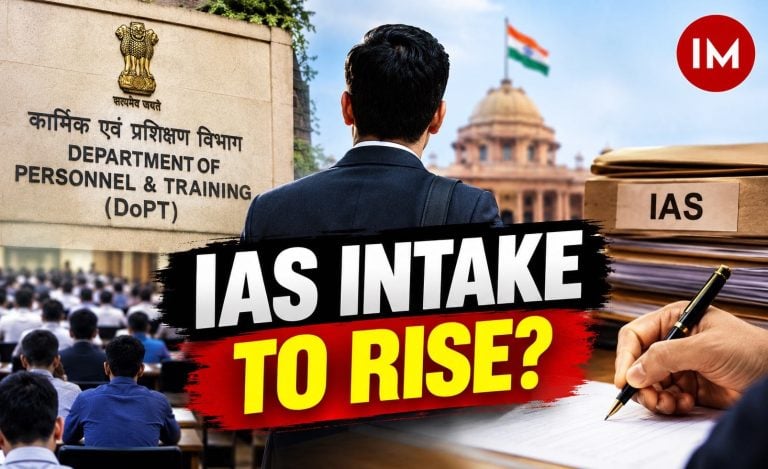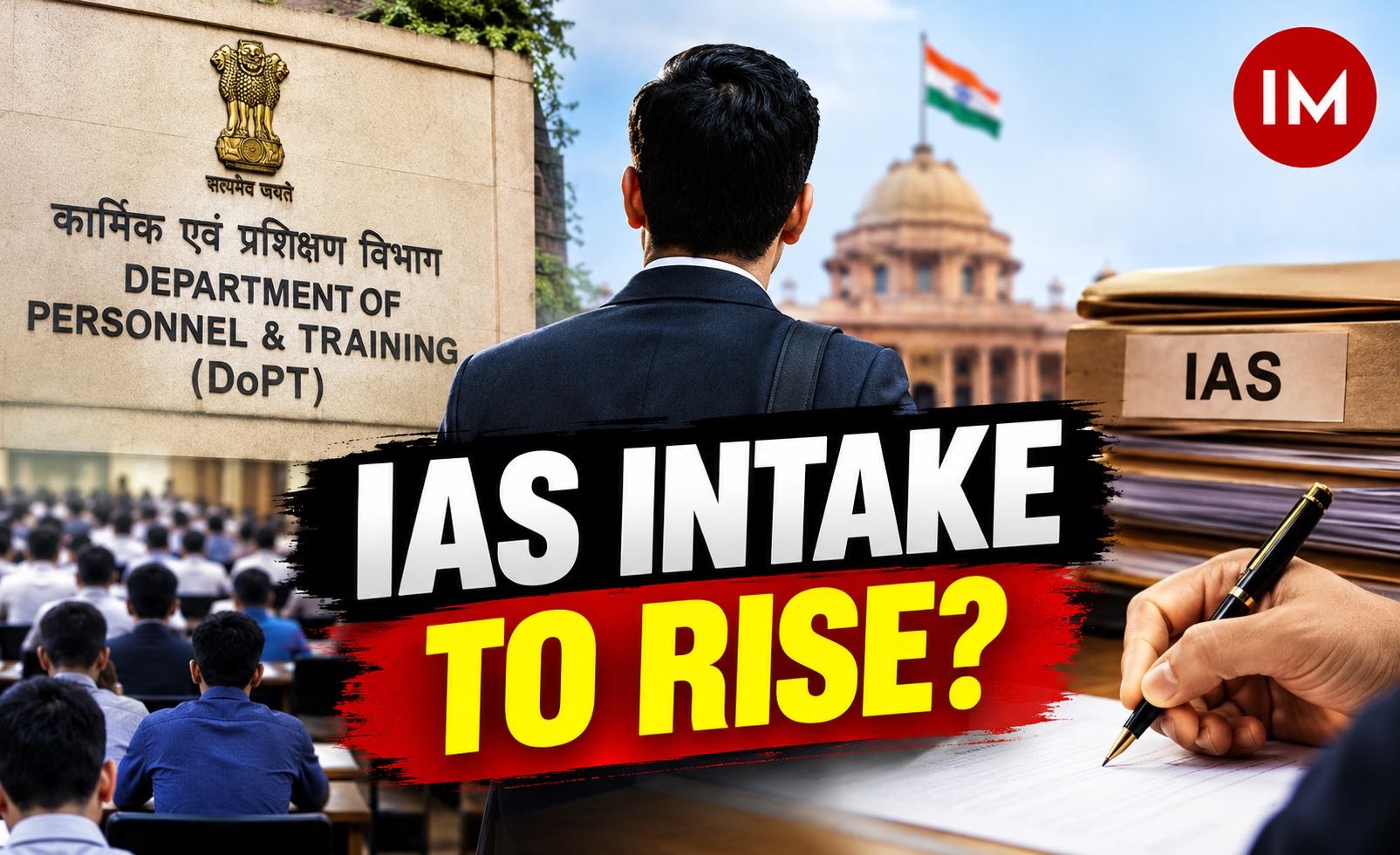
New Delhi: The Department of Personnel and Training (DoPT) is exploring ways to increase the annual intake of Indian Administrative Service (IAS) officers as the country faces a reported shortage of around 1,500 officers against its sanctioned strength.
According to reports, the Union Government is considering ways to raise recruitment in a phased manner through the Union Public Service Commission (UPSC). The objective is to narrow the gap between the sanctioned strength of the IAS and the number of officers actually in position, while addressing the growing administrative demands on the service.
The issue has also been highlighted by the Parliamentary Standing Committee on Personnel, Public Grievances, Law and Justice, which has called for a significant increase in annual IAS recruitment and faster reviews of cadre strength.
IAS Shortage: Uttar Pradesh, Bihar and AGMUT Among the Affected Cadres
The gap between sanctioned and in-position IAS strength remains a concern across several cadres. According to the information cited in parliamentary committee reports, Uttar Pradesh has a shortage of 104 officers, Bihar has a gap of 94, and the AGMUT cadre has a shortage of 87 officers.
These figures reflect the difference between the number of officers authorised for the respective cadres and those currently in position.
Read Also: Chhattisgarh: 3 State Administrative Service Officers Promoted to IAS; DoPT Issues Order
The overall shortage of around 1,500 IAS officers has raised concerns about the availability of officers for key administrative responsibilities at both state and central levels.
A shortage of officers can increase the workload on serving personnel, complicate the filling of important posts and place additional pressure on state governments to maintain administrative continuity.
DoPT Exploring Higher Annual IAS Recruitment Through UPSC
Sources in the DoPT have indicated that the Union Government is aware of the shortage and is working on possible ways to increase the annual intake of IAS officers.
The approach under consideration involves raising recruitment through the UPSC in a phased manner. However, the supplied information does not specify the proposed annual intake, the timeline for increasing recruitment or whether a final decision has been taken.
Increasing the number of officers entering the service could help address the shortage over time, although recruitment and training take several years before new officers can fill the full range of administrative responsibilities.
The proposal is therefore being considered in the context of the country’s evolving governance requirements and the need to maintain adequate staffing across IAS cadres.
Parliamentary Panel Flags Administrative Problems Due to Officer Shortage
The Parliamentary Standing Committee on Personnel, Public Grievances, Law and Justice has also raised concerns about the shortage of IAS officers.
In its 112th report, the committee observed that the deficit has led states to adopt measures such as appointing non-cadre officers to cadre posts and continuing them in such positions beyond the permissible time limit.
The panel also noted that serving officers are sometimes assigned multiple charges to keep administrative work functioning despite staff shortages.
According to the committee, such arrangements can compromise administrative efficiency. Assigning several responsibilities to the same officer can stretch available capacity, while prolonged appointments of non-cadre officers to cadre posts can create difficulties in maintaining the intended staffing structure.
The committee has consequently urged the DoPT to increase annual IAS intake significantly, keeping in view the changing needs of Indian administration.
Panel Recommends Review of IAS Cadre Posts in States
Alongside higher recruitment, the parliamentary committee has recommended that the Centre undertake a review of posts designated as cadre posts and reserved exclusively for IAS officers in state governments.
Cadre reviews help determine the number and distribution of posts in a service in light of administrative requirements. The committee’s recommendation highlights the importance of assessing whether existing cadre structures adequately reflect the responsibilities and staffing needs of states.
A review could help the Centre and state governments examine sanctioned positions and the deployment of officers, alongside measures to address the overall shortage.
The panel has emphasised that resolving the staffing gap requires attention not only to recruitment but also to the organisation and allocation of posts.
Cadre Review of Central Group A Services Also Pending
The committee has also drawn attention to delays in cadre reviews involving Central Group A services.
According to the report cited in the supplied information, cadre review proposals for 12 Central Group A services were awaiting Cabinet approval, while proposals for nine services were pending with the Cadre Review Committee.
The panel expressed hope that these matters would be completed at the earliest.
It also asked the DoPT to take steps to expedite cadre reviews for the remaining 17 services and ensure that the process is completed without unnecessary delay.
The recommendations underline a wider concern about staffing structures across government services, beyond the IAS alone.
Higher IAS Intake and Cadre Reforms Seen as Key Steps
The DoPT’s reported consideration of higher annual IAS recruitment comes amid calls for a more comprehensive response to the shortage of officers.
The parliamentary committee has linked the shortage to administrative workarounds, including multiple charges and the continued appointment of non-cadre officers to cadre posts. It has also stressed the need to review cadre strength and expedite pending cadre-review proposals.
Increasing annual recruitment could help narrow the gap over time, while cadre reviews could support better alignment between authorised posts and administrative requirements.
However, the scale and timing of any increase in IAS recruitment will depend on the government’s final decisions. No revised annual intake figure or implementation timeline has been specified in the information available.