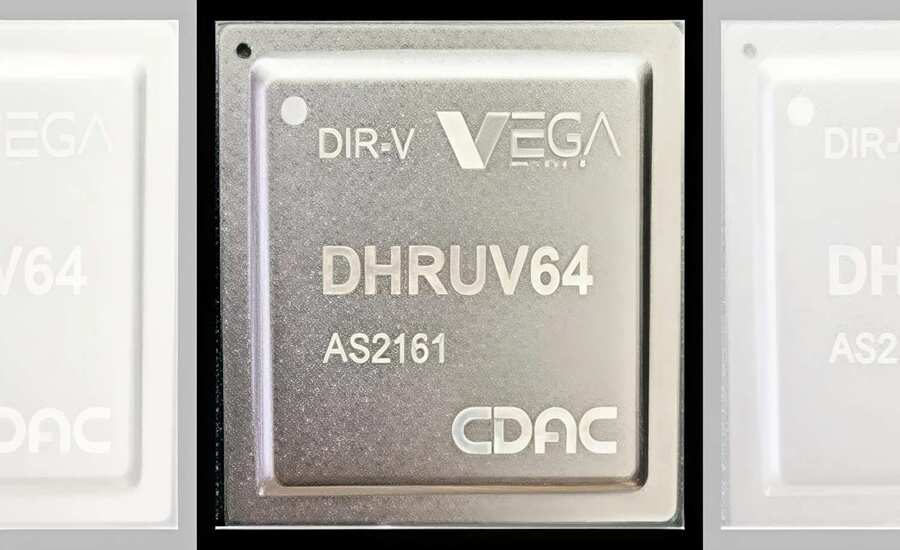
New Delhi: India has taken a significant leap in its pursuit of technological self-reliance with the official launch of Dhruv64 microprocessor, the nation’s first indigenously designed 1.0 GHz, 64-bit dual-core microprocessor.
The milestone, announced by the Government of India, marks a pivotal achievement in building a robust domestic semiconductor ecosystem, reducing dependency on imported chips, and laying the foundation for future innovation across critical sectors from defence systems to consumer electronics.
At a time when microprocessor technology is a cornerstone of modern computing and strategic applications, India’s entry into the high-performance processor domain has been hailed as a leap toward Aatmanirbhar Bharat — a self-reliant India in deep technology.
Background of Dhruv64 microprocessor
Microprocessors are the heart of contemporary digital systems — powering everything from smartphones and servers to automotive electronics, industrial machines, 5G infrastructure, and defence equipment.
Read also: Mona Khandhar: The Woman Powering Gujarat’s Big Leap Into Semiconductors
For years, India’s semiconductor industry has relied largely on imports, even as the country has emerged as one of the world’s largest consumers of computing chips. According to official sources, India accounts for nearly 20 per cent of global microprocessor consumption — a striking figure that underscores the strategic urgency behind indigenous chip development.
To change this paradigm, the Government of India has steadily expanded national programmes to build local design capacity, nurture talent, and create a complete ecosystem from research to fabrication.
Initiatives such as the Microprocessor Development Programme (MDP), Digital India RISC-V (DIR-V), Chips to Startup (C2S), and the India Semiconductor Mission (ISM) have catalysed collaborations between research institutions, industry, and academia.
What Is Dhruv64 microprocessor? Design and Technical Features
Dhruv64 is a 1.0 GHz, 64-bit dual-core microprocessor designed and developed by the Centre for Development of Advanced Computing (C-DAC) under the Microprocessor Development Programme.
The chip is based on the open-source RISC-V architecture, which allows flexibility in design and eliminates costly licensing barriers — a strategic advantage for India’s growing microprocessor industry.
Key Technical Features of Dhruv64 Microprocessor
64-bit architecture: Enables enhanced computing power and support for modern applications.
1.0 GHz clock speed with dual cores: Offers improved multitasking and performance compared to previous generations of indigenous chips.
Modern architectural design: Delivers efficiency, reliability, and support for advanced system integration, making it suitable for a diverse range of uses.
Seamless integration: Built to integrate with various hardware platforms — from embedded systems to larger industrial setups.
The combination of these features positions Dhruv64 as not just a symbolic achievement but a functional building block for numerous high-impact applications.
Building the Indigenous Processor Ecosystem
Dhruv64 is part of a broader, multi-stage effort to establish a full stack of Indian processor technologies. India’s strides in microprocessor development include earlier efforts such as:
SHAKTI: Designed at IIT Madras for strategic and space applications.
AJIT: Developed by IIT Bombay for industrial and robotics use.
VIKRAM: Created by ISRO and SCL for space navigation and harsh environment applications.
THEJAS64: An earlier 64-bit design by C-DAC, also fabricated domestically.
Together, these efforts have set the stage for Dhruv64 and prepare the ecosystem for next-generation processors like the Dhanush and Dhanush+ families, which are already under development.
Government Support and the RISC-V Push
The success of Dhruv64 is closely tied to the Indian government’s policy framework and funding programmes:
Digital India RISC-V (DIR–V): A flagship programme that supports design, testing, and prototyping of RISC-V-based chips and encourages collaboration across the innovation ecosystem.
Chips to Startup (C2S) and Design Linked Incentive Scheme: Designed to build skilled manpower and encourage industry participation in chip design.
India Semiconductor Mission (ISM): A broader strategic mission attracting large investments and supporting semiconductor fabrication and design partnerships.
These programmes create a fertile environment for sustainable growth in India’s semiconductor industry, helping bridge gaps between academia, startups, and established tech companies.