6 November 2026
ADVERTISEMENT
ADVERTISEMENT

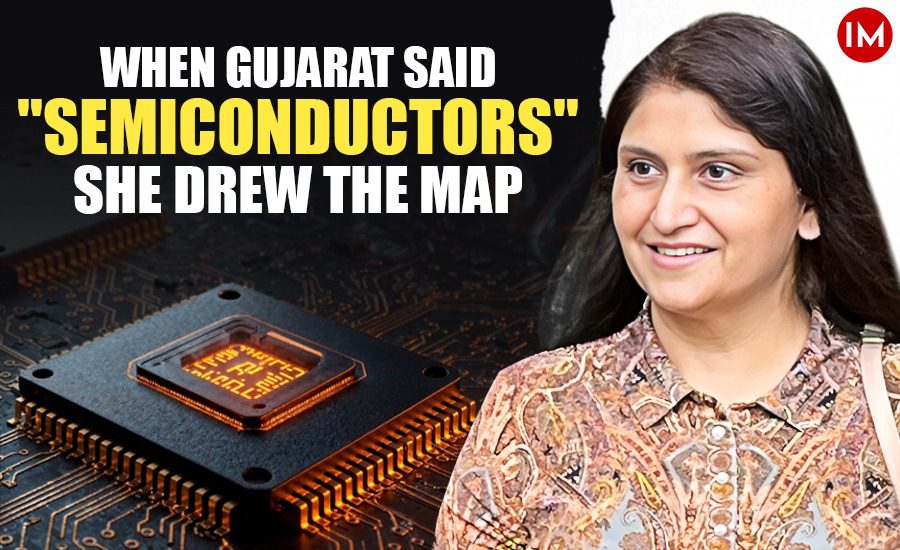
Mona Khandhar: The Woman Powering Gujarat’s Big Leap Into Semiconductors

From slum redevelopment and e-governance to steering ₹1.24 lakh crore semiconductor projects, IAS officer Mona Khandhar has quietly but firmly shaped some of Gujarat’s most ambitious turns.
Indian Masterminds Stories

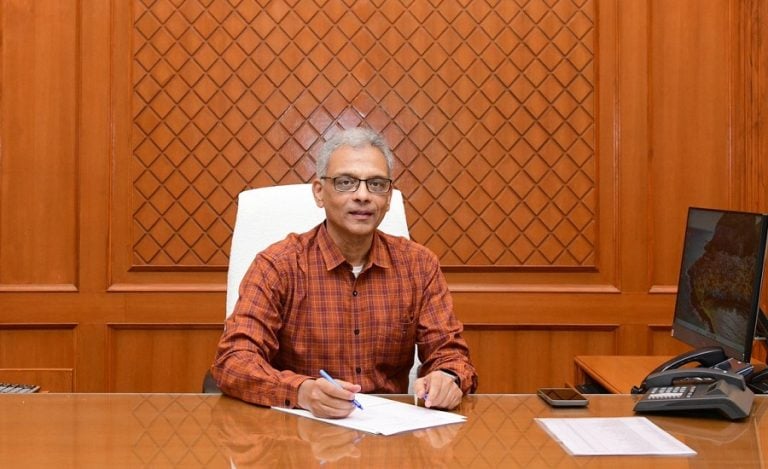
In the dimly lit corridors of policy and paperwork, Mona Khandhar doesn’t raise her voice, but you’ll know when she’s made a decision. Now serving as the Principal Secretary of the Department of Science and Technology, Gujarat, the 1996 batch IAS officer is leading the state’s push into one of the most complex sectors of our time – semiconductors.

It’s unfamiliar territory for many, not for Khandhar. “As a civil servant, I’ve learnt to adapt to new sectors and take the time to understand them thoroughly before planning and implementing strategies,” she once shared with the media. Her latest challenge? Making Gujarat the semiconductor hub of India.

And it’s not just lip service. She’s overseeing projects worth ₹1.24 lakh crore. Yes, crore, with factories by Micron Technologies, Tata Electronics, CG Power, and Kaynes Technology already in motion.

No Maps, Just Momentum

Gujarat’s semiconductor vision sounds futuristic. But at its core is old-school groundwork—land, electricity, approvals, and investor trust. Kaynes Technology was eyeing Hyderabad initially. Khandhar didn’t let it slide. Quiet follow-ups, logistical precision, and relentless backchannel coordination helped swing the decision in Gujarat’s favor.

Ask anyone in her circle, and they’ll tell you: she’s not easy to convince. She knows what she’s aiming for—and she rarely leaves room for doubt

From Harvard Classrooms to Gujarat’s Slums

This isn’t her first big shift. In 2014, fresh from a master’s in international economics at Harvard, she was made Housing Commissioner just before the general elections. Gujarat needed affordable housing and fast.

Between government red tape, skeptical slum dwellers, and impatient developers, most officers would tread carefully. Khandhar dove in. She helped shape slum rehabilitation policies and launched greenfield housing in Ahmedabad, Baroda, Surat, and Rajkot. Her efforts pushed private players like Adani and Godrej to reduce prices.

Building e-Villages Before It Was Cool

Long before “Digital India” became a buzzword, Khandhar had already moved on it. One of her earliest milestones was the eGram Vishwagram Project, which aimed to bring e-governance to Gujarat’s villages. Back then, people barely believed in digitizing cities, let alone remote blocks.

She didn’t just roll it out—she designed it.

When the Odds Were Tilted

Khandhar’s ascent hasn’t always been smooth. In a batch of 80, only 12 were women. She recalls how her independent thinking often drew puzzled looks or quiet resistance. There was skepticism about her ideas, her presence, even her intelligence.

But Gujarat, she says, was different. “While feudalistic attitudes exist, I found Gujarat to be relatively egalitarian,” she reflects.

The turning point? The early 2000s, when Narendra Modi took over as Chief Minister. For the first time, women in the service were given bigger, meatier assignments. Khandhar was among them.

Tokyo to Tablas: The Quiet Contrasts

Between 2019 and 2022, she served as Minister (Economics & Commerce) at the Indian Embassy in Tokyo. The precision of Japanese systems sharpened her strategic planning lens. But even with such high-level assignments, she never lost her softer side.

Classical music, dance, yoga, meditation—these aren’t weekend fads for her. They’ve been part of her life for decades. She even learned the tabla and sitar to accompany her own singing.

What’s Next? Probably Something Unwritten

Mona Khandhar doesn’t believe in calling something ‘final.’ Whether it’s semiconductor plants or slum housing, there’s always another layer to fix, another problem to pre-empt.

Her style is simple: understand deeply, act decisively, and speak when it counts. Gujarat’s semiconductor journey may be in its early stages, but with Khandhar anchoring it, there’s little room for drift.

Because when she’s in the room, things don’t just get discussed. They get done.

Indian Masterminds Stories
Join our WhatsApp Channel
ADVERTISEMENT
ADVERTISEMENT
Related Stories
ADVERTISEMENT
ADVERTISEMENT
NEWS
NLC India Limited
NLC India Targets 50:50 Renewable and Conventional Energy Mix by 2032, Plans to Expand Clean Energy Portfolio 
Pilibhit Tiger Reserve
Pilibhit Tiger Reserve Steps Up Patrols Ahead of Diwali Over Owl Poaching Fears
M Sai Kumar
Tamil Nadu Govt Forms Chief Secretary-Led Panel to Attract Investments Linked to Free Trade Agreements (FTAs)
Tomin Thachankary
'Don't Repeat Lies': Kerala High Court Rebukes Convicted Former DGP Tomin Thachankary Over Illness Claims
J&K High Court Judge Appointment
Arms Licence Scam: J&K High Court Seeks Centre's Compliance Report, IAS Officers Withdraw Plea
Tukaram Mundhe
IAS Tukaram Mundhe Urges Consumers to Check Sweets Before Diwali, FDA Seizes Adulterated Food Worth ₹64.45 Crore
Allahabad High Court Registrar General Issue
Former Assam DGP GM Srivastava Says ‘People Want Instant Justice’ Amid Rising Demands for Encounters 
Coaching
Bhagwant Mann Govt Announces Free UPSC and PCS Coaching for 1,000 Students Under Punjab Sikhiya Kranti 
ADVERTISEMENT
ADVERTISEMENT
Videos
Five years after Kargil, India sent its cricketing heroes to Pakistan where terrorism posed a deadly threat. The man guarding them, former Special Director of Intelligence Bureau, Mr. Yashovardhan Azad, reveals what all went behind the scenes during that crucial tour. 
Trust No One, Said His Instinct in Pakistan
Gajendra Singh Shekhawat
How India Plans to Boost Tourism, Create Jobs and Ease Overcrowding : Gajendra Singh Shekhawat on the Road to 2047
Dr Saket Badola IFS
Beyond Tigers and Safaris: How Corbett Literature Festival Wants to Change the Conservation Conversation
ADVERTISEMENT
UPSC Stories
IDAS Himanshu Tembhekar
Should UPSC Aspirants Give Up Their Hobbies? IDAS Officer Himanshu Tembhekar Explains
Should UPSC aspirants give up their hobbies? IDAS officer Himanshu Tembhekar explains how hobbies help...
UPSC Story
He Taught Students to Meet Expenses. Today, Sachin Bhadouria is a Scientist ‘B’ at CWPRS
Sachin Bhadouria overcame financial challenges and a Hindi-medium background to secure AIR 2 in a UPSC...
Vishwas Jhargad UPSC CAPF
A Photograph of His Mother Accompanied Vishwas Jhargad to the UPSC Interview, Where His Dream Came Closer
Vishwas Vijay Jhargad lost both parents as a child. With his family's support, he secured AIR 145 in...
CSR NEWS
REC Foundation Solar Street Light
REC Foundation to Install 350 Solar Street Lights Across Six Districts of West Bengal to Improve Rural Safety 
The CSR initiative, undertaken in partnership with Y4D Foundation, aims to improve night-time safety...
nalco
NALCO Signs MoU with SDI Bhubaneswar to Provide Skill Training to 60 Youths in Odisha
The three-month CSR programme will benefit youths from villages near NALCO's Angul and Koraput complexes,...
HUDCO Perpetual Tier I Bond Issue
HUDCO Launches Cleanliness and Green Initiatives Across India Under Special Campaign 6.0
From planting over 100 saplings at the Institution for the Blind in Delhi to organising cleanliness drives...
ADVERTISEMENT
ADVERTISEMENT
ADVERTISEMENT
Latest
NLC India Limited
NLC India Targets 50:50 Renewable and Conventional Energy Mix by 2032, Plans to Expand Clean Energy Portfolio 
Pilibhit Tiger Reserve
Pilibhit Tiger Reserve Steps Up Patrols Ahead of Diwali Over Owl Poaching Fears
ADVERTISEMENT
ADVERTISEMENT
ADVERTISEMENT
ADVERTISEMENT
ADVERTISEMENT
ADVERTISEMENT
ADVERTISEMENT
Videos
Five years after Kargil, India sent its cricketing heroes to Pakistan where terrorism posed a deadly threat. The man guarding them, former Special Director of Intelligence Bureau, Mr. Yashovardhan Azad, reveals what all went behind the scenes during that crucial tour. 
Gajendra Singh Shekhawat
Dr Saket Badola IFS
ADVERTISEMENT
ADVERTISEMENT