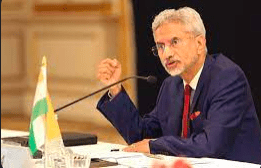
New Delhi: Myanmar in India’s foreign policy has gained renewed attention after External Affairs Minister Dr. S. Jaishankar said that the country lies at the confluence of three major priorities of India’s diplomacy.
Speaking during the inauguration of the Sarsobeikman Literary Centre Building, Jaishankar highlighted that Myanmar connects India’s Neighbourhood First policy, Act East policy, and MAHASAGAR vision including the Indo-Pacific region.
He stressed that India’s engagement with Myanmar is multidimensional and focused on strengthening cultural, economic, and strategic cooperation. The newly inaugurated literary centre is also expected to deepen cultural ties and preserve Myanmar’s rich literary heritage for future generations.
Importance of India-Myanmar Relationship
External Affairs Minister Dr. S. Jaishankar said Myanmar occupies a unique position in India’s diplomatic framework because it connects several strategic priorities.
According to him, Myanmar sits at the intersection of three key pillars of India’s foreign policy:
- Neighbourhood First Policy – strengthening relations with neighbouring countries.
- Act East Policy – boosting economic, cultural, and strategic ties with Southeast Asia.
- MAHASAGAR Vision (Mutual and Holistic Advancement for Security and Growth Across Regions) – India’s approach to security and development in the Indo-Pacific region.
Because of this geographic and strategic position, cooperation with Myanmar plays a crucial role in India’s broader regional strategy.
Why is Myanmar Important to India
Myanmar is one of India’s most important neighbours in Southeast Asia. The country shares a 1,640-kilometre land border with several Indian states, including Nagaland, Manipur, Mizoram and Arunachal Pradesh.
This long border makes Myanmar significant for several reasons:
1. Security and Border Stability
Cooperation between India and Myanmar helps manage cross-border insurgency and maintain peace in India’s northeastern states.
2. Connectivity to Southeast Asia
Myanmar serves as India’s gateway to ASEAN countries through projects such as the India-Myanmar-Thailand Trilateral Highway, which aims to improve trade and regional connectivity.
3. Economic and Trade Opportunities
India and Myanmar are working to expand trade, infrastructure cooperation and energy partnerships to boost regional growth.
Sarsobeikman Literary Centre: Strengthening Cultural Ties
Jaishankar inaugurated the Sarsobeikman Literary Centre Building, which symbolizes the strong cultural connection between India and Myanmar.
The centre will focus on:
- Preserving classical and folk literature of Myanmar
- Supporting translation and archival research
- Encouraging creative writing and academic exchanges
- Making Myanmar’s literary heritage accessible to younger generations and global audiences.
Such cultural initiatives are part of India’s people-centric development cooperation with Myanmar.
India’s People-Centric Development Approach
India’s engagement with Myanmar focuses on projects that directly benefit people and local communities.
These include:
- Cultural and educational cooperation
- Infrastructure and connectivity projects
- Trade and economic partnerships
- Security collaboration along the shared border
Jaishankar emphasized that India’s development assistance to Myanmar is “demand-driven and people-centric,” aimed at strengthening local economies and improving livelihoods.
India-Myanmar Relationship: Strategic Importance in the Indo-Pacific
Myanmar also plays an important role in India’s Indo-Pacific strategy.
Through initiatives like MAHASAGAR, India aims to promote:
- Maritime security
- Regional economic growth
- Sustainable development
- Stronger partnerships across the Indo-Pacific region
Because Myanmar sits between South Asia and Southeast Asia, it acts as a bridge connecting India with ASEAN and the broader Indo-Pacific region.