New Delhi: India’s nuclear energy programme is set to play a growing role in meeting the country’s future electricity requirements, including the rising demand from artificial intelligence (AI) systems and data centres, Union Minister of State Dr. Jitendra Singh has said.
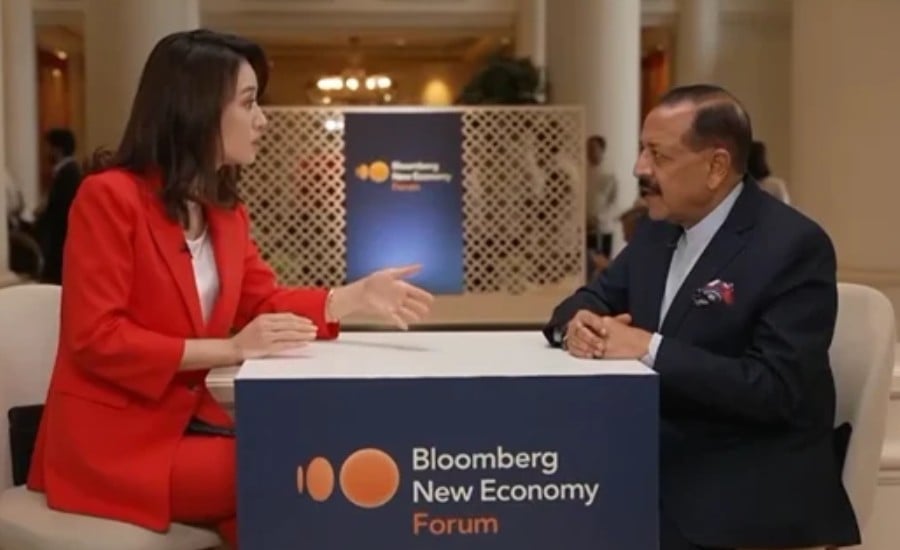
Speaking on the sidelines of the Bloomberg Economy Forum 2026, the Minister reaffirmed that India’s nuclear programme is dedicated to peaceful purposes and national development, guided by the vision of Dr. Homi Bhabha, regarded as the architect of the country’s nuclear programme.
India has set a target of achieving 100 GW of nuclear power capacity by 2047, alongside its commitment to reaching Net Zero emissions by 2070. According to Singh, nuclear energy will complement other power sources by providing a reliable supply of electricity as the country’s economy and technology sectors expand.
Nuclear Power to Support India’s AI and Data Centre Expansion
Singh highlighted the growing connection between energy infrastructure and technological development, noting that AI applications and data centres require dependable electricity supplies to operate continuously.
As digital infrastructure expands, ensuring a reliable power supply will become increasingly important for supporting computing facilities and other energy-intensive technologies.
The Minister said nuclear energy could supplement India’s existing energy programmes and help meet the electricity needs of an increasingly technology-driven economy.
Key points highlighted by the Minister include:
- 100 GW nuclear power target: India aims to achieve this capacity by 2047.
- Net Zero target: The country has committed to achieving Net Zero emissions by 2070.
- Reliable electricity: Nuclear energy is expected to complement other sources of power.
- AI and data centres: Growing digital infrastructure is creating additional demand for dependable electricity.
- Long-term energy security: Nuclear power is expected to contribute to meeting India’s future development needs.

Homi Bhabha’s Vision Continues to Guide India’s Nuclear Programme
Reiterating the peaceful purpose of India’s nuclear programme, Singh said the vision established by Dr Homi Bhabha continues to guide the country’s nuclear journey.
He emphasised that nuclear technology has an important role in national development, particularly as India seeks to strengthen energy security and expand access to clean electricity.
The Minister’s remarks placed the nuclear power target within the broader context of India’s development priorities and its long-term emissions commitments.
Nuclear energy is expected to form part of a wider energy mix, alongside other sources, as the country works towards meeting its growing electricity demand.
‘One Has to Be Intelligent Enough to Use Artificial Intelligence’
Beyond energy, Singh discussed the expanding role of AI across scientific and technological fields.
He said AI should be viewed as a tool that can be applied across sectors rather than as a standalone domain. Areas such as space research, life sciences and other fields of scientific development could increasingly benefit from its application.
Emphasising the need for human judgement, the Minister said, “One has to be intelligent enough to use Artificial Intelligence.”
He noted that while AI offers significant advantages, its responsible use remains an important challenge. The objective, he said, should be to harness the technology effectively without allowing it to be misused by individuals or other actors.
Singh stressed that regulations alone are not sufficient to ensure responsible AI use, highlighting the importance of integrity at both the individual and national levels.
Government Opens Critical Sectors to Private Participation
Singh also referred to the expansion of private sector participation in critical and sensitive areas under the government led by Prime Minister Narendra Modi.
According to the Minister, opening these sectors to non-government players has created wider opportunities for industry to contribute to innovation, technological advancement and national development.
The approach reflects an expanded role for private enterprises in areas that were traditionally more restricted, although the extent of participation varies by sector and the applicable regulatory framework.
Greater industry involvement is intended to support technological capabilities and widen the pool of participants contributing to India’s development objectives.
Nuclear Energy and AI Form Part of India’s Long-Term Development Goals
Singh’s remarks brought together two areas of growing importance to India’s development strategy: expanding reliable electricity generation and using emerging technologies responsibly.
The target of 100 GW of nuclear power capacity by 2047 reflects the government’s stated ambition to increase nuclear energy’s contribution to the national power mix. Meanwhile, the 2070 Net Zero commitment sets a longer-term emissions objective.
As AI applications and data centres expand, the availability of reliable electricity will remain an important consideration for the technology sector. Nuclear power is expected to complement other energy sources in meeting this demand.
The pace of progress towards these goals will depend on the implementation of nuclear energy projects, the development of supporting infrastructure and the responsible deployment of emerging technologies.