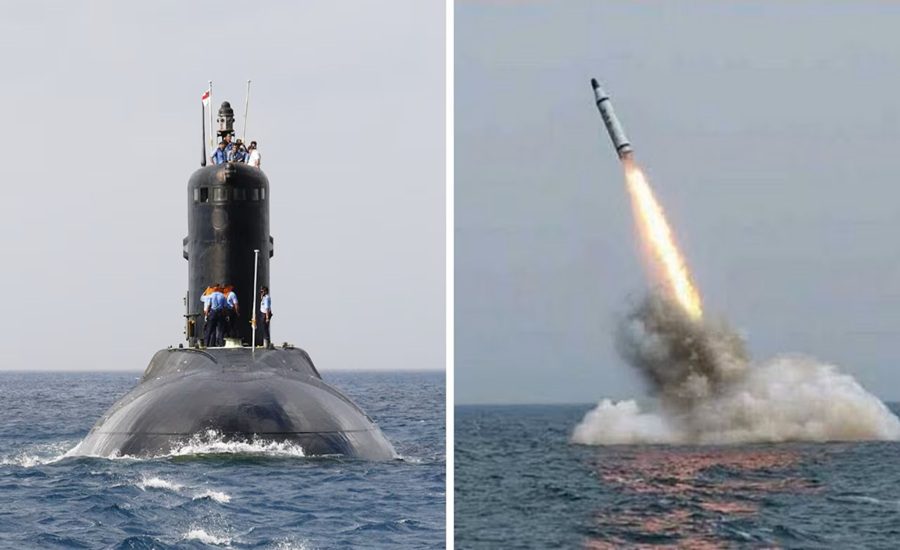
New Delhi, 1 July 2025 — India is advancing its strategic defence with upcoming sea trials of the K-6 submarine-launched hypersonic ballistic missile. Developed by the Defence Research and Development Organisation (DRDO), this powerful missile is expected to travel at speeds nearing Mach 7 to 7.5 and strike targets at distances over 8,000 kilometres. It will be deployed from the next-generation S-5 class nuclear-powered submarines, reinforcing India’s second-strike capability and completing its nuclear triad.
Hypersonic Speed and Extended Reach
The K-6 will travel at approximately 9,200 kilometres per hour, giving adversaries little time to detect or respond to its launch. Its extended range of 8,000 kilometres allows Indian submarines to remain in secure waters while targeting locations across Asia, Africa, and Europe.
The missile significantly surpasses the range of its predecessors—K-4 with 3,500 kilometres and K-5 with around 5,000–6,000 kilometres. This strategic edge will allow India to engage targets well beyond its immediate region and strengthens its deterrence posture.
MIRV Capability and Flexible Payloads
Equipped with Multiple Independently targetable Reentry Vehicles (MIRVs), the K-6 can carry four to six warheads capable of striking different targets. This increases the lethality of a single launch and ensures greater damage to adversarial assets in the event of retaliation.
The missile’s payloads can be either nuclear or conventional, giving it operational flexibility across strategic and tactical missions. MIRV capability places India among a select group of nations with such advanced missile technology and enhances its credibility in global defence circles.
Also Read: Indian Navy Extinguishes Blaze Aboard MT Yi Cheng 6, Rescues 14 Indian Crew
Tailored for the S-5 Class Submarines
The K-6 is designed to be launched from the upcoming S-5 class ballistic missile submarines, which are larger and more advanced than the existing Arihant-class. The missile measures over 12 metres in length, 2 metres in diameter, and is compatible with vertical launch systems on the S-5 submarines.
Each vessel is expected to carry 12 to 16 K-6 missiles, with a displacement of around 13,500 tonnes. This combination of platform and payload represents a quantum leap in India’s sea-based strike capabilities.
Technical Profile and Performance Features
The missile employs a three-stage solid fuel propulsion system, giving it high speed and a consistent flight trajectory through all stages. It is designed to carry a payload of approximately 2–3 tonnes and has an estimated Circular Error Probability (CEP) of 90–100 metres, ensuring accurate targeting.
The integration of composite materials and stealth technology enhances its survivability during launch and flight. With a high terminal speed and deep-penetration capability, the K-6 is extremely difficult to intercept using conventional missile defence systems.
A Strategic Counter to Existing Threats
Unlike the BrahMos cruise missile, which travels at Mach 3 and has a range of 800 kilometres, the K-6 is an intercontinental ballistic missile designed for strategic deterrence. Its hypersonic speed, stealth, and MIRV capabilities make it a potent second-strike weapon.
Deployed on nuclear submarines, the K-6 will be undetectable while on patrol, ensuring India retains a survivable and credible nuclear deterrent in line with its stated no-first-use policy. The missile also counters growing regional threats and bolsters India’s maritime dominance.
Timelines and Strategic Significance
The K-6 project has been in development since 2017 and is aligned with the operational timeline of the S-5 submarine program. The first test launch is expected by the late 2020s, with full deployment likely in the early 2030s.
Once inducted, the missile will significantly enhance India’s strategic strike capability and defence preparedness. It also marks an important step towards self-reliance in advanced missile systems and positions India alongside global powers in underwater hypersonic deterrence.
Also Read: India Deepens Defence and Nuclear Cooperation with Argentina and Brazil