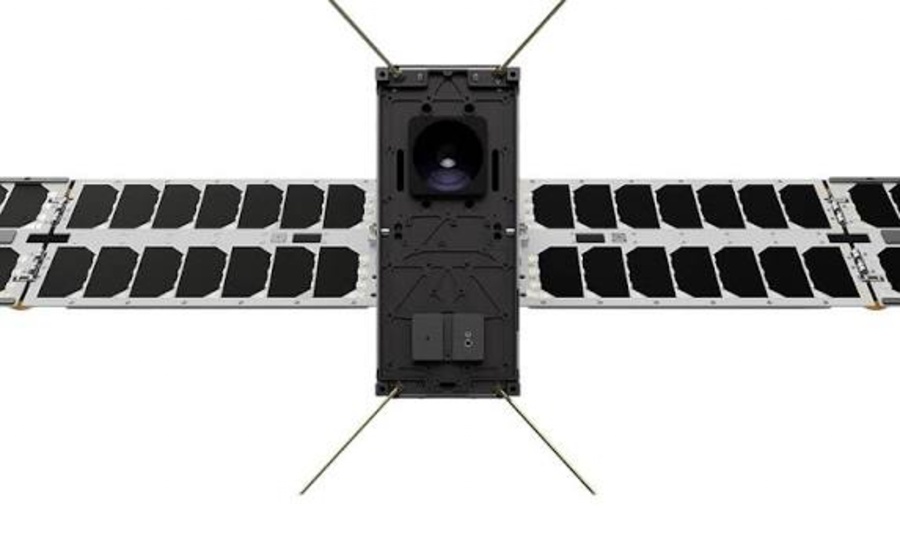
New Delhi: India’s space-tech startup TakeMe2Space is preparing to launch MOI-1A, the country’s first orbital computing satellite, aboard a SpaceX rocket on October 1, 2026. The mission aims to process data directly in space instead of sending massive raw datasets back to Earth, marking a significant step in the future of space-based computing and AI-powered satellite operations.
What Is TakeMe2Space MOI-1A Satelite
Traditional Earth-observation satellites capture images and data and then send large amounts of raw information to ground stations for processing. MOI-1A takes a different approach.
Read also: India Steps Closer to SpaceX-Like Technology as ISRO Floats Landing Leg Tender for Reusable Rockets
The satellite will process data while orbiting Earth and send only the final results back to customers. This can reduce transmission costs, save bandwidth, and deliver faster insights.
The mission highlights India’s growing private space sector and its increasing focus on advanced technologies such as artificial intelligence, edge computing, and orbital data processing.
TakeMe2Space MOI-1A Satelite Launch Details
Launch Date
TakeMe2Space plans to launch MOI-1A on October 1, 2026.
Launch Vehicle
The satellite will fly aboard a SpaceX mission as part of the Transporter-18 rideshare program, which carries multiple satellites into orbit during a single launch.
Mission Objective
The main goal is to enable customers to run AI models directly on the satellite and receive processed insights rather than downloading complete datasets.
How Orbital Computing Works
Customers will be able to upload artificial intelligence models to the spacecraft. As the satellite passes over a selected area, it can analyze collected data onboard and generate useful outputs. Only the processed results need to be transmitted back to Earth.
Reduced Data Transfer Costs
Large Earth-observation datasets often require significant bandwidth and storage. By processing information in orbit, MOI-1A can reduce the amount of data that must be transmitted, making operations more efficient and potentially more affordable.
Technical Specifications Of TakeMe2Space MOI-1A Satelite
The satellite is equipped with Nvidia Orin NX processors, capable of delivering approximately 117 trillion operations per second (TOPS) for AI workloads.
Satellite Size And Storage
MOI-1A is a 6U CubeSat weighing around 14 kilograms. It includes:
- 2 terabytes of onboard storage
- Nine-band multispectral imaging capability
- Peak power capacity of 120 watts
Who Will Use The Satellite
TakeMe2Space says it has already secured 23 customers for the mission. These customers come from several sectors, including:
- Agriculture
- Mining
- Supply chain management
- Insurance
- Geographic information systems
- Educational institutions
US-based space data analytics company Little Place Labs is also among the customers participating in the mission.
TakeMe2Space’s Journey So Far
The company successfully demonstrated orbital AI processing technology during a mission in late 2024. That mission proved the ability to upload applications, perform AI inference in orbit, and return results to Earth.
Previous Setback
A later MOI-1 satellite mission was lost after a third-stage launch vehicle failure. Despite that setback, the company continued developing its orbital computing platform.
Future Plans Beyond TakeMe2Space MOI-1A Satelite
TakeMe2Space plans to build larger interconnected satellites beginning in 2027. The goal is to increase computing power in orbit while reducing operational costs.
Orbital Data Centers
The company has also announced ambitions to develop orbital data-center infrastructure and cold-storage solutions for critical data in the coming years.
FAQs
The satellite is scheduled to launch on October 1, 2026, aboard SpaceX’s Transporter-18 rideshare mission.
MOI-1A is India’s first orbital computing satellite developed by TakeMe2Space. It is designed to process data directly in space using AI-powered computing hardware.
Traditional satellites send raw data to Earth for processing. Orbital computing satellites process data onboard and transmit only the final analysis, reducing bandwidth and costs.