New Delhi: The indigenous autoloader system for the FRCV program marks a major milestone in India’s defence innovation and self-reliance in military technology. Developed jointly by Chennai-based Jeanuvs Private Limited and the Defence Research and Development Organisation’s (DRDO) Combat Vehicles Research and Development Establishment (CVRDE), this homegrown solution promises to reduce import dependency, cut costs, and tailor performance to Indian operational needs from deserts to high-altitude environments.
What Is the FRCV Program?
The Future Ready Combat Vehicle (FRCV) program is India’s next-generation main battle tank initiative, led by DRDO to replace ageing Russian-made T-72 tanks.
Official plans call for roughly 1,770 units to be inducted in phases, with a focus on enhancing mobility, protection, firepower, and automation.
Importance of Indigenous Autoloader System for FRCV Program
Historically, Indian tanks like the T-90 have relied on imported autoloaders from Russia, exposing supply chains to geopolitical risks and sanctions. The new system developed by Jeanuvs and CVRDE addresses this challenge directly by building a locally engineered unit.
Cost and Customisation Benefits
Experts estimate 30–40% cost savings compared to foreign systems, while custom design allows seamless integration with Indian combat doctrine — including operations in Ladakh’s high altitudes or Rajasthan’s deserts.
Features of the Indigenous Autoloader System for FRCV Program
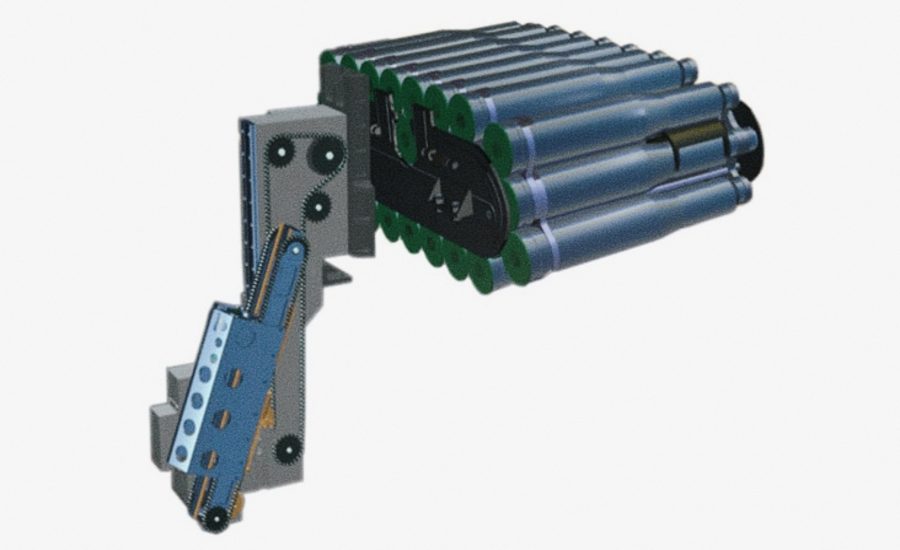
The system uses a bustle-type carousel magazine capable of holding up to 24 rounds — from armour-piercing fin-stabilised discarding sabot (APFSDS) to high-explosive anti-tank (HEAT) ammunition. It includes blow-out panels for crew safety and hydraulic + electric drives for precision handling.
Robust Under Extreme Conditions
Engineers tested the autoloader under high vibration, electromagnetic interference scenarios, and extreme temperatures — ensuring readiness for real battlefield conditions. Its fault-tolerant electronics and modular layout also simplify maintenance and future upgrades.
Impact of Indigenous Autoloader System for FRCV Program
By automating ammunition loading, the system improves firing efficiency and crew safety, especially under intense combat stress. This positions Indian tanks to achieve rapid response rates comparable with modern global MBTs.
Aligning With Army Modernisation Goals
The autoloader integrates with advanced fire control systems and could link to future AI-driven targeting modules — a key goal of the FRCV program’s automation roadmap.
Export and Global Competitiveness
This homegrown technology increases India’s appeal in global defence markets. Nations in Southeast Asia and Africa seeking cost-effective armoured solutions may find Indian-produced autoloaders an attractive alternative.
How Jeanuvs and CVRDE Achieved This
Jeanuvs brought cutting-edge automation and mechatronics expertise, while CVRDE contributed deep combat vehicle integration and metallurgical insight. This partnership exemplifies the Development-cum-Production Partner (DcPP) model under India’s Defence Acquisition Procedure 2020.
Advanced Engineering and Simulation
Jeanuvs invested in simulation tools to model performance and accelerate iterative design, while CVRDE ensured components could withstand 10,000+ operational cycles — a benchmark for modern autoloaders.
Looking Ahead: Production and Trials
Scaling up production is underway at Jeanuvs’ facility in Chennai, supported by DRDO funding. Army user trials are scheduled for 2026, with prototype FRCV units potentially fitted with the indigenous autoloader by 2028. Full-rate production could follow soon after, strengthening India’s armored fleet.
Read also: Inside Agni-3 Missile Test: Range, Capability, Purpose and Strategic Significance Explained