https://indianmasterminds.com

ADVERTISEMENT
ADVERTISEMENT

Inside Agni-3 Missile Test: Range, Capability, Purpose and Strategic Significance Explained

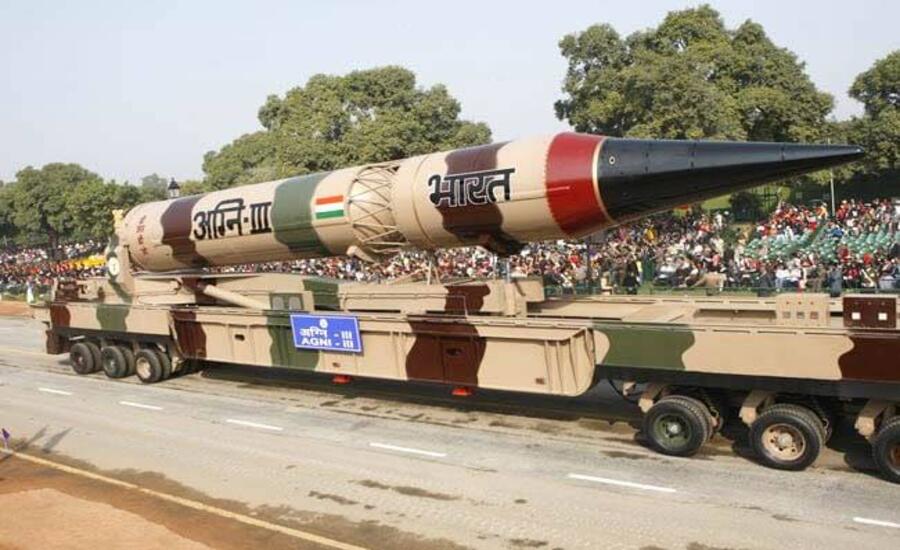
India has successfully test-fired the Agni-3 intermediate range ballistic missile from the Integrated Test Range in Chandipur, Odisha. Conducted on February 06, 2026, under the supervision of the Strategic Forces Command, the launch verified all operational and technical parameters of this indigenous Indian missile system.
Agni-3 Missile
Indian Masterminds Stories

New Delhi: India has once again demonstrated its advancing strategic deterrence capabilities with the successful test-firing of the Agni-3 Intermediate Range Ballistic Missile (IRBM).

This test was conducted at the Integrated Test Range (ITR), Chandipur in Odisha, under the supervision of the Strategic Forces Command, validating all operational and technical parameters of the system as part of routine user training and readiness checks.

What is the Agni-3 Intermediate Range Ballistic Missile?

The Agni-3 IRBM is a two-stage, solid-propellant ballistic missile developed by India’s Defence Research and Development Organisation (DRDO). Classified as an Intermediate Range Ballistic Missile, it has an estimated strike range of 3,000–3,500 kilometres, enabling it to engage targets at strategic distances while enhancing India’s defence posture.

Read also: DRDO’s Microwave Weapon Explained: Technology, Range, and Strategic Impact on India’s Defence

The missile is road-mobile and rail-mobile, which enhances its deployment flexibility. It is capable of carrying a substantial payload, including conventional or nuclear warheads, and is integrated with advanced navigation and guidance systems to ensure reliable performance.

What is Significance of Agni-3 Missile

The recent test was carried out to verify all technical and operational parameters of the weapon system under actual launch conditions. This ensures that the missile and its associated infrastructure remain capable and ready for deployment when required by defence planners.

Strategic Forces Command at the Helm

The Strategic Forces Command (SFC) — responsible for managing India’s strategic nuclear arsenal — oversaw the launch. The SFC routinely conducts user training launches to maintain proficiency, accuracy, and preparedness across strategic assets.

Boost to India’s Deterrence Posture

The success of this test reinforces India’s comprehensive deterrence structure. Intermediate range ballistic missiles like Agni-3 are critical components of India’s surface-to-surface strike capability, complementing shorter-range systems and those with intercontinental reach.

Historical Context of Agni-3 Missile

The Agni-3 missile forms part of the broader Agni family of ballistic missiles, which range from short-range systems like Agni-I to longer-range missiles such as Agni-V. Agni-3 was inducted into India’s Strategic Forces Command in 2011 after a series of successful developmental tests.

Its predecessor Agni-II had a range of around 2,000 km, while Agni-3 extended that reach to approximately 3,500 km — a significant leap in capability that allows strikes deep into strategic target sets if ever needed.

Historically, Agni-3 has undergone multiple successful tests since its first launch in 2007, establishing its reliability over years of service.

Strategic Implications for India and the Region

Agni-3’s capabilities contribute to credible deterrence — a cornerstone of India’s defence strategy. The combination of range, mobility, and payload flexibility underpins India’s ability to respond to threats or escalate deterrence effectively.

Integration with Nuclear Deterrence

Ballistic missiles like Agni-3 form an integral part of India’s nuclear command and control structure, ensuring a robust strategic framework alongside land, air, and sea-based delivery platforms.

Future of India’s Strategic Missile Program

With continuing advancements in indigenous missile technologies, India is refining its strategic missile family. Tests of other Agni variants, investment in precision guidance technologies, and enhanced payload configurations foreshadow a future where India’s missile capabilities remain at the forefront of defence innovation.

Read also: DRDO Enhances Missile Capabilities for Army, Navy & Air Force: BrahMos Range, Hypersonic Missiles, and SFDR Technology


Indian Masterminds Stories
ADVERTISEMENT
ADVERTISEMENT
Related Stories
ADVERTISEMENT
ADVERTISEMENT
NEWS
dhami
Uttarakhand Disaster Management Model Gains Global Praise at BRICS DRR Forum for Innovation and Resilience 
cm dhami
CM Pushkar Singh Dhami Stresses Inclusive, Tech-Driven and Timely Justice System at Uttarakhand Judges’ Conference
Chandigarh IAS officers repatriated
Chandigarh’s Search for Senior IAS Officer Stuck as Home Ministry Yet to Clear Names
Karnataka
Karnataka IPS Reshuffle: Pronab Mohanty Posted as CID DGP; Major Intelligence & Security Overhaul in State Police
Karnataka-govt-announces-state-wide-close-down-for-14-days
Karnataka Govt Transfers 6 IAS Officers; Munish Moudgil Appointed Principal Secretary in CMO
IAS Officers Indian Administrative Services
UP High Court Imposes ₹5,000 Fine Each on Two IAS Officers, Orders Personal Payment for Non-Compliance
psuwatch_import_wp-content_uploads_2022_02_RBI-recruitment-2019
Who Is Swaminathan Janakiraman? Former SBI MD Re-Appointed as RBI Deputy Governor for Two More Years
MP CM Bhagwat Kathy
‘Listening to Bhagwat Katha Dispels Sorrows and Suffering’: CM Mohan Yadav Announces Shri Krishna Tirth Projects in MP
ADVERTISEMENT
ADVERTISEMENT
Videos
ajay suri
When The Entire Film Crew Was At The Mercy of King Cobra
Manisha Khatri
How IAS Officer Manisha Khatri IS Turning Nashik Kumbh 2027 Into A Digital Mega City
Vikas Vaibhav
How IPS Officer Vikas Vaibhav Turned a Dream Into Bihar’s Biggest Youth Movement
ADVERTISEMENT
UPSC Stories
Brijesh Parmar RAS
Failed Class 12, Failed BA First Year, Chose Dance, Then Cracked RAS Twice: The Story of Brijesh Parmar
Failed Class 12 and BA first year, pursued professional dance, then cracked RAS twice. Read Brijesh Parmar's...
IFS Akshat Singhal
Cracked UPSC CSE, IFS and Engineering Services: The Inspiring Journey of Akshat Singhal While Balancing a Full-Time Job
Rajasthan's Akshat Singhal Balanced a Demanding Government Job, Multiple UPSC Attempts and Personal Sacrifices...
Bhoomika Jain UPSC CSE 2025
A First for Generations: Bhoomika Jain Clears UPSC CSE 2025 After Two Failed Attempts
Bhoomika Jain from Satna secured AIR 331 in CSE 2025 after clearing the exam in her third attempt. Read...
CSR NEWS
NTPL
NTPL Signs ₹2.97 Crore CSR MoU with Gandhigram Rural Institute to Establish Gandhi Museum in Tamil Nadu
Project aims to preserve Mahatma Gandhi’s legacy through education, research, and heritage conservation...
NCL
NCL Signs ₹25 Lakh MoU with Singrauli Administration for Jal Ganga Sanvardhan Abhiyan Water Conservation Project
CSR initiative to build three ponds in Chitrangi block aims to boost groundwater recharge, irrigation...
DVC
DVC Donates 2 Ambulances in Koderma to Boost Rural Emergency Healthcare Services Under CSR Initiative
In collaboration with NGO Pehchan, Damodar Valley Corporation strengthens healthcare access in Jharkhand...
ADVERTISEMENT
ADVERTISEMENT
ADVERTISEMENT
Latest
dhami
Uttarakhand Disaster Management Model Gains Global Praise at BRICS DRR Forum for Innovation and Resilience 
cm dhami
CM Pushkar Singh Dhami Stresses Inclusive, Tech-Driven and Timely Justice System at Uttarakhand Judges’ Conference
ADVERTISEMENT
ADVERTISEMENT
ADVERTISEMENT
ADVERTISEMENT
ADVERTISEMENT
ADVERTISEMENT
ADVERTISEMENT
Videos
ajay suri
Manisha Khatri
Vikas Vaibhav
ADVERTISEMENT
ADVERTISEMENT