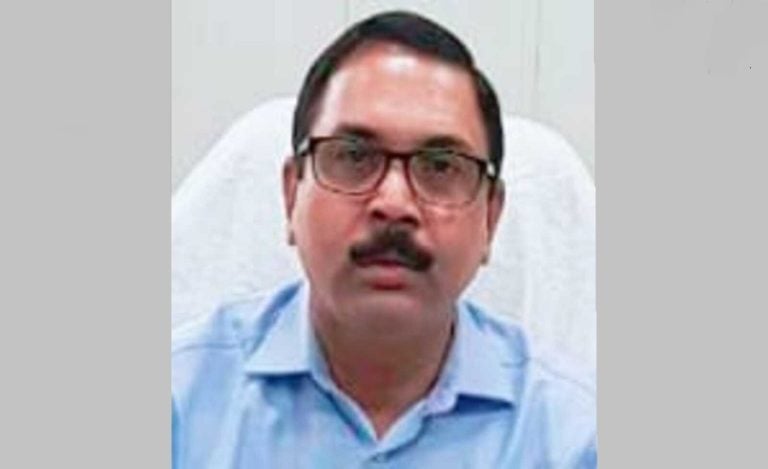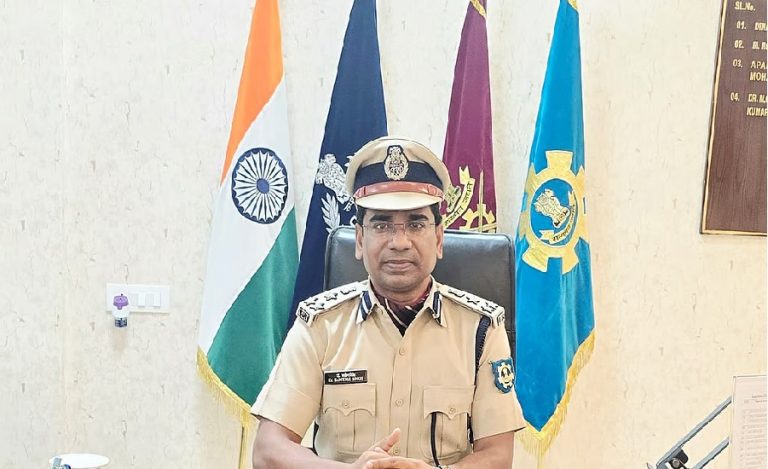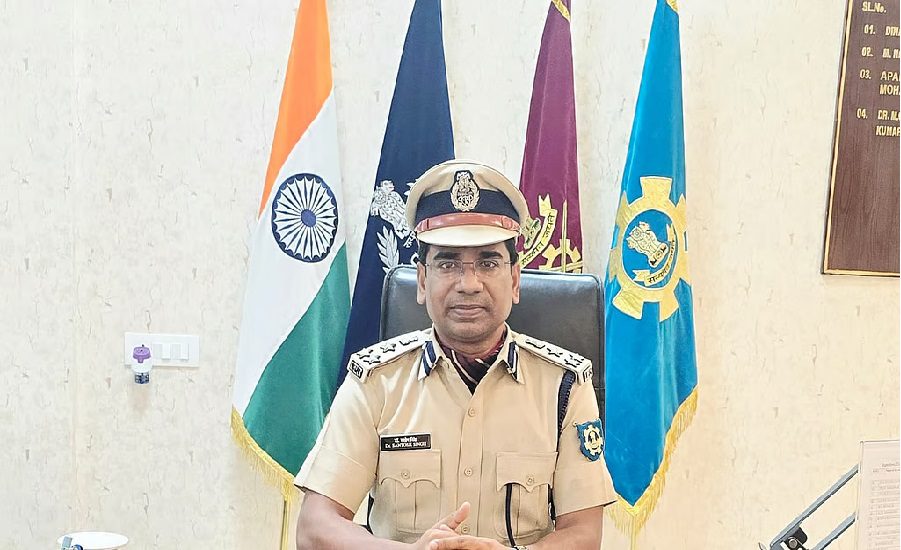
New Delhi: From tackling Left-Wing Extremism in the forests of Bastar and Sukma to leading community-oriented policing initiatives and researching United Nations peacebuilding, Dr Santosh Kumar Singh, a 2011-batch Indian Police Service officer of the Chhattisgarh cadre, has built a career that combines field policing with academic scholarship.
The IPS officer has now taken charge as Deputy Inspector General (DIG) of the Central Industrial Security Force (CISF) at the Delhi Metro Rail Corporation (DMRC). He will oversee security arrangements across the extensive Delhi Metro network, one of the country’s most critical urban transportation systems.
Singh was on central deputation and was serving as DIG, CISF South Zone-2, in Hyderabad, before being entrusted with his new assignment.
Known for his experience in counter-insurgency operations, community policing and academic work in international relations, Singh has been described as a “scholar-warrior” because of his unusual combination of policing experience and academic credentials.
From Uttar Pradesh Roots to the IPS
Born in 1985, Santosh Kumar Singh hails from Ghazipur district of Uttar Pradesh. He is the son of senior journalist Ashok Kumar Kushwaha.
Singh completed his high-school education at Jawahar Navodaya Vidyalaya in Ghazipur. He subsequently moved into higher education, where his academic performance helped shape the scholarly side of his career.
He studied at Banaras Hindu University (BHU), where he reportedly topped his batch during graduation and later earned a gold medal in his postgraduate studies in Political Science.
He also cleared the UGC NET-JRF and pursued an M.Phil. in International Relations from Jawaharlal Nehru University (JNU), New Delhi. He later earned a Ph.D. from Hemchand Yadav University.
While pursuing his academic journey at JNU, Singh developed an interest in grassroots public service. He subsequently cleared the UPSC Civil Services Examination and joined the Indian Police Service on August 29, 2011, entering the Chhattisgarh cadre.
Read also: Who Is S.N. Gupta? West Bengal DGP Gets Second 6-Month Extension; Tenure Extended Till April 2027
A Career Spanning Nine Districts of Chhattisgarh
Singh’s field career has taken him across several challenging policing assignments in Chhattisgarh.
Over the course of his state service, he served as Superintendent of Police (SP) or Senior Superintendent of Police (SSP) in nine districts of the state. His assignments included districts that had experienced significant Maoist or Left-Wing Extremism-related violence.
One of the defining phases of his career was his nearly four-year association with the Bastar and Sukma regions, where he worked in areas affected by Left-Wing Extremism.
He served as Additional Superintendent of Police (ASP) in Sukma, one of the state’s worst-affected districts during the peak years of Maoist violence. The assignment exposed him to some of the most difficult operational and security challenges faced by police personnel in central India.
He later served as SP in districts including Raigarh, Korba, Bilaspur and Koriya, taking on both law-and-order responsibilities and community-oriented policing initiatives.
His policing career has therefore covered both high-intensity counter-insurgency environments and conventional district policing.
Community Policing and the ‘Nijaat’ Initiative
Alongside conventional policing, Singh has been associated with initiatives aimed at strengthening the relationship between police and communities.
One of his prominent initiatives is the ‘Nijaat’ campaign, an anti-drug public awareness drive designed to address substance abuse and illicit drug trafficking.
The campaign combined action against illegal drug networks with awareness, counselling and rehabilitation-oriented support for people struggling with addiction.
The approach reflected Singh’s emphasis on policing that goes beyond enforcement and seeks to address the social conditions surrounding crime and substance abuse.
His work in community policing and innovative policing practices later earned him international recognition.
International Recognition: IACP ‘40 Under 40’
In 2021, Singh received the ‘40 Under 40’ award from the US-based International Association of Chiefs of Police (IACP).
The recognition came for his work in innovative community policing, including child-friendly policing initiatives in Mahasamund, as well as his leadership in areas affected by Left-Wing Extremism.
The award added an international dimension to his professional record and highlighted his work in combining conventional law enforcement with community-oriented approaches.
From Police Headquarters to Central Deputation
Before moving to central deputation, Singh served at the Chhattisgarh Police Headquarters in Nava Raipur, where he was posted as DIG, CCTNS/SCRB.
His experience subsequently took him to the Central Industrial Security Force.
In March 2026, Singh moved to central deputation and joined the CISF as a DIG. He was initially posted as DIG, CISF South Zone-2, Hyderabad.
In that assignment, he was responsible for security arrangements involving important industrial and strategic establishments across Andhra Pradesh, Telangana and Karnataka, besides ports along the eastern coast.
The role gave him experience in securing major industrial units, public sector undertakings and strategically important infrastructure spread across multiple states.
Now Responsible for Delhi Metro Security
Singh has now been reassigned to the CISF’s Delhi Metro security setup, taking charge as DIG at the DMRC.
The Delhi Metro has grown into one of the country’s largest urban rapid-transit networks, with 271 stations, connecting Delhi with several cities in neighbouring Uttar Pradesh and Haryana as part of the National Capital Region.
The security responsibility therefore places Singh in charge of a vast and highly visible operational network used by millions of passengers.
His new assignment is also markedly different from his earlier counter-insurgency postings. While his Chhattisgarh career involved policing in Maoist-affected districts and his previous CISF role focused on industrial and strategic infrastructure, the Delhi Metro assignment involves securing a dense urban transportation network spread across the National Capital Region.
The ‘Scholar’ in ‘Scholar-Warrior’
What distinguishes Singh’s career is the parallel development of his academic interests.
His postgraduate gold medal in Political Science, UGC NET-JRF qualification, M.Phil. in International Relations and Ph.D. reflect a sustained engagement with academics alongside his police career.
He has also authored the book Institutionalization of Peacebuilding, published by Manak Publications.
The book examines post-Cold War United Nations peacebuilding operations and reflects his academic interest in international relations, conflict resolution and peacebuilding.
His academic work has also made him a familiar name among students and researchers interested in international relations and UPSC preparation.
This combination of field experience in conflict-affected areas and academic work on peacebuilding has contributed to his description as a “scholar-warrior.”
A Distinctive Blend of Policing and Academics
Across nearly 15 years of service, Singh’s career has moved through several distinct areas — from Maoist-affected forests and district policing to police technology and crime records, industrial security and now one of India’s largest urban transport systems.
His field experience includes service in nine Chhattisgarh districts, including a significant stint in the Bastar-Sukma region. His later assignments have expanded into technology-driven policing, central security responsibilities and protection of strategic infrastructure.
At the same time, his academic work has remained a consistent part of his professional identity.
With his new assignment in Delhi, Singh now brings that combination of operational policing experience, community engagement and strategic understanding to the security of the Delhi Metro.