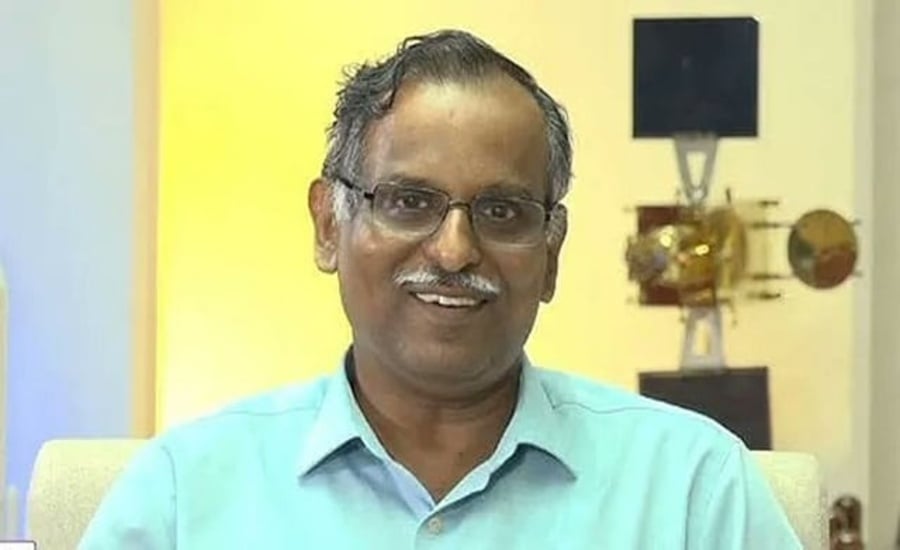
New Delhi: ISRO Chairman Dr. V. Narayanan has announced that the country is working towards achieving 50 launches annually by 2029, a huge jump from the early years of India’s space journey. The plan includes new launch facilities, greater private sector participation, advanced launch vehicles, and the Gaganyaan human spaceflight program.
The announcement reflects India’s long-term goal of becoming a leading global space power while building a stronger commercial space ecosystem. Official statements from ISRO leadership indicate that industry collaboration will play a critical role in achieving these ambitious targets.
Details of ISRO Space Expansion Programme
Dr. V. Narayanan said India is on track to conduct around 50 launches every year by 2029. The target marks a remarkable transformation for ISRO. According to Narayanan, there was a time when completing a single launch could take years. Today, the organization is moving toward a high-frequency launch model supported by government agencies, private companies, and research institutions.
Read also: ISRO Chairman Reveals Key Progress On India’s First Human Spaceflight Mission, Gaganyaan
The expansion aligns with India’s vision of increasing its presence in the global space economy and meeting rising domestic demand for satellites and space-based services.
Why India Needs More Launches
India’s demand for satellites is growing rapidly. Communication networks, navigation services, weather forecasting, disaster management, agriculture monitoring, defense applications, and broadband connectivity all require more satellites in orbit.
Narayanan noted that India may need hundreds of additional satellites over the coming years, making a higher launch frequency essential.
ISRO Space Expansion Programme: Growing Demand For Space Infrastructure
The country’s space-based services are becoming increasingly important for economic growth and national security. As India’s digital economy expands, demand for reliable satellite infrastructure is expected to rise significantly. This requires faster satellite manufacturing and more launch opportunities.
ISRO Space Expansion Programme: Next Generation Launch Vehicle To Drive Future Missions
A key pillar of India’s future launch strategy is the Next Generation Launch Vehicle (NGLV). The rocket is currently progressing through design and development stages and is expected to become a major component of India’s future heavy-lift launch capabilities.
The NGLV is being developed to support larger payloads, advanced missions, and long-term exploration objectives.
NGLV Expected To Strengthen India’s Space Capability
The vehicle is expected to support ambitious future missions, including deep-space exploration and large satellite deployments.
Experts believe the NGLV will help India compete more effectively in the global launch market while reducing dependence on foreign launch services.
ISRO Space Expansion Programme: Private Industry To Play A Bigger Role
ISRO’s future strategy includes significant participation from private companies. The Indian government has opened the space sector to private investment and innovation, leading to rapid growth in startups and commercial space firms. More than 450 space startups are now active in India.
Narayanan emphasized that ISRO is not being privatized. Instead, routine manufacturing and operational activities will increasingly be handled by industry, allowing ISRO to focus on advanced technologies, strategic missions, and scientific research.
PSLV Manufacturing Marks A Major Milestone
India’s first fully industry-built Polar Satellite Launch Vehicle (PSLV) is nearing operational readiness. The project demonstrates how private companies can successfully contribute to launch vehicle production while maintaining ISRO’s technological leadership.
Gaganyaan Mission Remains A Top Priority
India’s human spaceflight mission, Gaganyaan, continues to be one of ISRO’s most important programs. The mission aims to send Indian astronauts into space using indigenous technology. Several test missions are planned before the crewed flight takes place.
The upcoming uncrewed test flights will validate critical technologies needed for astronaut safety and mission success. These tests are considered essential milestones in India’s human spaceflight journey.
Human Spaceflight Will Expand India’s Capabilities
Successful completion of Gaganyaan will place India among a select group of nations capable of independently sending humans into space. The program is also expected to generate technological advancements that benefit multiple sectors.
ISRO Space Expansion Programme: New Launchpads Will Increase Capacity
Infrastructure expansion is another important part of ISRO’s roadmap. India currently conducts most launches from the Satish Dhawan Space Centre in Sriharikota. To support higher launch rates, additional launch facilities are being developed.
A new spaceport at Kulasekarapattinam in Tamil Nadu is expected to strengthen India’s launch capabilities and support future growth in the small satellite launch market.
ISRO Space Expansion Programme: Building A High-Frequency Launch Ecosystem
New launchpads, private launch operators, improved manufacturing capacity, and stronger industry participation are all expected to contribute to the 50-launch goal. Together, these developments will help India build a more resilient and competitive space ecosystem.
Read also: NASA Moon Base Programme: How ISRO Could Play A Major Role In Future Lunar Missions
FAQs
India needs more satellites for communication, navigation, weather forecasting, defense, broadband services, and scientific research. More launches are required to place these satellites into orbit.
ISRO aims to conduct 50 rocket launches every year by 2029, significantly increasing its current launch frequency to meet growing national and commercial demand.
Yes. Private companies will play a larger role in manufacturing, launch services, and satellite development, while ISRO focuses on research, advanced technologies, and strategic missions.