NEW DELHI: The race for the next Chief Secretary of Jammu & Kashmir is beginning to take shape as incumbent Chief Secretary Atal Dulloo, a 1989-batch IAS officer of the AGMUT cadre, approaches his superannuation on October 31, 2026. The Union Ministry of Home Affairs (MHA) is understood to be examining possible names for the key administrative position, with consultations expected to involve the Lieutenant Governor’s administration at Lok Bhawan.
The choice is likely to be influenced by a combination of seniority, suitability, administrative experience and the requirements of the Union Territory at the time of appointment. While senior AGMUT cadre officers are expected to constitute the principal pool, the possibility of a senior officer from another cadre being considered through the Department of Personnel and Training (DoPT) also remains open.
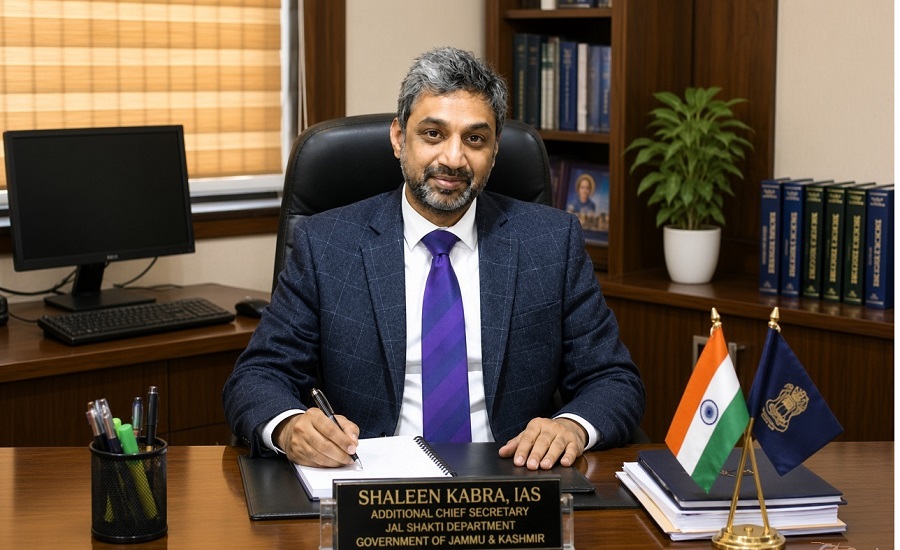
Among the names being discussed, Shaleen Kabra, a 1992-batch IAS officer of the AGMUT cadre and a former officer of the erstwhile Jammu & Kashmir cadre, has emerged as one of the prominent possibilities.
Seniority Window Narrows for Selection
The seniority profile of the AGMUT cadre makes the field particularly significant.
Dulloo, a 1989-batch officer, is scheduled to retire on October 31, 2026. Another senior 1989-batch officer, G Narendra Kumar, is also due to retire in September 2026. Rajendra Kumar, another senior officer in the reckoning, is scheduled to retire on December 31, 2026.
The 1990 batch has Jitendra Narain as its sole officer at this seniority level, but his retirement on October 31 also effectively reduces the availability of officers from the 1989-90 seniority group for the Chief Secretary’s post.
This makes the 1992 batch and subsequent batches particularly relevant to the succession exercise.
The final decision, however, need not necessarily follow batch seniority alone. Chief Secretary appointments can involve considerations relating to the officer’s current position, experience, cadre status, suitability and the administrative priorities of the government.
Shaleen Kabra Emerges as a Key Name
Among the senior officers available in the J&K administrative establishment, Shaleen Kabra stands out because of his long association with the Union Territory and his experience in several critical departments.
A 1992-batch IAS officer, Kabra belongs to the AGMUT cadre and was originally part of the erstwhile Jammu & Kashmir cadre. He is currently serving as Financial Commissioner (Additional Chief Secretary), Jal Shakti Department, in the Government of Jammu & Kashmir.
According to the J&K General Administration Department’s current officer records, Kabra also holds the additional charge of Financial Commissioner, Revenue, J&K, and Administrative Secretary, Estates Department. He is serving at Pay Level 17, the Fixed Scale, and was granted the Level 17 scale with effect from January 1, 2023.
His current responsibilities place him at the centre of several important areas of the Union Territory’s administration. He has also been associated with government committees dealing with senior-level administrative appointments and selection matters. A March 2026 J&K government order, for instance, listed Kabra as a member of the Establishment-cum-Selection Committee chaired by Chief Secretary Atal Dulloo.
His long administrative association with J&K could therefore be a factor in the succession discussions.
Who Is Shaleen Kabra?
Born on July 12, 1968, Kabra is a native of Rajasthan. His official J&K government profile records his 1992 appointment to the IAS and identifies his academic qualification as B.E. in Mechanical Engineering. His official property-return record also identifies him as an AGMUT 1992 officer, earlier J&K cadre, and records his present Level 17 status.
Kabra entered the IAS through direct recruitment following the UPSC Civil Services Examination and has served in a wide range of administrative assignments during a career spanning more than three decades.
His career has included field administration, central deputation, departmental leadership and senior-level policymaking in Jammu & Kashmir.
From Reasi and Kargil to Senior Administrative Roles
Kabra’s early career included field assignments in Jammu & Kashmir. He served as Sub-Divisional Magistrate (SDM), Reasi, in 1994 and subsequently served as Deputy Commissioner, Kargil, in 1998.
These assignments gave him direct experience of administration in geographically and strategically important parts of the region.
His subsequent career took him to the Centre, where he worked in important central government assignments. He served as Deputy Secretary in the Home Affairs set-up and later as Director in the Prime Minister’s Office (PMO).
His DoPT Executive Record Sheet records his tenure as Deputy Secretary, Home Affairs, from September 2005 to June 2006, followed by his posting as Director, Home Affairs, from July 2006 to March 2008, and subsequently as Director in the Prime Minister’s Office from March to September 2008.
The central deputation was followed by further assignments involving administration and public policy, adding to his experience beyond the Union Territory.
Extensive Experience in Jammu & Kashmir Administration
Kabra has subsequently occupied several important positions in the J&K administration.
He has served as Principal Secretary, Home Department, an assignment that placed him at the heart of the Union Territory’s internal security and administrative machinery. He has also served as Principal Secretary, Industries & Commerce Department, and as Chief Electoral Officer of Jammu & Kashmir.
His career in the Union Territory has also included a prolonged stint heading J&K government entities. According to the profile information provided for the officer, his longest single assignment involved more than seven years as Managing Director of J&K State entities.
His present responsibilities have further expanded his exposure to the UT’s financial, revenue, infrastructure and administrative systems.
The J&K government’s current civil list identifies him as Financial Commissioner (Additional Chief Secretary), Jal Shakti Department, with additional charge of Financial Commissioner, Revenue, and Administrative Secretary, Estates Department.
A Senior Officer With Longer Service Ahead
One factor that distinguishes Kabra from some of the older officers in the succession discussion is his remaining service tenure.
Born in July 1968, he is scheduled to retire on July 31, 2028. This would give him roughly two years of service beyond the retirement date of the incumbent Chief Secretary, Atal Dulloo.
Kabra is also empanelled at the Centre at the Additional Secretary level, while his current Level 17 position places him among the senior-most serving bureaucrats in the J&K administration.
His official J&K government profile confirms his progression to Level 17 with effect from January 1, 2023.
Other Senior Officers in the Wider Field
Kabra is not the only senior officer whose name could feature in the broader assessment.
Vijay Kumar, currently serving as Secretary in the Ministry of Ports, Shipping and Waterways, is among the senior officers whose experience and present central assignment could be relevant to any wider consideration.
Rajeev Kumar, currently the Chief Secretary of Delhi, is another senior officer in the broader pool. However, his proximity to retirement could be a factor in determining whether a move to J&K is considered.
The 1993 batch also provides senior-level options. Among those are Punya Salila Srivastava, Secretary in the Union Health Ministry, and Dheeraj Gupta, who is serving as Principal Secretary to Chief Minister Omar Abdullah.
Dheeraj Gupta’s continued presence in the J&K administration gives him considerable familiarity with the Union Territory’s current political and administrative structure. J&K government records have also previously listed Gupta alongside Kabra on senior administrative committees.
The eventual shortlist, therefore, could extend beyond a straightforward seniority-based selection from the AGMUT cadre.
Possibility of an Officer From Another Cadre
Although AGMUT officers are expected to remain central to the exercise, sources indicate that the Centre could also consider an officer from another cadre through the DoPT mechanism.
Such a move would broaden the potential field considerably, particularly if the Centre’s assessment of the Union Territory’s administrative requirements favours a particular combination of experience and seniority.
The selection of a Chief Secretary for a Union Territory also involves the Centre because of the administrative structure governing Union Territories and the role played by the Union government in senior appointments.
The J&K administration currently lists Atal Dulloo as Chief Secretary and Kabra immediately among the senior-most officers in its IAS civil list.
Dulloo’s Possible Next Assignment Also Under Discussion
The succession exercise is taking place alongside discussions about Atal Dulloo’s post-retirement assignment.
Government sources indicate that Dulloo is among two to three IAS and IPS officers whose names are being considered for the chairmanship of the Jammu & Kashmir Public Service Commission (JKPSC).
Dulloo was appointed Chief Secretary of J&K in December 2023. The J&K government’s official profile records his appointment to the post with effect from December 1, 2023, and identifies him as a 1989-batch officer with a Level 17 position.
His possible movement to another senior constitutional or statutory assignment would consequently coincide with the Centre’s decision on his successor at the Civil Secretariat.
Why the Succession Matters
The Chief Secretary’s office occupies a pivotal position in the J&K administrative structure, coordinating the functioning of departments and serving as the senior-most bureaucratic link between the elected government, the Lieutenant Governor’s administration and the wider administrative machinery.
The next Chief Secretary will therefore inherit an administration dealing with a broad range of issues, including development programmes, infrastructure, public services, financial management, security-related coordination and the implementation of government schemes across the Union Territory.
For an officer such as Kabra, who has already handled the Home, Industries & Commerce, Jal Shakti, Revenue and Estates portfolios and served as Chief Electoral Officer, the breadth of previous assignments provides significant familiarity with the institutional structure of J&K.
At the same time, the presence of other senior AGMUT and central deputation officers means the final selection remains open.
Final Choice Likely to Depend on Seniority and Suitability
With Dulloo’s retirement date approaching, the Centre is expected to narrow the field in the coming weeks. Seniority will be an important component of the exercise, but the profiles of the officers under consideration show that the decision could involve a combination of cadre position, administrative experience, current assignment, remaining service and suitability for the responsibilities of the Union Territory.
For now, Shaleen Kabra’s name has emerged prominently in discussions, particularly because of his 1992-batch seniority, extensive experience in J&K, present Level 17 position and service tenure extending to July 2028.
The final appointment, however, will be known only after the competent authorities complete the consultation and selection process.
Read also: MHA Sets October 5 Deadline for IAS Officer Mohammad Aijaz to Take Up Arunachal Posting