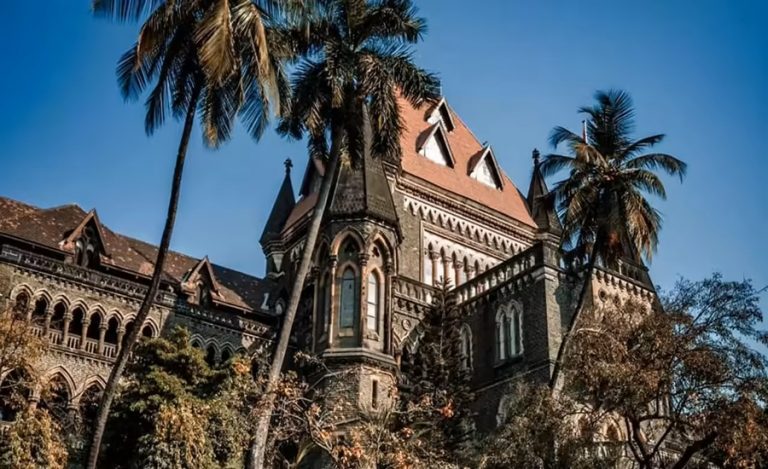
Maharashtra: The Bombay High Court judicial recruitment ruling has clarified who can receive the one-year deemed legal practice benefit for Maharashtra’s Civil Judge Junior Division and Judicial Magistrate First Class (JMFC) recruitment.
On November 5, 2026, the Court upheld the Maharashtra Public Service Commission’s (MPSC) decision to limit this benefit to law graduates who obtained their degrees before August 22, 2025. The ruling means that candidates who graduated after this date cannot claim the same transitional benefit for the ongoing recruitment process.
MPSC Judicial Recruitment: Bombay High Court Rejects Pleas Of Two Law Graduates
A Division Bench of the Bombay High Court, comprising Justice Sarang V. Kotwal and Justice Ranjitsinha Raja Bhonsale, heard two petitions challenging the MPSC’s decision.
The petitions were filed by Satish Maulyawan Patole and Jinesh Jitendra Koli. Both petitioners completed their law degrees in 2026 and enrolled as advocates with the Bar Council of Maharashtra and Goa on June 20, 2026.
They wanted permission to participate in the Civil Judge Junior Division and JMFC Preliminary Examination-2024, conducted under Advertisement No. 013/2026.
However, the MPSC had issued a corrigendum on October 23, 2026, allowing eligible law graduates who obtained their degrees before August 22, 2025, to apply under the transitional arrangement.
The petitioners challenged this restriction and requested the Court to allow them to participate in the recruitment process.
Why Did The Petitioners Challenge The MPSC Decision
The petitioners argued that the Supreme Court’s judgment in Bhumika Trust v. Union of India allowed all law graduates to apply during the transitional period.
They relied on Paragraph 73(i) of the Supreme Court’s August 21, 2026, judgment. According to them, the direction did not create any difference between candidates who graduated before and after August 22, 2025.
They also argued that the MPSC had wrongly created two separate groups of law graduates based on their graduation dates.
Therefore, they asked the High Court to cancel the relevant part of the MPSC corrigendum and allow fresh law graduates to apply.
MPSC Judicial Recruitment: What Did The Bombay High Court Say
The High Court rejected the petitioners’ arguments and upheld the MPSC’s corrigendum.
The Bench explained that the Supreme Court’s directions in the Bhumika Trust case must be read together, rather than interpreting one sentence separately.
The Supreme Court had considered that more than one year had passed since its earlier judgment restoring the three-year legal practice requirement.
It had therefore introduced a one-time transitional arrangement. The Court considered that law graduates might have gained practical experience through legal practice, working as law clerks or working in law firms during that period.
The Bombay High Court explained that the one-year deemed practice benefit was connected to this specific transitional arrangement. It was not a general exemption for every law graduate, regardless of when they completed their degree.
The Bench also observed that practical experience in courts is important for people who want to become judges.
Supreme Court’s Three-Year Practice Requirement Explained
The Supreme Court restored the three-year legal practice requirement for candidates seeking appointment as Civil Judge (Junior Division) in its May 20, 2025, judgment in All India Judges Association v. Union of India.
Later, in Bhumika Trust v. Union of India, decided on August 21, 2026, the Supreme Court introduced a transitional arrangement to make the implementation of this requirement fairer for candidates.
Under this arrangement, the three-year experience requirement is divided into three parts.
1. First Year Of Practical Legal Experience
During the transitional period, the Supreme Court treated the relevant preceding one-year period as completed active practice for eligible candidates.
This benefit was based on the assumption that candidates had gained experience through legal practice, law clerkships or work in law firms.
2. One Year Of Judicial Academy Training
Candidates selected during the transitional period will initially be appointed as Trainee Judicial Officers.
They must complete one year of compulsory training at the concerned State Judicial Academy.
This training period will count as one year of legal practice for the three-year requirement.
3. One Year Of Supervised Law Clerkship
After completing judicial academy training, trainee judicial officers must undergo another year of structured law clerkship.
The first six months will be spent under the supervision of senior district-level judicial officers.
The remaining six months will be completed under a sitting judge of the concerned High Court.
This period will also count towards the three-year experience requirement.
What Happens To MPSC Judicial Recruitment After April 1, 2027
The Supreme Court has also provided separate rules for future judicial recruitment.
According to Paragraph 74 of its Bhumika Trust judgment, recruitment advertisements issued on or after April 1, 2027, will require candidates to have at least one year of actual legal practice before appearing for the Civil Judge (Junior Division) examination.
Candidates will also need to submit the required Certificate of Practice.
Their participation in effective judicial proceedings must be properly recorded and verified under the mechanism prescribed by the High Courts.
Selected candidates will still have to complete one year of judicial academy training and another year of supervised law clerkship. Therefore, the transitional deemed practice benefit will not apply to future recruitment advertisements issued from April 1, 2027.
MPSC Judicial Recruitment: Bombay High Court Dismisses Both Petitions
After examining the Supreme Court’s directions, the Bombay High Court found that the MPSC had correctly interpreted the transitional arrangement.
The Bench held that the one-year practice requirement remained an important part of judicial recruitment and that the MPSC corrigendum was consistent with the Supreme Court’s directions.
The Court found no reason to interfere with the recruitment decision. As a result, both petitions were dismissed, and the Court discharged the Rule on November 5, 2026.
Read also: MPSC Protest Row: Bombay High Court Directs Maharashtra To Clear 70,000 Vacancies Fast
FAQs
They cannot claim the one-year deemed practice benefit under the MPSC corrigendum for this recruitment. The ruling rejected the petitions filed by two 2026 law graduates seeking permission to participate.
The Bombay High Court upheld the MPSC’s decision to restrict the transitional one-year deemed practice benefit to eligible law graduates who obtained their degrees before August 22, 2025, in the recruitment under consideration.
According to the Supreme Court’s directions, candidates must complete at least one year of actual legal practice and submit the required Certificate of Practice. Selected candidates must also complete judicial academy training and supervised law clerkship.