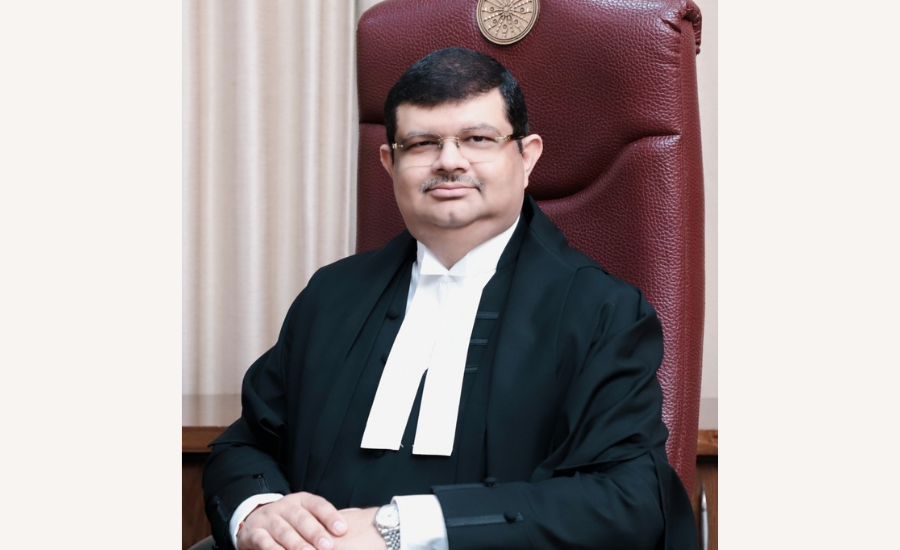
Ahmedabad: Emergency arbitration In India took center stage during a high-level discussion at Gujarat High Court Arbitration Centre Arbitration Week 2026, where Delhi High Court Justice Tejas Karia called for major reforms to strengthen India’s arbitration ecosystem.
Justice Karia emphasized the need for statutory recognition of emergency arbitration and the creation of dedicated arbitration benches. He said these measures could make dispute resolution faster, more efficient, and more reliable for businesses and investors.
Panel Discusses Future Of Arbitration In India
The panel discussion focused on two important themes. The first was the progress made since the 2015 amendments to India’s arbitration law. The second focused on the revised International Bar Association (IBA) Guidelines 2024, particularly issues related to conflicts of interest, disclosure requirements, and arbitration independence.
Legal experts, judges, and arbitration professionals examined the challenges that continue to affect the effectiveness of arbitration in India.
Justice Tejas Karia Advocates Statutory Recognition For Emergency Arbitration
Justice Tejas Karia stressed that emergency arbitration should be formally incorporated into Indian law through a proposed Section 9A.
According to him, institutional arbitration is the best way to implement emergency arbitration effectively. He explained that a statutory framework would allow parties to obtain urgent interim relief within a short period without burdening regular courts.
The proposal aims to provide quicker legal remedies in commercial disputes, particularly in cases where immediate action is necessary to protect business interests.
Dedicated Gujarat High Court Bench Proposed For GIFT City
Justice Karia also highlighted the growing importance of GIFT City as an international financial and arbitration hub. He suggested establishing a dedicated bench of the Gujarat High Court in GIFT City to deal with arbitration-related matters. According to him, such a move would improve efficiency and reduce delays in dispute resolution.
Vision For An International Commercial Court
Looking beyond immediate reforms, Justice Karia proposed the creation of a full-fledged international commercial court in India. He suggested that the model could be inspired by globally recognized institutions such as the Dubai International Financial Centre (DIFC) Courts and the Singapore International Commercial Court (SICC). Such a court could significantly enhance India’s attractiveness as a destination for international commercial dispute resolution.
Justice Tejas Karia Raised Concerns Over Judicial Delays
The panel also discussed delays in arbitration-related court proceedings. Justice Tejas Karia noted that judicial review under Section 34 of the Arbitration and Conciliation Act should remain limited and should not become a mechanism for extensive interference in arbitral awards.
Experts argued that faster judicial support is essential if India wants to become a leading global arbitration center.
Experts Call For Structural Reforms
Senior legal experts participating in the discussion pointed to systemic issues affecting arbitration. Concerns included delays caused by court backlogs, lack of specialized arbitration benches, and the need for better-trained arbitrators and judges handling arbitration matters.
Suggestions included strengthening institutional arbitration, setting strict timelines for arbitration-related proceedings, and improving disclosure standards to ensure neutrality and transparency.
Importance Of Arbitrator Independence
The discussion also focused on arbitrator neutrality. Experts stressed that proper disclosures and adherence to the revised IBA Guidelines 2024 are critical for maintaining confidence in arbitration proceedings. Strong disclosure norms can reduce challenges to arbitral awards and improve enforceability.
Why These Reforms Matter
India has been working to position itself as a global hub for commercial dispute resolution. Strengthening emergency arbitration, reducing judicial delays, and creating specialized arbitration infrastructure could improve investor confidence and support India’s ambition to become a preferred destination for international business and arbitration.
Who is Justice Tejas Karia
Justice Tejas Dhirenbhai Karia is a judge of the High Court of Delhi, known for his specialized background in domestic and international commercial arbitration and technology law. His elevation on February 14, 2025, marked a notable transition from leading corporate law practice directly to the constitutional bench.
Early Life & Education
- Born on February 1, 1978, in Ahmedabad, Gujarat, into a family of judges and lawyers.
- Earned his LL.B. from ILS Law College, Pune (2000).
- Completed an LL.M. in Corporate Laws from Gujarat University (2002), followed by a second LL.M. in International Arbitration and Information Technology Law from the London School of Economics (LSE) in 2003.
- Dual-qualified as an Advocate in India and a Solicitor of England & Wales.
Legal Practice & Specialization
- Began his legal career in 2000 at the City Civil Court in Ahmedabad before practicing at the Gujarat High Court and various state tribunals, including serving as special defense counsel in an Indian Army Court Martial.
- Moved to New Delhi in 2004, joining Amarchand Mangaldas & Co. (later Shardul Amarchand Mangaldas & Co.), where he went on to head the firm’s dispute resolution and arbitration practice.
- Represented Indian and multinational corporations before the Supreme Court of India, various High Courts, and international arbitration tribunals seated in London, Singapore, and India.
- Built significant expertise in information technology law, data privacy, cybersecurity, intermediary liability, and e-commerce regulation.
Institutional Roles & Legislative Reforms
- Served on the Court of Arbitration of the Singapore International Arbitration Centre (SIAC) and the ICC Commission on Arbitration and ADR.
- Fellow of the Chartered Institute of Arbitrators (CIArb, London) and a specialist mediator with the Singapore International Mediation Centre (SIMC).
- Actively contributed to key legislative reforms, advising the Law Commission of India on the 2015 amendments to the Arbitration and Conciliation Act, and serving on the 2019 High-Powered Committee on institutionalizing arbitration in India as well as the 2024 Expert Committee on arbitration reforms.
Judicial Career
- Recommended by the Supreme Court Collegium and appointed as a Judge of the High Court of Delhi, taking the oath of office on February 14, 2025.
- His appointment was widely noted as bringing specialized private-practice expertise in complex commercial disputes, intellectual property, and technology governance to the Delhi High Court bench.
Read also: Delhi High Court Clarifies Rules On Hiring Amid Allegations Of Exam Malpractice
FAQs
Justice Karia believes statutory backing would make emergency arbitration more effective, enforceable, and accessible while reducing pressure on courts.
Emergency arbitration is a process that allows parties to obtain urgent interim relief before the full arbitral tribunal is constituted. It is designed to provide quick protection in urgent commercial disputes.
A dedicated bench could speed up arbitration-related cases, support international investors, and strengthen GIFT City’s position as a major dispute resolution hub.