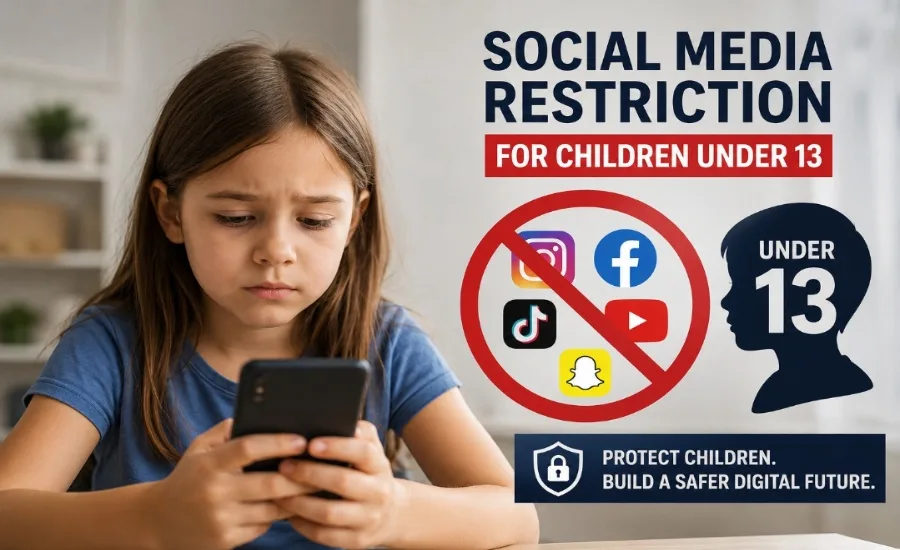
New Delhi: The Delhi High Court has directed the Central Government to consider a plea seeking guidelines to restrict social media access for children below 13 years and regulate online content for children between 13 and 16 years of age. The Court said the issue falls within the government’s policy-making powers and should be examined accordingly.
The matter was heard by a Division Bench of Justice V. Kameswar Rao and Justice Manmeet Pritam Singh Arora. The Court disposed of the petition after directing the Centre to consider the representation and suggestions submitted by the petitioners.
Details of Social Media Restriction For Children Petition
The Public Interest Litigation (PIL) was filed by Kirti Dua and Dr. Sharad Gupta. The petition requested the government to frame guidelines, regulations, and possible legislation to protect children from harmful social media content and excessive platform usage.
Restrictions For Children Below 13
The plea sought restrictions on social media access for children under 13 years of age. It argued that stronger safeguards are needed to protect children from harmful and exploitative online material that may affect their mental and psychological well-being.
Regulation For Teenagers Aged 13 To 16
The petition also requested regulation of content available to children between 13 and 16 years. According to the petitioners, age-appropriate safeguards should be introduced to reduce exposure to harmful content and improve online safety.
Social Media Restriction For Children: Delhi High Court’s Observation
During the hearing, the Central Government informed the Court that the matter relates to public policy. The government stated that if a representation is submitted, it would be examined and decided according to the law.
The Court agreed that decisions regarding social media restrictions involve policy considerations and consultation with stakeholders, including social media companies.
Social Media Restriction For Children: Court Directs Centre To Consider Representation
The Bench directed the Centre to consider the writ petition along with the note of suggestions submitted by the petitioners. The Court also said the government may provide a hearing to the petitioners’ representatives if it considers such a step necessary while evaluating the proposal.
Social Media Restriction For Children: Key Demands Made In The PIL
The petition contained several recommendations aimed at strengthening child safety online.
Stronger Enforcement Of Existing Laws
The petition sought stricter implementation of existing laws, including:
- Information Technology Act, 2000
- Digital Personal Data Protection Act, 2023
- Protection Of Children From Sexual Offences (POCSO) Act, 2012
The petitioners argued that stronger enforcement could help protect children from harmful online content.
Overnight Social Media Curfew
One of the major proposals was the introduction of overnight restrictions on social media access for children aged 13 to 16.
The petitioners believe such measures could help reduce excessive screen time and digital addiction among minors.
Age Verification Mechanisms
The PIL also sought stronger age-verification systems on social media platforms. The petition proposed verification models that could ensure children access platforms only under appropriate safeguards while maintaining privacy protections.
Growing Debate Around Child Safety Online
The case reflects increasing concerns about children’s exposure to harmful content, cyber risks, and excessive social media use.
Several countries around the world are exploring age-verification systems, parental controls, and platform accountability measures to improve online safety for minors. The petitioners argued that India should also consider stronger safeguards for children.
Read also: Big Relief For Advocates! Delhi High Court Allows Practice During 3-Year LLM Course
FAQs
The petition sought guidelines and possible regulations to restrict social media access for children under 13 and protect them from harmful online content.
The Court said that restricting or regulating children’s access to social media is a policy matter that falls within the Central Government’s domain and should be decided after considering all stakeholders.
No. The Court did not impose any ban. It directed the Central Government to consider the petition and suggestions submitted by the petitioners before taking a policy decision.