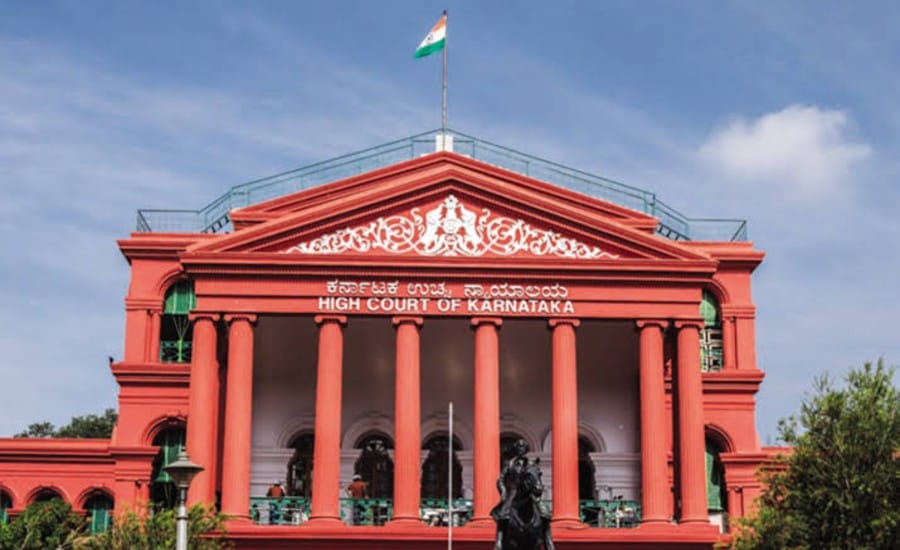
Bangalore: The Karnataka High Court has ruled that criminal proceedings can be initiated against advocates who continue practising law without clearing the mandatory All India Bar Examination (AIBE) within the prescribed two-year period.
The court also directed the Karnataka State Bar Council (KSBC) to develop a system to identify such advocates and take appropriate action. The ruling highlights the importance of professional qualifications, legal accountability and protecting people who depend on lawyers for justice.
Details of Karnataka Advocates Criminal Proceedings
On October 17, 2026, Justice H.P. Sandesh of the Karnataka High Court delivered the ruling in a case involving allegations that an advocate continued practising for nearly a decade without clearing the AIBE.
Read also: Why Has Delhi High Court Ordered Proceedings Against 6 CBI Officers?
The court observed that disciplinary action by a Bar Council and criminal proceedings are separate legal matters. The existence of a disciplinary process does not automatically prevent a criminal court from examining alleged offences. The court clarified that criminal action may be taken when the alleged conduct meets the legal requirements of a criminal offence.
What Is The All India Bar Examination (AIBE)
The All India Bar Examination is a qualifying examination conducted under the framework of the Bar Council of India (BCI). It is intended to assess whether law graduates have the basic knowledge required to practise law.
Under the applicable AIBE rules, eligible advocates provisionally enrolled with a State Bar Council must clear the examination within the prescribed two-year period to continue practising. The requirement helps maintain professional standards and ensures that advocates meet the necessary conditions for legal practice.
Why Did The Karnataka Advocates Criminal Proceedings Case Reach The Karnataka High Court
The case arose from a criminal petition filed by an advocate seeking to quash proceedings pending before a Judicial Magistrate First Class (JMFC) court in Bangarpet, Karnataka.
According to the complaint, the advocate was provisionally enrolled with the Karnataka State Bar Council in 2011 but allegedly continued practising for nearly a decade without passing the mandatory AIBE.
The complainant alleged that this conduct amounted to cheating clients and the judicial system. These were allegations before the court, not a final finding that the advocate was guilty of the alleged offences. The Magistrate had referred the complaint for investigation under Section 156(3) of the Code of Criminal Procedure (CrPC).
Why The Court Allowed Karnataka Advocates Criminal Proceedings
The High Court examined whether criminal proceedings could continue even though the Advocates Act, 1961, provides a disciplinary framework for advocates.
Justice H.P. Sandesh held that the existence of disciplinary powers does not remove the jurisdiction of a competent criminal court when the alleged conduct independently fulfils the requirements of a criminal offence.
The court also referred to earlier Supreme Court decisions while explaining the relationship between criminal jurisdiction and professional disciplinary proceedings. It observed that a complainant could initiate a criminal complaint without first approaching the Karnataka State Bar Council, subject to the applicable law.
Which Laws Could Apply To Advocates Practising Without AIBE
The court observed that the allegations could be examined under the relevant provisions of the Indian Penal Code (IPC) and Section 45 of the Advocates Act, 1961.
Section 45 of the Advocates Act addresses punishment for a person who practises before a court or other authority when they are not entitled to do so under the Act.
The investigation must determine whether the available evidence establishes the ingredients of the alleged offences. The court’s decision to allow proceedings to continue does not, by itself, establish criminal guilt.
Karnataka State Bar Council Directed To Track Advocates
The Karnataka High Court directed the KSBC to develop a mechanism to identify advocates who fail to clear the AIBE within the required period but continue practising.
The system is expected to alert the Council automatically when the prescribed two-year period expires. This would help the Council identify people who may no longer be eligible to practise.
The court stressed that the State Bar Council is responsible not only for enrolling advocates but also for maintaining records of those who are eligible to practise law. The directions aim to improve monitoring and enable timely action against unauthorised legal practice.
Bar Council Letters On AIBE Compliance
The court took note of a Karnataka State Bar Council letter dated August 7, 2026, which informed recognised bar associations that failure to pass the AIBE could result in suspension of the licence to practise.
It also referred to a communication issued by the Bar Council of India on July 29, 2026, concerning the consequences of failing to clear the examination. These communications supported the court’s observation that compliance with the examination requirement must be monitored and enforced.
Read also: Supreme Court Slams Chhattisgarh High Court Over Criminal Law Errors
FAQs
Under the applicable AIBE rules, provisionally enrolled advocates covered by the requirement must clear the All India Bar Examination within two years to continue practising law.
Yes. The Karnataka High Court held that criminal proceedings may be initiated when an advocate continues practising without meeting the applicable AIBE requirement and the alleged conduct fulfils the legal ingredients of a criminal offence.
The Karnataka High Court directed the Karnataka State Bar Council to develop a mechanism to track advocates who fail to clear the AIBE within the prescribed period and identify those who continue practising without the required eligibility.