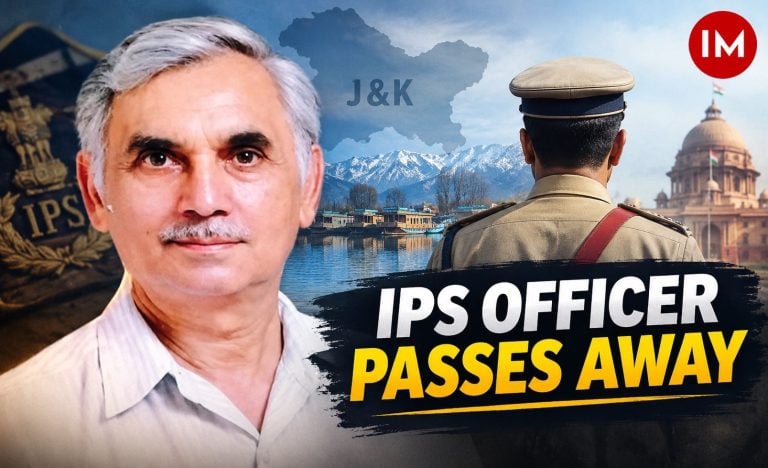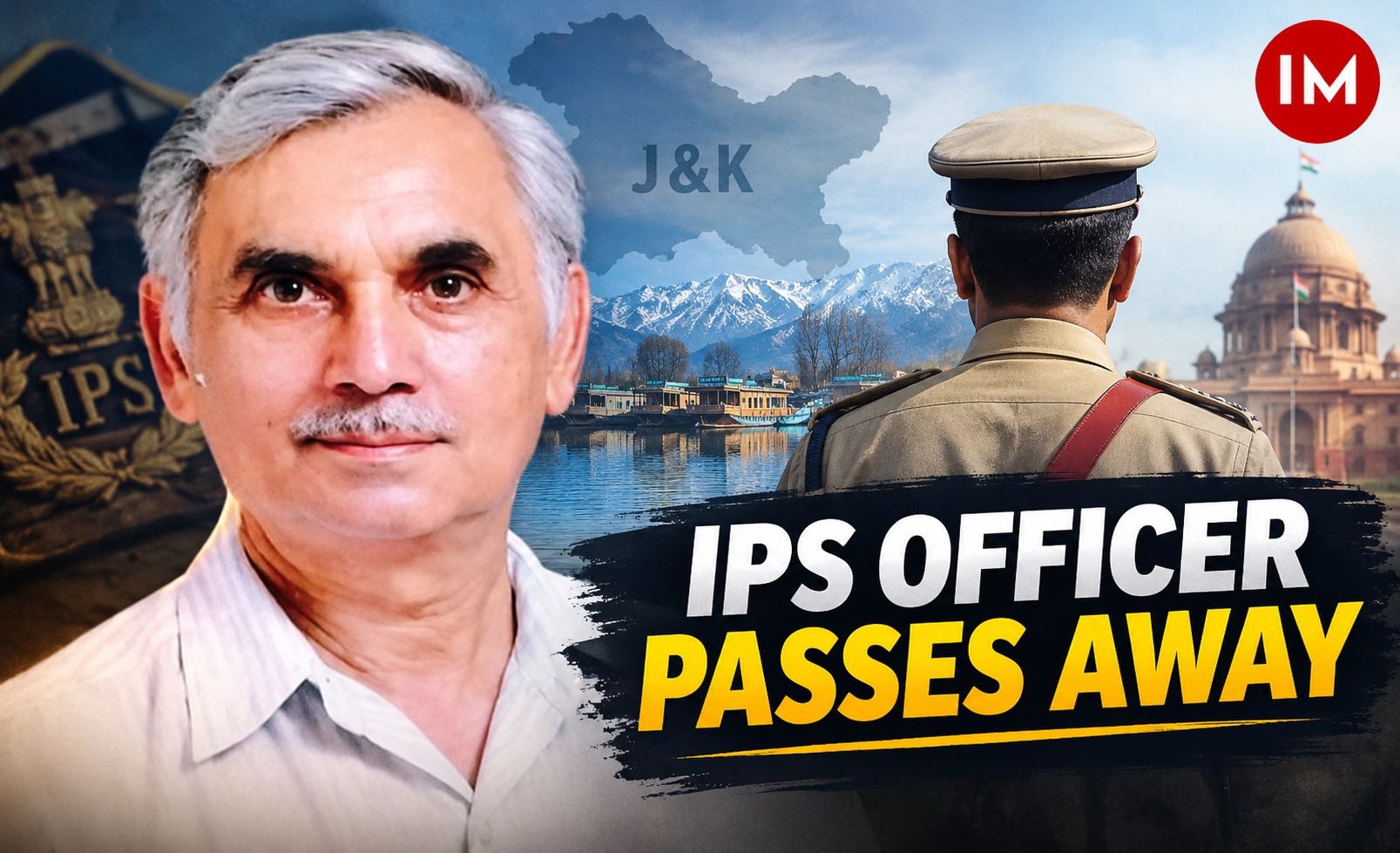
Chandigarh: Former Jammu and Kashmir cadre IPS officer Ram Prakash died in Chandigarh on October 18. Remembered for his professional integrity, he served during a politically turbulent period and was known for a confrontation with former Chief Minister Ghulam Mohammad Shah.
Prakash served in Jammu and Kashmir during a politically turbulent period, when the administration faced significant challenges involving political instability, governance and law and order.
He held several important field and supervisory assignments during his service. Among his most widely recalled experiences was a confrontation with then-Chief Minister Ghulam Mohammad Shah, an episode that became associated with his reputation for administrative independence and professional integrity.
Who Was IPS Officer Ram Prakash?
Ram Prakash was a former IPS officer of the erstwhile Jammu and Kashmir cadre who spent his career serving in the region during a period of considerable political and administrative uncertainty.
He held senior responsibilities in field policing and supervisory administration, working in an environment where maintaining law and order often involved navigating difficult political circumstances.
Colleagues and contemporaries remembered him as an officer who valued professional discipline, administrative propriety and adherence to established norms.
His reputation was particularly associated with his willingness to maintain professional standards even when confronted with political pressure.
The Face-Off With Chief Minister Ghulam Mohammad Shah
One of the most notable episodes associated with Prakash’s career was his reported confrontation with Ghulam Mohammad Shah, who served as Chief Minister of Jammu and Kashmir between July 1984 and March 1986.
The episode has been recalled in accounts of Prakash’s career as an example of his willingness to defend professional principles during a period of strained relations between political leaders and sections of the administration.
Although the confrontation is frequently mentioned in tributes to the former IPS officer, the available accounts do not establish the precise circumstances, official decisions or sequence of events surrounding the disagreement.
Nevertheless, the episode remained an important part of how Prakash was remembered within police and administrative circles.
Political Turmoil During G.M. Shah’s Government
The political circumstances surrounding Shah’s tenure provide important context to the period in which Prakash served.
Ghulam Mohammad Shah became Chief Minister in July 1984 after a split in the National Conference resulted in the collapse of Farooq Abdullah’s government.
Shah formed his administration with the support of the Congress legislature party. His tenure was marked by political uncertainty and tensions within the state’s political and administrative establishment.
In March 1986, the Congress withdrew its support from Shah’s government, leading to its dismissal and the imposition of Governor’s Rule in Jammu and Kashmir.
It was against this wider backdrop of political instability that Prakash carried out his responsibilities as an IPS officer.
Remembered for Integrity and Professional Independence
Throughout his service, Prakash was regarded by colleagues and contemporaries as an officer who placed importance on professional ethics and administrative discipline.
His career reflected the challenges faced by police officers serving in politically sensitive environments, particularly when operational responsibilities intersected with competing political expectations.
The confrontation with G.M. Shah became a prominent element of his professional legacy, reinforcing his reputation among those who remembered him for his principled approach to public service.
Ram Prakash Passes Away in Chandigarh
Prakash had reportedly been unwell for some time before his death in Chandigarh on October 18, 2026.
His passing marks the loss of a former senior police officer whose career was closely associated with an important and politically unsettled chapter in Jammu and Kashmir’s administrative history.
He is remembered in police and administrative circles for his service in the erstwhile state and his commitment to maintaining professional standards during challenging circumstances.