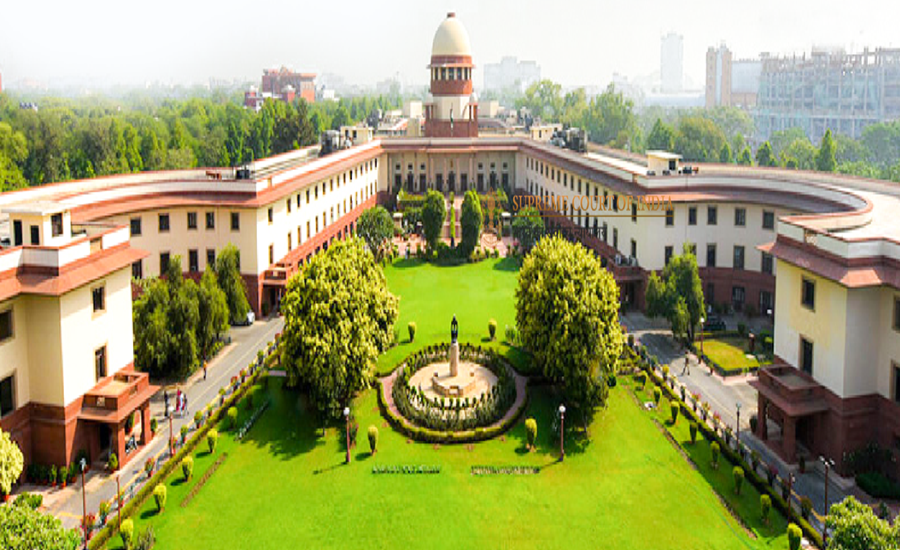
New Delhi: The supreme court asked the Union government to examine whether EVM totaliser machines can be introduced for counting votes recorded in Electronic Voting Machines (EVMs). The move aims to protect voter privacy by preventing the disclosure of booth-wise voting patterns. The Court sought the Centre’s response after hearing submissions from the Election Commission of India (ECI), senior advocates, and the petitioner.
What Did The Supreme Court Say
A Bench comprising Chief Justice of India Surya Kant, Justice Joymalya Bagchi, and Justice V Mohana heard the matter concerning the introduction of totalisers for EVM vote counting.
Read also: Big Relief For Job Aspirants: Supreme Court Restricts Government’s Power To Reopen PSC Selections
The Court asked the Union government to examine the proposal and consider whether any legal, technical, or practical obstacles exist in implementing such a system.
The Bench observed that voter secrecy is an important feature of free and fair elections and sought clarity on whether totalisers could help strengthen that principle.
What Is the EVM Totaliser Machine
A totaliser is a device that combines votes recorded in multiple EVMs before the final count is displayed. Instead of revealing results booth by booth, the machine produces an aggregated result from several polling stations. This makes it difficult to identify voting patterns in any particular booth.
Why Is It Being Considered
Supporters argue that booth-wise counting can sometimes reveal how voters in a particular area voted. They say this may expose voters to pressure, intimidation, or political targeting after elections. A totaliser would help keep voting choices anonymous.
EVM Totaliser Machine Use: Election Commission’s Position
The Election Commission of India told the Court that it supports the principle of protecting voter anonymity. However, it also highlighted practical and regulatory challenges involved in introducing totalisers.
According to submissions before the Court, implementing the proposal may require changes to existing election rules and procedures.
The Commission also pointed out that candidates currently receive booth-wise data through Form 17C, which helps them verify counting results. The use of totalisers could affect this verification process.
Arguments Presented Before The Court
The petitioner argued that booth-wise disclosure of voting patterns could lead to intimidation and post-election victimisation of voters. It was submitted that a totaliser could combine votes from multiple EVMs, making it impossible to determine how a specific booth voted.
Senior Advocates’ Submissions
Senior Advocate Gopal Sankaranarayanan argued that the existing legal framework may already allow the government to introduce totalisers through rules framed under the Representation of the People Act.
He referred to Section 169 of the Act, which empowers the Central government, in consultation with the Election Commission, to make rules regarding the conduct of elections.
EVM Totaliser Machine Use: Court Discusses Existing Election Rules
Justice Bagchi referred to Rule 59A of the Conduct of Elections Rules, 1961. The rule allows votes to be counted in an aggregated manner in exceptional situations where there is concern that voters may be identified and subjected to intimidation or victimisation. The Court noted that a similar principle could potentially be considered for EVM vote counting as well.
Concerns Regarding VVPAT Verification
The Court also discussed the issue of Voter Verifiable Paper Audit Trail (VVPAT) slips. The Election Commission argued that introducing totalisers could make cross-verification between EVM votes and VVPAT records more complex.
The Court clarified that it was not necessarily proposing totalisers as a replacement for the current counting system but was examining whether they could be used in specific cases where voter protection concerns arise.
Read also: What Did the Supreme Court Say About Black Money in Elections? Key Directions Explained
FAQs
A totaliser is a device that combines votes from multiple EVMs and displays only the combined result, preventing booth-wise voting data from being revealed.
The Court wants the government to examine whether totalisers can help protect voter privacy and prevent voters from being identified through booth-wise voting patterns.
The Election Commission supports voter anonymity in principle but has highlighted practical, legal, and verification-related challenges in implementing totalisers.