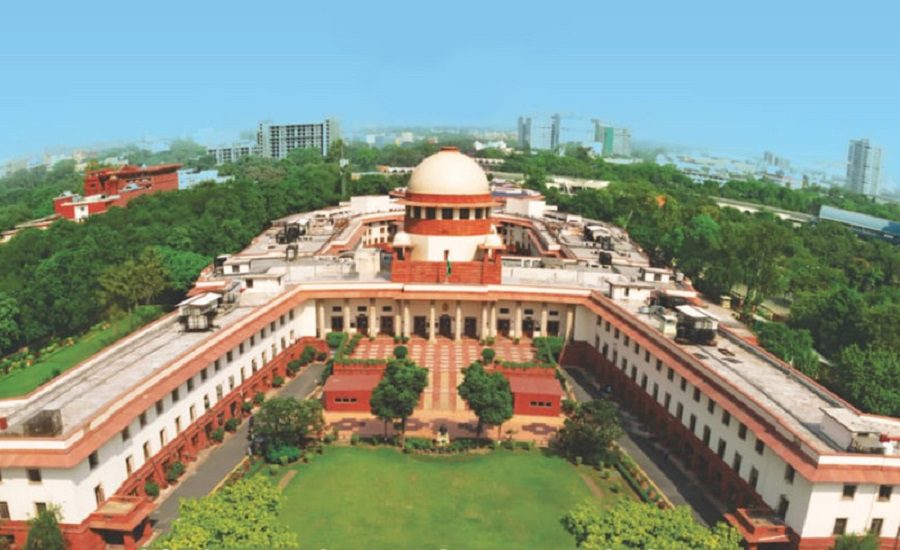
New Delhi: The Supreme Court of India has directed the Central Government to widely publicise the Compensation To Victims (Interim Relief) Scheme, 2026, which aims to provide temporary financial relief to road accident victims.
The Court wants people to know about their right to seek interim compensation under Section 164A of the Motor Vehicles Act, 1988.
It has also asked the government to clarify whether victims of accidents involving uninsured vehicles are covered by the scheme. The directions aim to make this important legal benefit more accessible to ordinary citizens.
Road Accident Compensation Scheme 2026: Why Did The Supreme Court Issue This Direction
The Supreme Court raised concerns that many road accident victims might not know about the new compensation scheme because it had not received enough public attention.
Read also: Supreme Court Mandates Panic Buttons & GPS in All Public Transport Vehicles
A bench comprising Justice J.B. Pardiwala and Justice K.V. Viswanathan issued the directions on October 16, 2026, while hearing contempt petitions related to compliance with earlier court orders. The petitions raised concerns about the implementation of legal provisions and the publication of road accident data.
During the hearing, the Court was informed that the Central Government had prepared the Compensation To Victims (Interim Relief) Scheme, 2026. However, the scheme’s existence was not widely known, including to the parties involved in the court proceedings.
The Court stressed that a welfare measure cannot fully help people if they do not know that it exists or how to access its benefits.
What Is The Road Accident Compensation Scheme 2026
The Compensation To Victims (Interim Relief) Scheme, 2026, has been framed under Section 164A of the Motor Vehicles Act, 1988.
This section allows the Central Government to create schemes that provide interim financial relief to people seeking compensation after road accidents.
The main purpose of interim compensation is to provide financial assistance while the wider compensation claim is being dealt with through the legal process.
Road accidents can cause serious injuries, loss of income and financial difficulties for victims and their families. Temporary financial support can help reduce some of these difficulties. However, the scheme’s exact eligibility requirements and implementation process must be understood from its applicable official provisions.
Supreme Court Asks Centre To Publish Road Accident Compensation Scheme 2026 In Official Gazette
The Supreme Court directed the Central Government to ensure that the scheme is published in the Official Gazette as soon as possible. An Official Gazette is a government publication used to formally publish laws, rules, regulations and notifications.
The Court also asked the Union Government to explain, by the next hearing, how it plans to make the scheme operational. This means the government must clarify the steps it intends to take to implement the scheme and make people aware of it.
The Court’s directions focus on two important issues: formal publication of the scheme and effective public communication.
Will Road Accident Compensation Scheme 2026 Cover Accidents Involving Uninsured Vehicles
One of the major concerns raised during the hearing was whether the scheme would cover road accidents involving uninsured vehicles.
Senior Advocate Gaurav Agarwal, who was assisting the Court as an amicus curiae, and an applicant appearing in person raised questions about the scheme’s coverage. They pointed out that the scheme appeared to focus on accidents involving insured vehicles, where an insurance company could be responsible for paying compensation.
They raised concerns that victims of accidents involving uninsured vehicles might not receive the same interim relief under the scheme.
In such cases, questions may arise about the responsibility of the vehicle owner or driver and how compensation can be recovered.
The Supreme Court asked the Central Government to clarify whether the scheme would also cover accidents involving uninsured vehicles. The issue remains an important point requiring clarification from the government. The Court’s direction should not be understood as a final ruling that uninsured vehicles are either included or excluded.
How Can Road Accident Victims Apply For Interim Compensation
The scheme’s application process is intended to provide a formal route for eligible victims to seek interim relief. Information presented during the proceedings indicated that the scheme provides for an electronic application process. The application procedure includes details of a compensation claim filed before, or pending with, a Motor Accident Claims Tribunal.
The process described during the proceedings also involves the relevant investigating officer, the Department of Financial Services and the insurance company concerned.
The investigating officer is expected to upload the Detailed Accident Report within the prescribed period. The insurance company then has a specified period to accept or reject the application, giving reasons for rejection.
If the insurer accepts responsibility, the scheme provides for payment through the prescribed legal process. However, victims should check the final, officially published scheme and its applicable rules before relying on specific deadlines or application requirements. The Supreme Court has directed the Centre to clarify how the scheme will be implemented.
What Is Section 164A Of The Motor Vehicles Act
Section 164A of the Motor Vehicles Act, 1988, gives the Central Government the power to establish schemes for interim relief for people seeking compensation under the relevant chapter of the Act. It also provides for a procedure to recover funds paid under such schemes from the vehicle owner or other sources specified by the government.
The provision is important because it creates a legal basis for providing financial assistance before the entire compensation process is completed. The Supreme Court’s latest directions concern making this legal provision effective through a formal scheme and ensuring that eligible people know about it.
What Happened In The Earlier Supreme Court Proceedings
The latest directions follow earlier proceedings concerning the implementation of Section 164A.
On April 28, 2025, the Supreme Court had directed the Central Government to establish a mechanism for interim relief under the law. The earlier proceedings raised concerns about the delay in putting the provision into practical operation.
The preparation of the 2026 scheme represents a step towards creating a formal mechanism. However, the latest hearing highlighted that preparing a scheme is not enough unless it is properly published, implemented and communicated to the public. The Court has therefore sought details about the government’s plan for putting the scheme into operation.
What is the Importance of Road Accident Compensation Scheme 2026 For The Public
The Court’s directions could help improve public awareness about the legal options available to road accident victims. Many people may not know that they can seek compensation after a serious road accident or that a legal provision exists for interim relief.
Wider publicity could help victims and their families understand the scheme, identify the appropriate application process and seek legal assistance where necessary. Clarifying coverage for uninsured vehicles is also important because victims should be able to understand their rights and the available remedies in different accident situations.
At the same time, the directions do not mean that every road accident victim will automatically receive interim compensation. Eligibility, documentation, responsibility for the accident and the applicable scheme provisions will remain relevant.
Read also: Supreme Court Declares Safe Footpaths a Fundamental Right, Pedestrians Get Priority Over Vehicles
FAQs
The Supreme Court directed the Centre to publicise the scheme because people may not know about their right to seek interim compensation. The Court also directed the government to publish the scheme in the Official Gazette and explain its implementation plan.
The Compensation To Victims (Interim Relief) Scheme, 2026, is a scheme framed under Section 164A of the Motor Vehicles Act, 1988, to provide interim financial relief to eligible road accident compensation claimants.
The coverage of accidents involving uninsured vehicles was questioned during the Supreme Court hearing. The Court asked the Central Government to clarify this issue. The final position should be checked against the government’s official clarification and the published scheme.