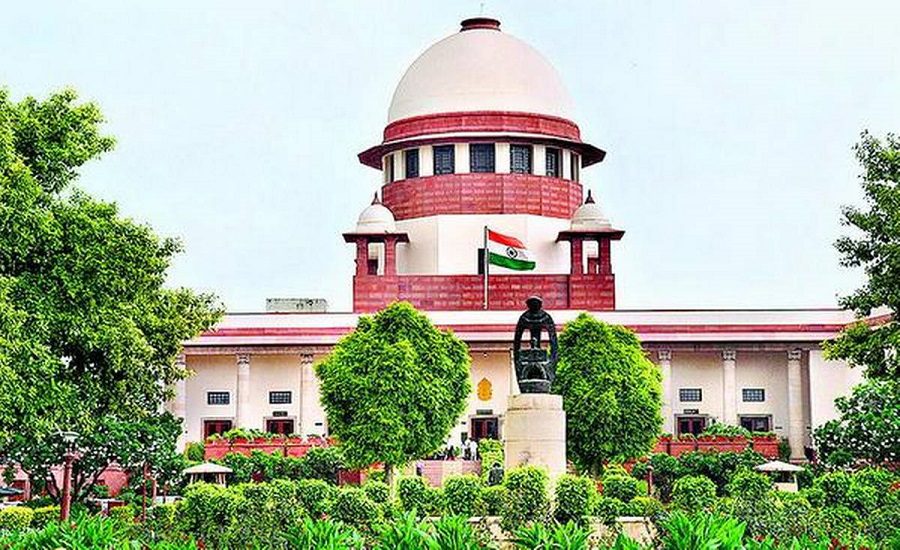
New Delhi: The supreme court urged the Tamil Nadu government to adopt a more flexible approach and engage in dialogue with the Centre.
The dispute relates to the establishment of Jawahar Navodaya Vidyalayas (JNVs) in the State. Based on proceedings before the Supreme Court, the Bench emphasized cooperative federalism, educational opportunities for students, and the need for constructive discussions between the State and Central governments.
Tamil Nadu Navodaya Schools Dispute: Supreme Court Refuses To Recall Earlier Order
The Supreme Court was hearing Tamil Nadu’s plea challenging a Madras High Court judgment that directed the State to facilitate the establishment of Navodaya Vidyalayas in every district.
Tamil Nadu argued that education policy falls within its domain and that its two-language policy is not compatible with the Navodaya model. However, the Supreme Court declined to recall its earlier direction.
Instead, the Court granted Tamil Nadu an additional three months to comply with the order and identify land required for setting up the schools.
What Is The Tamil Nadu Navodaya Schools Dispute
Tamil Nadu has long opposed the establishment of Jawahar Navodaya Vidyalayas in the State. The government has argued that the schools are not aligned with its language policy and could affect the State’s educational framework.
Senior Advocate Jaideep Gupta, appearing for Tamil Nadu, told the Court that the policy was against the State’s educational approach and raised concerns regarding language issues.
Centre’s Position
The Central government maintains that Navodaya Vidyalayas provide quality education to talented students, especially those from rural areas. The Centre also argued that the State only needs to provide land, while the remaining infrastructure and operational responsibilities are handled by the Central government.
Supreme Court Calls For Dialogue
During the hearing, Justice B V Nagarathna emphasized the importance of dialogue between the State and the Centre. The Court observed that Navodaya schools are not necessarily against Tamil Nadu’s educational policy and encouraged discussions to find common ground.
The Bench stated that a rigid approach would not benefit students and highlighted the need for cooperation in matters concerning education.
“You Can’t Alienate Delhi”
The Court noted that States and the Centre must work together in a federal system. It observed that refusing engagement with the Central government on policy matters could create unnecessary barriers and that dialogue remains the best solution.
The Bench also remarked that perspectives can evolve over time and that governments should remain open to discussions that benefit citizens.
Tamil Nadu Raises Concerns Over Implementation
Senior Advocate Jaideep Gupta argued that cooperative federalism should work both ways. He submitted that certain policy decisions cannot simply be imposed on States through judicial directions. Gupta also expressed concerns regarding funding responsibilities and the practical implementation of the schools. According to the State, educational policy decisions should respect local priorities and established practices.
Tamil Nadu Navodaya Schools Dispute: Court Emphasizes Student Welfare
The Supreme Court repeatedly highlighted that the issue should be viewed from the perspective of students. The Bench said greater educational opportunities would benefit children and that discussions should focus on improving access to quality education.
The Court maintained that identifying land for schools does not automatically alter the State’s educational policy. Instead, it opens the door for further discussions between the State and the Centre.
Centre Says Land Is The Only Requirement
Additional Solicitor General KM Nataraj, representing the Central government, informed the Court that Tamil Nadu’s primary responsibility would be providing land. He stated that the Central government would take care of the remaining aspects related to the schools.
The submission was made to address concerns regarding financial and administrative burdens on the State government.
What Happens Next?
Tamil Nadu has been given three additional months to comply with the Supreme Court’s direction regarding identification of land.
Meanwhile, both governments are expected to continue discussions on the policy and implementation issues surrounding Navodaya Vidyalayas. The matter is likely to remain under judicial scrutiny as the compliance process moves forward.
FAQs
The Supreme Court refused to recall its earlier order, granted Tamil Nadu three more months to identify land, and encouraged dialogue between the State and Central governments.
Tamil Nadu argues that the Navodaya model is not fully compatible with its educational and language policies, particularly its two-language policy framework.
According to the Central government’s submission before the Court, Tamil Nadu would mainly provide land, while the Central government would handle the remaining responsibilities for establishing and operating the schools.